

Maddy summaryHR 175, the Heartbeat Protection Act of 2023, prohibits physicians from performing abortions without first checking for a detectable fetal heartbeat using standard medical practice and informing the patient of the results. It allows exceptions only for abortions necessary to save a mother’s life due to physical conditions (not psychological ones), or for pregnancies resulting from rape or incest against an adult or minor, which require specific documentation like counseling records or police reports. Physicians violating the law face up to five years in prison, while patients cannot be prosecuted. The bill defines "unborn child" as beginning at fertilization and mandates detailed medical documentation for all exceptions. It explicitly excludes psychological conditions from life-threatening exceptions and requires physicians to retain records per federal health privacy rules.
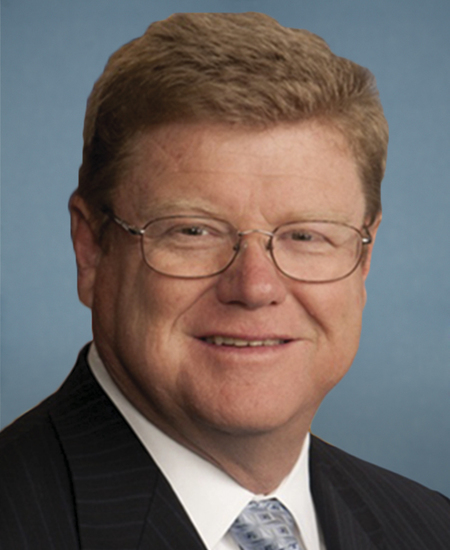
Rep. Mark E. Amodei
Sponsored bills
Maddy summaryHCONRES 3 is a non-binding congressional resolution expressing support for pro-life facilities, groups, and churches targeted by vandalism and threats following the Supreme Court's Dobbs decision. It condemns specific incidents like graffiti, window-smashing, and arson at pregnancy centers and churches (e.g., in Frederick, MD, and Portland, OR), while recognizing the role of these organizations in supporting pregnant women. The resolution calls on the Biden Administration to use law enforcement to protect these facilities but does not create new laws or policies. As a symbolic measure, it has no legal effect on the incidents described.
Investing in Rural Manufacturing Act This bill authorizes the Small Business Administration to make loans for certain costs to businesses that manufacture goods essential to critical infrastructure sectors in rural areas. Businesses that meet at least 75% of their job creation goals under such loans may receive partial loan forgiveness.
Maddy summaryThis bill creates new federal crimes for killing or assaulting law enforcement officers, judges, and certain public safety officers (including firefighters) while they are on duty or for past duties, with penalties including minimum 10-year sentences for killing and varying assault penalties based on severity. It adds a new factor that would make the federal death penalty more likely for killing such officers, limits federal legal challenges for convictions related to these killings, and expands law enforcement officers' rights to carry firearms in certain circumstances. The bill also provides funding for grants to improve community-law enforcement relationships through transparency, accountability, and officer wellness programs. It directly affects law enforcement officers, judges, and public safety personnel across the country, establishing new federal protections and procedures for violence against these personnel.
Maddy summaryThe GAS Act (HR 337) prohibits any federal agency from banning the sale or use of gas-burning stoves in the United States. This applies to all agencies defined under federal law, including the Environmental Protection Agency and Consumer Product Safety Commission. The bill directly blocks agencies from enacting new regulations that would restrict gas stoves, preventing future regulatory actions. It does not affect existing stove sales or current agency authority but sets a clear restriction on future rulemaking.
Maddy summaryThe Faithful Execution of the Law Act of 2023 would require federal officials, including the Attorney General and other federal officers, to publicly state the specific reasons for not enforcing a federal law they believe is unconstitutional. The bill amends U.S. Code Section 530D to expand this requirement from the Attorney General alone to all federal officers who establish or implement policies regarding law enforcement. It mandates that officials must document the grounds (e.g., constitutional concerns) for such non-enforcement decisions in writing. This change aims to increase transparency in how federal agencies handle laws they deem unconstitutional. The bill directly affects federal enforcement agencies and their decision-making processes.
Maddy summaryHJRES 8 proposes a constitutional amendment to permanently set the Supreme Court's size at nine justices. The bill would require any future changes to the Court's composition to follow this specific number, locking in the current structure. It does not alter the existing Court size (which has been nine since 1869) but aims to prevent future adjustments through legislative action. The amendment must be ratified by three-fourths of state legislatures within seven years to take effect. This is a procedural proposal focused on constitutional structure, not a direct policy affecting citizens or programs.
Maddy summaryHR 24, the Federal Reserve Transparency Act of 2023, requires a comprehensive audit of the Federal Reserve System's Board of Governors and Federal Reserve banks within 12 months of the bill's enactment. The Congressional auditor (Comptroller General) must then submit a detailed report to Congress within 90 days, including findings, conclusions, and recommendations for improving transparency. This bill directly affects the Federal Reserve System by mandating greater oversight of its operations and financial activities. The key provision repeals a prior limitation that prevented audits of certain Fed programs, aiming to clarify which activities are subject to audit under existing law.
Maddy summaryThis bill establishes nationwide recognition for valid concealed carry permits. It allows permit holders from any state to carry concealed handguns in states that either issue such permits or don't ban concealed carry, provided they carry a photo ID and their valid permit. Key provisions include making presentation of a valid permit and ID prima facie evidence of compliance, shifting the burden of proof to prosecutors if challenged, and requiring courts to award attorney fees to successful defendants. It does not override state laws prohibiting concealed carry on private property or government lands, nor does it affect restrictions on federal lands like national parks.
Maddy summaryHR 130, the Thin Blue Line Act, amends federal death penalty law to add a new consideration for sentencing. It specifies that killing or targeting a law enforcement officer (including firefighters and other first responders) while they are performing official duties, because of their duties, or due to their status as a public official qualifies as an aggravating factor. This change directly affects defendants convicted of such killings, making the death penalty a potential sentence in these specific cases. The bill does not alter sentencing ranges but adds this circumstance as a factor judges must weigh during sentencing.