Maddy summaryHRES 930 is a symbolic resolution designating December 8, 2025, as "Jimmy Lai Day" to honor Jimmy Lai's advocacy for free press, religious freedom, and democracy in Hong Kong. It calls on the People's Republic of China and Hong Kong authorities to release Jimmy Lai and other Hong Kong prodemocracy advocates detained under Hong Kong's National Security Law. The resolution does not create new laws or policies but expresses congressional support for Lai's work and condemns the imprisonment of those advocating for Hong Kong's freedoms. It directly affects U.S. diplomatic messaging toward China, not Hong Kong's legal system or residents.
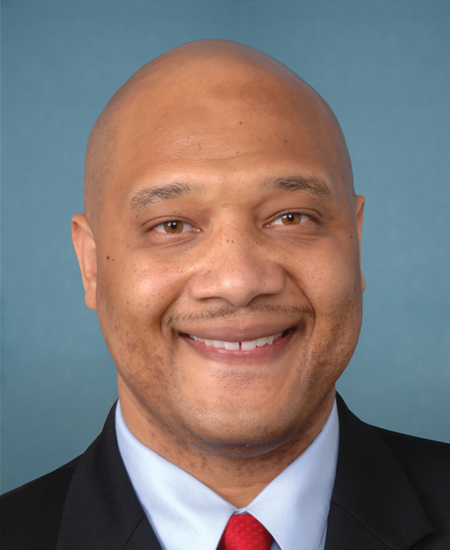
Rep. André Carson
Sponsored bills
Maddy summaryThis bill designates the Museum of the Blind People’s Movement (currently located at the National Federation of the Blind Jernigan Institute in Baltimore, Maryland) as the National Museum of the Blind People’s Movement. It formally recognizes the museum, operated by blind individuals, as the first national institution dedicated to preserving and showcasing the history of blind people’s contributions and struggles in the U.S. The museum already collects artifacts, documents, and literature documenting the blind community’s collective achievements and civil rights efforts since the 1940s. The bill’s key provision is this official congressional designation, elevating the existing museum as a national platform for education and awareness about blind people’s movement.
Maddy summaryThis bill (HR 6469) requires the U.S. State Department, in coordination with the FCC and Treasury, to submit a report within 120 days of enactment assessing internet access options in Iran. The report must evaluate the feasibility of using direct-to-cell wireless technology to expand internet access there, including technical, security, and regulatory considerations. It also analyzes how drone-based systems and signal jamming could affect such technology, surveys Iranian telecom providers (including state ownership and foreign investment), and examines broader implications for communications freedom. The bill does not enact new policy but mandates a government review of potential technological solutions.
Maddy summaryThe Dignity for Detained Immigrants Act establishes minimum standards for detention facilities operated by the Department of Homeland Security, requiring them to follow the American Bar Association's Civil Immigration Detention Standards. It mandates annual unannounced inspections by the DHS Inspector General, with penalties including fines for noncompliant private facilities and transfers of detainees from noncompliant facilities. The bill requires DHS to publicly report on facility compliance, phase out private detention facilities over three years, and prohibit solitary confinement. It also ensures detainees have access to legal orientation, counsel, and more frequent custody review hearings. The bill directly affects all individuals detained in DHS custody, including immigrants, asylum seekers, and refugees held in facilities operated by or contracted to DHS.
Maddy summaryThis bill would protect unaccompanied children by repealing fee requirements and other provisions in the "One Big Beautiful Bill Act" that have created barriers to their access to humanitarian protections. It specifically exempts unaccompanied children from paying fees for asylum applications, employment authorization, and immigration court proceedings, and requires the government to refund fees already paid under the repealed provisions. The bill also repeals provisions allowing for summary removal of children without due process, intrusive body examinations without safeguards, and sharing of sponsor information with immigration enforcement that has led to family separations. These changes would directly affect unaccompanied children seeking asylum or other protections in the United States, ensuring they can access legal processes without financial barriers or heightened risks of exploitation. The bill aims to uphold protections for unaccompanied children established under the William Wilberforce Trafficking Victims Protection Reauthorization Act of 2008 (TVPRA).
Maddy summaryThis bill creates several tax credits to increase housing affordability for individuals and families. It establishes a first-time homebuyer credit of up to $25,000 (or $50,000 for first-generation homebuyers) for purchasing a principal residence, with income limits based on household size. It also creates a starter home construction credit for building homes under 1,200 square feet priced below 80% of local median home prices, and a renter tax credit for tenants paying more than 30% of their income in rent. Additionally, it provides a credit for converting non-residential buildings to affordable housing that meets specific income and rent restrictions. The bill includes provisions for inflation adjustments and reporting requirements for these tax credits.
Maddy summaryThe "No Robot Bosses Act" (HR 6371) prevents employers from making final employment decisions (like hiring, firing, or promotions) using automated systems without human oversight. It requires companies with 11+ employees to test these systems for bias against protected groups, explain how they work in plain language to workers, and provide opportunities for workers to dispute automated decisions through human review. The bill creates a new Technology and Worker Protection Division within the Department of Labor to enforce these rules and requires annual public reports on bias testing. It also includes strong whistleblower protections for workers who report violations. The law applies to most employers but excludes certain government entities and labor organizations acting in their representative capacity.
Maddy summaryHR 6406, the Parental Workforce Training Act, provides federal grants to local workforce boards to help parents cover childcare costs while participating in job training programs. It directly affects parents with dependent children who are enrolled in employment and training activities under the Workforce Innovation and Opportunity Act (WIOA). The bill authorizes $10 million in funding to award competitive grants, allowing local boards to provide direct childcare subsidies to eligible individuals through their chosen providers (as long as they meet state/local quality standards). Local boards must report on participant enrollment and program completion rates within one year of grant implementation. This is a concrete policy change establishing a new childcare support mechanism within existing workforce programs.
Maddy summaryHR 6391, the Save Oak Flat from Foreign Mining Act, repeals Section 3003 of the 2014 National Defense Authorization Act that would have transferred Oak Flat (2,422 acres in Arizona’s Tonto National Forest) to Resolution Copper for mining. The bill withdraws Oak Flat from all public land use, preventing the foreign-owned mining venture (Rio Tinto/BHP) from extracting copper beneath the site for export to China. It directly protects the area, which is a sacred site for Indigenous peoples and a National Register Historic Property, from a mine projected to consume 250 billion gallons of groundwater over 40 years and cause significant land subsidence. The bill halts a process that would have allowed foreign corporations to mine copper from public land without requiring domestic smelting or benefiting U.S. consumers.
Maddy summaryThis bill establishes a new interagency Task Force to dismantle foreign scam operations targeting Americans, particularly through "pig butchering" scams in Southeast Asia. The Task Force, chaired by the Secretary of State, will coordinate efforts across multiple agencies to shut down scam centers, impose sanctions on perpetrators, and support victims of trafficking. It requires a detailed strategy within 180 days and annual reports to Congress on progress, including sanctions imposed and funds recovered. The bill authorizes $30 million for these efforts in fiscal years 2026-2027, focusing on countries like Cambodia, Laos, and Burma where scam centers operate with forced labor.