Maddy summaryThe Transit Workforce Development Act expands how federal grants for buses and bus facilities can be used for workforce training. It increases the portion of these grants that transit agencies can dedicate to workforce development from 5% to 10% of the allocated funds. Additionally, the bill broadens the types of training eligible for these funds, allowing them to cover all buses, related equipment, and facility construction,
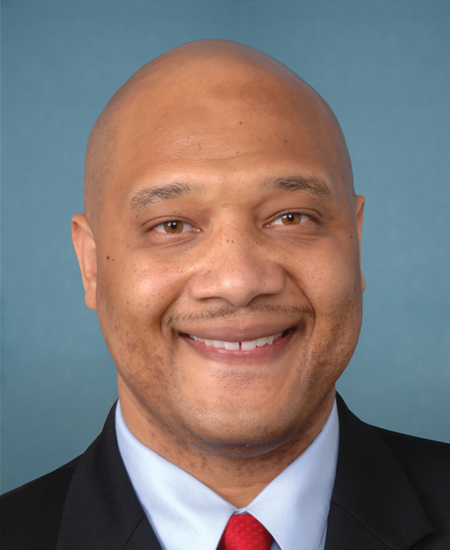
Rep. André Carson
Sponsored bills
Maddy summaryThe YouthBuild for the Future Act aims to strengthen and expand the existing YouthBuild program, which provides education and job training to young people. The bill increases authorized funding for the program and creates a new grant program to foster partnerships between YouthBuild programs and employers, aiming to develop more employment opportunities for participants. It reserves a portion of increased funds for rural areas and programs serving Native American, Alaska Native, and Native Hawaiian communities. Furthermore, the bill expands the types of supportive services YouthBuild programs can offer, including meals and assistance with applying for federal and state benefit programs.
Maddy summaryThis resolution expresses support for recognizing April as National Arab American Heritage Month to celebrate the heritage and culture of Arab Americans in the United States. The bill directly affects Arab American communities and encourages the public to observe the month with programs and activities that highlight their contributions to American society. It acknowledges Arab Americans' historical and ongoing contributions across various fields including science, arts, public service, and civil rights, while noting that 47 states and numerous local jurisdictions have already recognized the month. The resolution urges the people of the United States to observe National Arab American Heritage Month with appropriate programs and activities that recognize and celebrate the unique contributions of Arab Americans.
Maddy summaryThis resolution commemorates the fifth anniversary of the April 15, 2021, mass shooting in Indianapolis that killed eight people, including four members of the Sikh community, and denounces anti-Asian hate and xenophobic rhetoric. It formally condemns violence and discrimination against South Asian Americans, Arabs, Hindus, Muslims, and Sikhs, while also criticizing white supremacist ideology and anti-immigrant policies. The bill calls for expanded federal hate crime data collection and prevention programs, restoration of immigration processing, and reaffirms the government's commitment to protecting civil rights. As a House resolution, it expresses congressional sentiment and recommendations rather than enacting new laws or regulations.
Maddy summaryThe Supporting VA Families Act grants unpaid parental leave to Department of Veterans Affairs employees. This provision allows employees to take four weeks of unpaid leave within a 12-month period for the birth of a child or for adoption and foster care placements. The leave is designed to supplement existing leave policies rather than replace them, ensuring employees can balance family needs with their work responsibilities. The act defines eligible employees and children according to existing federal definitions found in Title 5 of the United States Code.
Maddy summaryThe ALERT Act (HR 7613) requires the Federal Aviation Administration to improve aviation safety through several key measures. It mandates the evaluation and potential implementation of enhanced collision avoidance systems (ACAS-Xa) for commercial aircraft and ACAS-Xr for rotorcraft, with specific deadlines for rulemaking and installation. The bill establishes committees to develop recommendations for safety technology requirements, requires safety risk assessments for air traffic controllers, and addresses operational procedures at high-traffic airports like Ronald Reagan Washington National. These provisions affect air carriers, air traffic controllers, rotorcraft operators, and Department of Defense aircraft operations. The act aims to enhance situational awareness and reduce midair collision risks through technology upgrades and improved safety protocols.
Maddy summaryThis bill establishes a 17-member Commission on Presidential Capacity to Discharge the Powers and Duties of the Office. This commission, composed primarily of medical professionals and former high-ranking executive officials, would be activated by a concurrent resolution of Congress. Its duty would be to conduct a medical examination of the President to determine if they are mentally or physically unable to discharge the powers and duties of the office due to conditions such as illness, disability, or substance use. Following the examination, the commission would report its findings and a declaration on the President's capacity to Congress and the Vice President, with any refusal by the President to undergo examination taken into consideration.
Maddy summaryThis bill, titled the "Biotechnology for All High School Students Act," aims to expand biotechnology education for secondary school students across the United States. It authorizes a competitive grant program for eligible entities, such as schools, colleges, and non-profit organizations, to support new and existing biotechnology education initiatives. Funds from these grants can be used for purposes like professional development for teachers, developing curricula, acquiring laboratory equipment, establishing partnerships, and creating transferable biotechnology credentials for students. The bill also establishes a National Biotechnology Education Consortium to provide support and recommendations for these programs, promoting coordination and resource sharing among various stakeholders.
Maddy summaryThis bill, known as the OHH SNAP Act of 2026, would expand eligibility for the Supplemental Nutrition Assistance Program to include more college students. It directly affects students who are working while attending college or have no financial aid available. The key changes allow students with zero financial aid and those classified as independent to qualify for SNAP benefits, while also broadening the definition of eligible work activities to include attending school. These provisions would take effect 180 days after the bill is signed into law, but would not apply to certification periods that began before that date.
Maddy summaryThe Books Save Lives Act requires public libraries and schools receiving federal funding to maintain diverse book collections that include works by and about members of underrepresented communities. It mandates that covered schools employ trained librarians and establishes that excluding books with a disparate impact on underrepresented groups serves as initial evidence of discrimination under existing civil rights laws. Additionally, the bill directs the Comptroller General to produce a report within 180 days on how recent book ban campaigns have affected underrepresented communities. The legislation defines underrepresented communities to include racial and ethnic minorities, LGBTQ+ individuals, religious minorities, and people with disabilities.