

Maddy summaryThe PLAN Act of 2026 directs the Secretary of Health and Human Services to launch a public education campaign encouraging Americans to plan for future long-term care needs. This initiative will use various media channels, including television, social media, and community partnerships, to provide objective information about care options and financial planning tools. The bill specifically targets working-age adults, family caregivers, and low-to-middle-income individuals who might struggle to afford care later in life. Additionally, the legislation requires the government to submit annual reports to Congress detailing the campaign's progress and reach. Funding for these educational activities will be drawn from existing appropriations under the Older Americans Act.
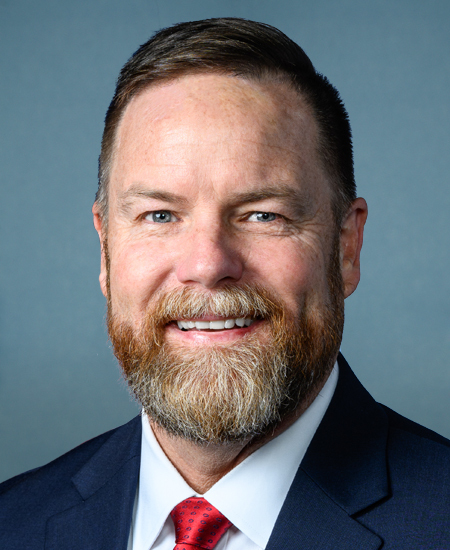
Rep. Aaron Bean
Sponsored bills
Maddy summaryThe Critical Mineral and Extraction Tax Parity Act expands a federal tax credit for advanced manufacturing to include eleven new critical minerals, such as boron, copper, and uranium, while also adding specific rules for phosphate. It allows companies that extract ore in the United States to claim these credits for the extraction costs themselves, provided they certify that the ore is refined into a qualifying mineral and sold to an unrelated buyer. Additionally, the bill removes a previous penalty that reduced tax credit amounts for metallurgical coal, ensuring these materials receive the same financial support as other critical minerals. These changes are designed to encourage domestic production and processing of essential raw materials and will take effect for minerals produced and sold after December 31, 2025.
This resolution expresses support for police officers and other law enforcement personnel. The resolution further recognizes law enforcement officers across the United States in the pursuit of preserving safe and secure communities; the need to ensure that such officers have the equipment, training, and resources necessary to protect their health and safety while they are protecting the public; and the law enforcement community for acts of sacrifice and heroism. The resolution expresses condolences and appreciation to the loved ones of each law enforcement officer who has made the ultimate sacrifice in the line of duty.
Maddy summaryThis bill would amend federal law to strengthen penalties for organized retail crime by expanding definitions of theft to include digital goods, gift cards, and setting a $5,000 aggregate value threshold for charges over a 12-month period. It would establish a new "Organized Retail and Supply Chain Crime Coordination Center" under Homeland Security to coordinate Federal, State, local, and Tribal law enforcement efforts against cross-jurisdictional theft groups. The Center would share information with retailers, transportation companies, and law enforcement agencies, track crime trends, and produce annual reports on organized retail crime. This legislation directly affects retailers, supply chain businesses, and law enforcement agencies, while targeting organized crime groups responsible for a 93% increase in larceny incidents and rising safety concerns for retail employees. The bill aims to address significant financial losses and supply chain disruptions noted in the National Retail Federation's 2023 data.
Maddy summaryThe Connected Vehicle Security Act of 2026 restricts the importation, sale, and manufacture of vehicles and related technology from specific countries, including China, Russia, Iran, and North Korea, to address national security concerns. The law defines prohibited items as connected vehicles, their software, and hardware components and sets different effective dates, with vehicle bans starting in 2027 and hardware restrictions beginning in 2030. A government official can grant exceptions for specific items after reviewing security risks and notifying Congress, while the agency must publish annual reports on enforcement actions and compliance.
Maddy summaryThis resolution expresses support for designating the week of May 3 through May 9, 2026, as Tardive Dyskinesia Awareness Week. It aims to increase public understanding of tardive dyskinesia, a movement disorder that can affect people taking long-term medications for mental health or gastrointestinal issues. The bill encourages individuals across the United States to learn more about the condition, which impacts approximately 600,000 people but often goes undiagnosed. By raising awareness, the House hopes to promote better monitoring and treatment for those living with this condition.
Maddy summaryThis bill requires federal agencies to analyze indirect economic costs on small businesses when creating new rules, including costs affecting businesses that interact with regulated entities (like suppliers or partners). It creates a new process allowing small businesses to petition the Small Business Administration's Chief Counsel to review agency certifications claiming a rule won't significantly impact them. Agencies must then provide detailed cost analyses, publish guidance online for small business feedback, and face penalties if they fail to cooperate with reviews. The bill does not change existing regulations but adds new review steps for small business input.
Maddy summaryThe Save America's Family Forests Act of 2026 provides tax incentives to encourage landowners to replant forests damaged by natural disasters. It increases the standard tax deduction for routine reforestation projects from $10,000 to $30,000 per property and adjusts these amounts annually for inflation. Additionally, the bill allows a special deduction of up to $1 million for expenses related to replanting trees destroyed by federally declared disasters, with specific rules to prevent double-dipping with other tax benefits. These financial benefits are designed to help taxpayers recover costs and promote forest regeneration without changing the underlying laws governing disaster relief or timber management.
Maddy summaryThe PRIMATE Act prohibits the importation of live nonhuman primates into the United States, with specific exceptions for accredited zoos and aquariums. Under this law, importers must certify that these animals will not be used for experiments, testing, or breeding for such purposes. U.S. Customs and Border Protection will deny entry to shipments containing these animals, and violators face civil penalties of up to $50,000 per violation or forfeiture of the animals. The Department of the Treasury is required to issue detailed regulations to enforce these rules within one year of the bill's enactment.
Equal Representation Act This bill requires that the statement sent by the President to Congress after the decennial census indicating the number of persons in each state exclude noncitizens. (This statement is the basis for reapportionment of U.S. Representatives.) The bill also requires any questionnaire used in the decennial census to include a checkbox or other similar option for respondents to indicate whether the respondent and each household member is (1) a U.S. citizen, (2) a U.S. national but not a citizen, (3) a non-U.S. national ( alien under federal law) lawfully residing in the United States, or (4) a non-U.S. national unlawfully residing in the United States. The Department of Commerce must make public the number of persons in each state, disaggregated by each of these four categories.