Moms Matter Act This bill establishes two grant programs to address maternal mental health conditions and substance use disorders, with a focus on racial and ethnic minority groups. First, the Substance Abuse and Mental Health Services Administration must award grants for maternal behavioral health services. Eligible grantees include state, tribal, and local governments; health care providers; and organizations that serve pregnant and postpartum individuals. Second, the Department of Health and Human Services may award grants to grow and diversify the maternal mental and behavioral health workforce by establishing or expanding schools and training programs.
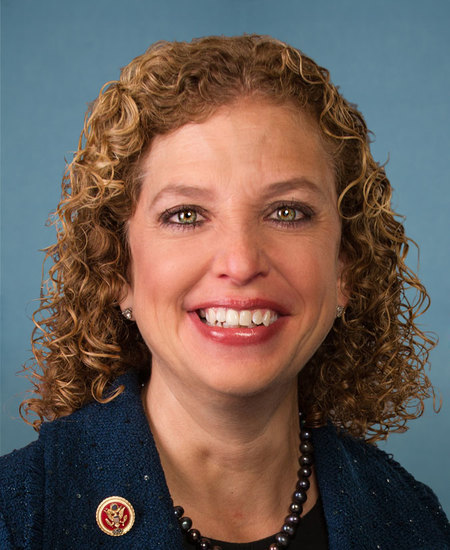
Rep. Debbie Wasserman Schultz
Sponsored bills
Horse Transportation Safety Act of 20 21 This bill prohibits a person from transporting a horse in interstate commerce in a motor vehicle (except a vehicle operated exclusively on rail or rails) containing two or more levels stacked on top of one another. The bill prescribes civil penalties for knowing violations of such prohibition.
Tech to Save Moms Act This bill supports the use of technology to improve, and address disparities in, maternal health outcomes. Specifically, the Center for Medicare and Medicaid Innovation may test telehealth models to screen and treat common pregnancy-related complications for Medicaid enrollees. In addition, the Department of Health and Human Services must award grants to evaluate and expand the use of technology-enabled collaborative learning models by entities that provide services to pregnant and postpartum individuals in medically underserved areas or from certain populations, and reduce racial and ethnic disparities in maternal health outcomes by increasing access to digital tools. The National Academies of Sciences, Engineering, and Medicine must also study the use of technology in maternal health care.
Innovative Maternal Payment And Coverage To Save Moms Act or the IMPACT to Save Moms Act This bill requires the Centers for Medicare & Medicaid Services to establish the Perinatal Care Alternative Payment Model Demonstration Project to allow states to test payment models for maternity care, including postpartum care, under Medicaid and the Children's Health Insurance Program (CHIP). Additionally, the Medicaid and CHIP Payment and Access Commission must report on specified information relating to the continuity of coverage for pregnant and postpartum women under Medicaid and CHIP.
American Family Act of 2021 This bill modifies the child tax credit to (1) make the credit fully refundable, (2) increase the amount of the credit and allow an additional credit for children who are under six years of age, (3) require the amount of the credit to be adjusted annually for inflation, and (4) require the Department of the Treasury to establish a program for making advance payments of the credit on a monthly basis.
This resolution expresses the sense of the House of Representatives that the U.S. Postal Service should continue door delivery for all customers.
This resolution removes Representative Marjorie Taylor Greene from the House Committee on the Budget and the House Committee on Education and Labor.
Family and Medical Insurance Leave Act or the FAMILY Act This bill entitles every employee to a family and medical leave insurance (FMLI) monthly benefit payment of two-thirds of the employee's regular pay, limited to a maximum of $4,000, for not more than 60 days of qualified caregiving. The bill establishes the Office of Paid Family and Medical Leave within the Social Security Administration to administer the FMLI program. An FMLI benefit payment must be coordinated with any periodic benefits received under a state or local temporary disability insurance or family leave program. The bill imposes a tax on employers, employees, and self-employed individuals to fund FMLI benefits. It also establishes the Federal Family and Medical Leave Insurance Trust Fund to hold tax revenues.
Scientific Integrity Act This bill revises provisions regarding the release of scientific research results by federal agencies. Each agency that funds, conducts, or oversees scientific research must (1) adopt and enforce a scientific integrity policy that includes requirements such as that scientific conclusions are not based on political considerations, and (2) submit such policy to the Office of Science and Technology Policy (OSTP) for approval. Each agency must make such policy available to the public and submit such policy to Congress. Agencies and the OSTP must periodically review the policies. The Government Accountability Office shall review implementation of the policies. Each agency shall (1) appoint a Scientific Integrity Officer, (2) establish a process for dispute resolution consistent with the scientific integrity policy, and (3) establish a specified training program for current and new employees.
FEMA Climate Change Preparedness Act This bill requires the Federal Emergency Management Agency (FEMA) to (1) revise its 2018-2022 Strategic Plan to ensure that the plan explicitly mentions climate change and addresses the implications of climate change on homeland security and near- and long-term national disaster risk, and (2) ensure that future strategic plans do likewise. The Department of Homeland Security must establish, as a subcommittee of the National Advisory Council, the Climate Change Subcommittee, which shall advise FEMA on how to best incorporate climate change, including risk assessments and strategies for adaptation and mitigation, into and throughout FEMA's policies, plans, programs, and operations. FEMA must publish as a report, submit to specified congressional committees, and make available to Congress and the public, a comprehensive assessment of climate change risks and preparedness.