Maddy summaryThis resolution expresses support for National Public Lands Day and encourages Americans to visit public lands on a designated fee-free day. It highlights the significant role these areas play in supporting rural economies, preserving biodiversity, and providing cultural and spiritual value. The text notes that public lands generate substantial economic output and employment while serving as hubs for outdoor recreation.
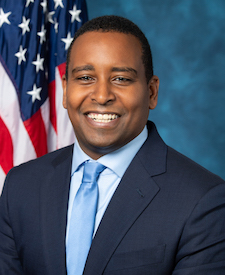
Rep. Joe Neguse
Sponsored bills
Maddy summaryHR 5334, the SEED Act of 2025, expands the existing educator expense deduction under federal tax law to explicitly include early childhood educators. It revises the Internal Revenue Code to cover expenses for "early childhood educators" and broadens the educational levels affected to include "pre-kindergarten through grade 12." This change allows early childhood educators (such as preschool teachers) to deduct work-related expenses like classroom supplies and professional development costs, which they previously could not claim under the existing deduction for "kindergarten through grade 12" teachers. The amendment applies to expenses incurred in taxable years beginning after December 31, 2024.
Maddy summaryThis bill, known as the Bankruptcy Threshold Adjustment Act of 2026, raises the maximum debt amounts individuals and small businesses can owe while still being eligible to file for Chapter 13 bankruptcy. For small businesses, it increases the debt limit from $2,750,000 to $7,500,000, while for individual consumers, it raises the limit from $483,000 to $2,750,000. The changes apply to cases filed on or after the bill becomes law and affect people who meet the income requirements for Chapter 13 repayment plans. The bill excludes large corporations and certain affiliated business groups from the new higher limits.
Maddy summaryThis bill reauthorizes the federal Snow Water Supply Forecasting Program through 2031, updating its focus to integrate advanced technologies for more accurate snowpack measurement and water supply forecasting. It specifically requires the use of commercially available technologies like airborne laser altimetry, imaging spectroscopy, and physics-based modeling to provide real-time, spatially complete data. The program must now emphasize activities that improve forecasting responsiveness to changing conditions, integrate data with water management decisions (including interstate disputes), and build partner capacity in key river basins. The changes directly affect federal water management agencies and Western states relying on snowmelt for water supply planning.
Maddy summaryThe Environmental Health Restoration Act of 2026 requires the EPA to reinstate specific environmental regulations that were weakened or repealed after January 19, 2025, including standards for greenhouse gas emissions from power plants and vehicles, methane pollution from oil and gas operations, and hazardous air pollutants. The bill prohibits federal officials from delaying or weakening these rules without explicit congressional approval and mandates the restoration of scientific advisory bodies, peer-reviewed decision-making processes, and the use of a specific social cost of carbon value in regulatory calculations. Additionally, it directs the agency to restore environmental justice programs, prioritize enforcement in communities with disproportionate pollution burdens, and conduct public health impact assessments for new regulations. To ensure compliance, the legislation authorizes approximately $11 billion annually for EPA operations, requires annual reporting on enforcement activities, and grants individuals the right to sue the agency if it fails to meet these legal obligations.
Maddy summaryThe 9-8-8 Implementation Act of 2026 expands federal funding and mandates insurance coverage for behavioral health crisis services, directly affecting individuals experiencing mental health or substance use emergencies as well as the providers who serve them. The bill authorizes grants to upgrade local lifeline call centers, build new crisis stabilization facilities, and train a larger workforce of behavioral health professionals. It requires Medicare, Medicaid, private group health plans, TRICARE, and other federal insurance programs to cover crisis response services with financial terms no more restrictive than standard medical care. Additionally, the legislation establishes a federal panel to develop training protocols for 9-1-1 dispatchers to better connect callers to appropriate crisis care rather than law enforcement responses.
Maddy summaryHR 6152, the Foreign Robocall Elimination Act, establishes an interagency task force to address foreign robocalls entering the United States. The task force, composed of the FCC, FTC, DOJ, and private sector representatives, will study the origins, impacts, and potential solutions to foreign robocalls and must submit a report to Congress within 360 days. The bill also modifies existing law to require FCC notices about robocall mitigation every three years instead of annually, and introduces a bond requirement for providers using the Robocall Mitigation Database. This legislation affects telecommunications providers, federal agencies, and all U.S. telephone users who receive unwanted calls. The bill aims to improve coordination between U.S. agencies and foreign countries in combating illegal robocalls through concrete policy changes.