

Older Americans Act Reauthorization Act of 2025 This bill reauthorizes through FY2030, modifies, and establishes programs under the Older Americans Act, which supports social services and activities for individuals aged 60 years or older. Reauthorized programs and activities include the national eldercare locator service; regional aging and disability resource centers; grants to support counseling and assistance on pensions and other retirement benefits; grants to support home-delivered nutrition services (sometimes referred to as meals on wheels programs); programs to facilitate the delivery of supportive services to tribal organizations; and programs to prevent elder abuse, neglect, and exploitation. The bill also modifies existing programs for older individuals, including by explicitly permitting states to use certain grant funds to make carryout meals available at congregate meal sites or community locations. (Some providers began offering carryout meals to seniors in response to the COVID-19 pandemic.) Further, the bill permits the Administration on Aging to establish and operate, through grants to or contracts with eligible entities, a national resource center to support growth of the direct care workforce. The center’s activities may include the provision of training and technical assistance and the promotion of strategies to recruit and retain direct care workers. Finally, the bill establishes or reconvenes certain advisory groups, including (1) an advisory committee to provide guidance regarding the needs of older Native Americans and the implementation of related programs, and (2) a White House Conference on Aging to recommend improvements to federal programs that serve older individuals.
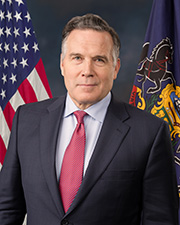
Sen. David McCormick
Sponsored bills
Maddy summaryThe Protecting American Taxpayers Act is a comprehensive bill designed to combat government fraud, recover misused funds, and strengthen oversight across various federal programs. It directly affects federal agencies, state governments administering public assistance, small businesses, veterans, and contractors by imposing new reporting requirements, extending statutes of limitations for fraud cases, and restricting financial assistance to entities linked to foreign agents or the Taliban. Key mechanisms include requiring child care payments to be based on recorded attendance rather than enrollment, mandating investigations into sudden spikes in health care spending, prohibiting small businesses with convicted fraudsters from receiving loans, and creating a new officer within the Department of Veterans Affairs dedicated to scam prevention. Additionally, the legislation rescinds unspent pandemic-era funds for deficit reduction, expands whistleblower protections for defense and non-defense contractors, and establishes stricter rules against transferring public assistance money abroad via remittance transfers.
Maddy summaryThe Farmers and Ranchers Relief Act of 2026 aims to simplify the permitting process for landowners by changing how federal rules regarding the discharge of dredged or fill material are interpreted. Specifically, the bill directs regulators to broadly allow discharges that do not harm fish or wildlife while strictly limiting the ability to revoke permits later. By amending the Clean Water Act, the legislation seeks to reduce the number of required permits for agricultural and ranching activities involving earth-moving or water management. These changes are intended to provide more flexibility for farmers and ranchers without altering the underlying environmental protections of the law.
Maddy summaryThe Opening Programs to Organic Farms Act requires the Department of Agriculture to conduct a comprehensive study on the obstacles preventing certified organic farms and those transitioning to organic production from accessing USDA programs. This report must detail specific barriers related to eligibility, funding, paperwork, and staff knowledge, along with data on application and approval rates. Following the initial study, the Secretary of Agriculture must submit annual updates for three years to track progress on removing these hurdles and propose any necessary legal changes. The bill directly affects organic farmers and the USDA agencies responsible for administering agricultural support programs.
Maddy summaryThis concurrent resolution directs the U.S. Congress to hold a joint session in Philadelphia, Pennsylvania, on July 2, 2026, to commemorate the 250th anniversary of the Declaration of Independence. The bill requires both the House of Representatives and the Senate to meet at Independence National Historical Park, marking a rare occasion where Congress convenes outside the nation's capital. The legislation cites Philadelphia's historical significance as the site of the Continental Congress, the Constitutional Convention, and the signing of the Declaration of Independence as the basis for this event.
Maddy summaryThe American Energy and Mineral Infrastructure Act of 2026 streamlines the permitting process for natural gas pipelines and other energy projects by designating the Federal Energy Regulatory Commission as the sole lead agency for environmental reviews and establishing strict deadlines for federal and state agencies to complete their portions of the review. The bill also modifies water quality laws to reduce the number of required certifications for discharges into navigable waters, extends the validity of certain nationwide permits for dredged or fill material from five to ten years, and creates a new fund to address abandoned hardrock mines. Additionally, the legislation updates the National Environmental Policy Act to limit the scope of environmental reviews to effects directly caused by a project, impose specific timelines for agency decisions, and restrict the ability of courts to issue injunctions that would halt construction while legal challenges are pending.
Maddy summaryThis bill directs the Department of Defense to conduct a comprehensive assessment of open-architecture command and control systems for unmanned aircraft, specifically analyzing frameworks used by Ukraine and Israel to improve interoperability and resilience. The evaluation will examine technical designs, cybersecurity measures against electronic warfare, and the ability of these systems to adapt quickly at the tactical level without requiring constant software updates. To guide this process, the Secretary of Defense must establish an independent advisory panel of experts to review findings and recommend a new, flexible system that avoids reliance on specific foreign vendors or prohibited foreign entities. The resulting report will outline a phased implementation plan and set strict cybersecurity standards, including regular penetration testing and a living process to update security rules as threats evolve. Additionally, the bill requires sharing relevant findings with the Federal Aviation Administration to support the integration of military and civil drone operations in shared airspace.
Maddy summaryThe Risk-based Oversight for Integrity Act directs the U.S. Department of Agriculture to study and potentially reform how it oversees the organic food industry. This study will examine whether inspections and regulations should be adjusted based on the risk that a farm or business might violate organic standards, considering factors like the size of the operation and its past compliance record. If the study finds it beneficial, the Act allows the Secretary to create new rules that could reduce inspection burdens for low-risk entities while focusing more resources on high-risk ones. Additionally, the legislation permits the use of virtual inspections for some domestic operations, provided that on-site checks still occur at least once every three years. The proposed changes aim to maintain strong organic integrity while improving efficiency within the national organic program.
Maddy summaryThis bill restricts how nonmilitary foreign assistance funds can be used by prohibiting organizations from supporting abortion, gender ideology, or discriminatory equity ideology outside the United States. It requires recipients of these funds to agree not to provide or promote these specific activities, mandates that U.S. organizations keep their foreign aid programs physically and financially separate from such work, and allows the Secretary of State to require foreign governments to place funds in segregated accounts to prevent misuse. The legislation defines prohibited concepts narrowly, such as defining sex strictly by biological classification and limiting exceptions for abortion to cases where a woman's life is in immediate danger. While the rules apply to foreign and international organizations receiving U.S. aid, U.S.-based nonprofits are exempt from the ban on providing these services domestically but must still ensure their foreign-funded projects do not engage in them.
Maddy summaryThe Regional Export Promotion Act of 2026 directs the Export-Import Bank to partner with local governments and nonprofit organizations to help businesses in specific U.S. regions expand their exports. A key provision establishes a five-year pilot program that prioritizes working with entities serving small businesses, such as community banks, minority depository institutions, and chambers of commerce. Through this pilot, the Bank will offer specialized training, short-term insurance products, and simplified application processes to increase its reach in areas with high concentrations of small businesses. The Act also requires the Bank to submit annual reports to Congress detailing the program's progress, including the number of new partners and the volume of products used by small businesses.