

Maddy summaryS 427 (TAILOR Act of 2025) requires federal banking regulators (like the Federal Reserve and FDIC) to adjust rules based on each financial institution’s specific risk level and business model, rather than applying uniform regulations. It directly affects all federally regulated banks, particularly community banks, by limiting unnecessary regulatory burdens like costly reporting. Key provisions include tailoring rules to minimize costs (e.g., reducing reporting requirements for community banks eligible under the Community Bank Leverage Ratio, as specified in Section 3), documenting this tailoring in rulemaking notices, and submitting annual reports to Congress on implementation. The bill aims to modernize supervision while preserving flexibility for institutions serving local communities.
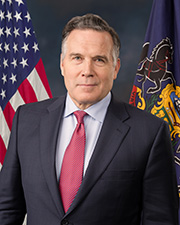
Sen. David McCormick
Sponsored bills
Maddy summaryThe Fair Access to Banking Act (S 401) prohibits large financial institutions ($10 billion+ in assets) and payment networks from denying services to lawful businesses based on political or reputational factors, such as the type of legal business they operate. It requires banks to justify denials using objective, risk-based standards instead of category-based decisions, and mandates written explanations for denials. The law enables lawsuits against violators with treble damages and civil penalties up to 10% of service value (capped at $10,000 per violation). It directly affects major banks, payment processors, and credit unions that serve large-scale customers, ensuring fair access for businesses operating within federal law.
Maddy summaryThis bill permanently prohibits U.S. foreign assistance funds from being used for abortions, involuntary sterilizations, or related biomedical research. It amends the Foreign Assistance Act of 1961 and the Peace Corps Act to block funding for organizations supporting coercive abortion or sterilization programs. The law directly affects all U.S. government programs distributing foreign aid, including international health and development initiatives. It ensures funds cannot cover abortion services as family planning, lobbying on abortion, or programs involving coercion.
Nancy Gardner Sewell Medicare Multi-Cancer Early Detection Screening Coverage Act This bill allows, beginning in 2028, for Medicare coverage and payment for multi-cancer early detection screening tests that are approved by the Food and Drug Administration and that are used to screen for cancer across many cancer types, if the Centers for Medicare & Medicaid Services determines such coverage is appropriate. Coverage is limited to those under a certain age (age 68 in 2028, increased by one year every year thereafter) and to one test every 11 months.
Maddy summaryThis bill establishes tax credits for individuals and corporations who contribute to scholarship granting organizations that provide educational scholarships for eligible students. The individual tax credit is limited to 10% of adjusted gross income or $5,000, while corporate credits are capped at 5% of taxable income. The bill defines "eligible students" as those from households with income not exceeding 300% of the area median gross income, and specifies that scholarships can cover tuition, materials, tutoring, and educational therapies. The bill includes a $10 billion annual cap on tax credits, with a first-come, first-served allocation system, and requires scholarship organizations to meet specific financial and operational standards.
Laken Riley Act This act requires the Department of Homeland Security (DHS) to detain certain non-U.S. nationals ( aliens under federal law) who have been arrested for burglary, theft, larceny, shoplifting, assault of a law enforcement officer, or any crime that results in death or serious bodily injury to another person. The act also authorizes states to sue the federal government for decisions or alleged failures related to immigration enforcement. Under this act, DHS must detain an individual who (1) is unlawfully present in the United States or did not possess the necessary documents when applying for admission; and (2) has been charged with, arrested for, convicted of, or admits to having committed acts that constitute the essential elements of the above crimes. The act also authorizes state governments to sue for injunctive relief over certain immigration-related decisions or alleged failures by the federal government if the decision or failure caused the state or its residents harm, including financial harm of more than $100. Specifically, the state government may sue the federal government over a decision to release a non-U.S. national from custody; failure to fulfill requirements relating to inspecting individuals seeking admission into the United States, including requirements related to asylum interviews; failure to fulfill a requirement to stop issuing visas to nationals of a country that unreasonably denies or delays acceptance of nationals of that country; violation of limitations on immigration parole, such as the requirement that parole be granted only on a case-by-case basis; or failure to detain an individual who has been ordered removed from the United States.
Maddy summaryThis concurrent resolution expresses Congress's sense that tax-exempt fraternal benefit societies - organizations providing life, health, and accident benefits to members - have historically and continue to deliver significant community benefits through charitable programs, volunteer efforts, and mutual aid. It highlights their role in addressing unmet community needs, supporting financial security for members, and contributing an estimated $3.8 billion annually in social value. The resolution affirms that their tax-exempt status under section 501(c)(8) of the Internal Revenue Code is essential to sustaining these services. As a procedural resolution, it does not create new law but formally recognizes these societies' contributions.
Maddy summaryS 213, the Main Street Tax Certainty Act, makes the qualified business income deduction permanent for small business owners. It directly affects pass-through business owners (like sole proprietors and small partnerships) who currently benefit from this tax break. The bill removes the temporary expiration of Section 199A of the tax code, providing long-term certainty for these taxpayers by ensuring they can continue deducting up to 20% of their qualified business income.
No Tax Dollars for Terrorists Act This bill requires the Department of State to develop and implement a strategy to discourage foreign countries and nongovernmental organizations from providing financial or material support to the Taliban, including by using U.S.-provided foreign assistance to discourage countries and organizations from providing such support to the Taliban. The State Department must report to Congress on (1) foreign countries and nongovernmental organizations that have provided financial or material support to the Taliban and U.S. efforts to oppose such support; (2) the strategy to discourage such support and a plan for the strategy's implementation; (3) U.S.-funded direct cash assistance programs in Afghanistan; and (4) the Afghan Fund, including Taliban influence over Da Afghanistan Bank (the Afghan central bank).
Maddy summaryS 227, the PEACE Act of 2025, prohibits the use of federal education funds for curriculum, teaching, or counseling that promotes or compels specific "divisive concepts" related to race. It directly affects schools receiving federal funding under the Elementary and Secondary Education Act by banning the use of those funds for materials teaching ideas like "one race is inherently superior," that "the United States is fundamentally racist," or that individuals bear responsibility for past racial actions based solely on their race. The bill defines prohibited concepts to include race stereotyping (assigning traits to races), race scapegoating (blaming a race for problems), and claims that meritocracy is racist. This amendment to the Elementary and Secondary Education Act would require schools to avoid these specific topics when using federal education funds. The law focuses on restricting the use of federal money for certain instructional content, not on banning all discussions of race or history.