Maddy summaryThis bill amends the Foreign Agents Registration Act (FARA) to restrict exemptions for foreign agents representing certain entities. It prohibits exemptions for agents of foreign corporate or government entities owned by countries listed in the State Department's "country of concern" definition (e.g., Russia, China, Iran). The bill creates a new process requiring congressional approval via a specific joint resolution to add or remove countries from the "concern" list, with proposals submitted to designated Senate and House committees. The changes expire after 5 years from enactment. (Note: The title "PAID OFF Act" is misleading; the bill focuses on foreign influence transparency, not financial relief.)
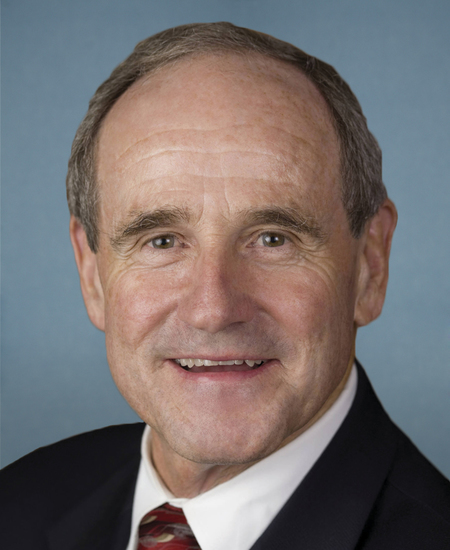
Sen. James E. Risch
Sponsored bills
Maddy summaryThis resolution designates July 25, 2026, as "National Day of the American Cowboy" to honor the historical and cultural contributions of cowboys to the United States. It encourages citizens to observe the day with ceremonies and activities that recognize the cowboy's role in establishing the American West and its enduring presence in literature, media, and the economy. The measure highlights values associated with the cowboy archetype, such as integrity, hard work, and environmental stewardship, while noting that the role transcends gender, ethnicity, and political affiliation.
Maddy summaryS 1175, the Small County PILT Parity Act, adjusts payments to small counties for federal lands under the PILT program. It lowers the population threshold from 5,000 to 1,000 for counties receiving higher per-capita payments, directly benefiting counties with populations under 1,000. The bill revises the payment formula to increase payments for these smaller counties, replacing the previous table with new rates (e.g., a 1,000-population county now gets $394.15 instead of lower amounts). This change ensures smaller counties receive fairer compensation for lost tax revenue on federal lands, without altering the overall PILT program structure.
Maddy summaryThe RAAM Act repeals federal fuel economy standards for cars and light trucks starting with the 2029 model year, removing the requirement for manufacturers to meet specific mileage targets. It also prevents states from creating their own fuel economy rules, reserving this authority exclusively to the federal government. Additionally, the bill updates legal definitions to clarify how vehicles are classified and modifies the process for challenging federal regulations in court. These changes directly affect automobile manufacturers, state governments, and consumers by eliminating federal mileage mandates and blocking state-level fuel economy laws.
Maddy summaryThis bill requires the FAA to create and maintain a public website listing medications approved for use by pilots, air traffic controllers, and aviation trainees seeking medical certification. The list must include all approved prescription and over-the-counter medications, indicate required duty limitations for certain drugs, flag medications the FAA prohibits ("Do Not Issue"), and provide clear guidance for medical providers. The FAA must develop this list with input from aviation experts, training institutions, and union representatives, and update it annually to reflect current medical standards. This directly affects aviation medical applicants by making medication safety information transparent and accessible at the time of certification.
Maddy summaryThe Hydropower Licensing Affordability Act amends the Federal Power Act to modify how federal licenses for hydropower projects are issued. It requires project operators to reasonably mitigate direct adverse effects on Indian reservations and fish populations before a license is granted. These changes aim to ensure that environmental and tribal concerns are addressed as specific conditions within the licensing process. The bill directly affects hydropower developers and the agencies responsible for reviewing and issuing federal project licenses.
Maddy summaryS 3456, the Law Enforcement Officer and Firefighter Recreation Pass Act, creates a free annual pass for eligible law enforcement officers and firefighters to use at national parks and federal recreational lands. The bill directly affects active officers and firefighters employed by federal, state, local, or tribal governments who perform duties related to crime prevention/detection or fire suppression. It amends existing law to require the Secretary to provide these passes at no cost, after verifying eligibility through proof of employment. The key mechanism is expanding the current pass program to specifically include these public safety professionals under defined roles.
Maddy summaryThis resolution honors the life and legacy of the late Senator Lindsey Olin Graham from South Carolina. It formally acknowledges his extensive career in the military, state government, and Congress, noting his service as a Senator and his roles as Chairman of the Judiciary and Budget committees. The Senate expresses its sorrow over his death and requests that this tribute be shared with the House of Representatives and Graham's family.
Maddy summaryThis bill establishes a comprehensive sanctions framework targeting the Russian government and its affiliated entities in response to ongoing military actions. It authorizes the President to block assets, revoke visas, and prohibit financial transactions for Russian officials, military leaders, and foreign persons supporting Russia's defense industry or undermining Ukraine. The legislation also bans U.S. investments in Russian energy sectors, prohibits the purchase of Russian sovereign debt, and imposes high tariffs on Russian imports while restricting crude oil purchases by specific foreign nations. Additionally, the bill prevents Russian companies from listing on U.S. stock exchanges and includes mechanisms for terminating sanctions only if Russia signs a peace agreement accepted by Ukraine and ceases hostilities.
Maddy summaryThe CLEAN Act aims to speed up geothermal energy development by requiring the Department of the Interior to lease 75 percent of nominated land parcels each year and to conduct replacement sales if a scheduled lease is canceled. It also mandates strict timelines for processing drilling permit applications, requiring officials to acknowledge receipt within 30 days and issue or defer decisions within another 30 days. These provisions directly affect the federal leasing process and companies seeking to drill for geothermal energy, ensuring that applications are reviewed quickly and that a majority of available resources are offered for lease.