Issue · Labor & Employment

Labor & Employment

Every labor & employment bill, vote, and legislator stance in Montana, automatically classified by Maddy, our AI policy reader.

Total bills
173
2025 Regular Session
Top supporter
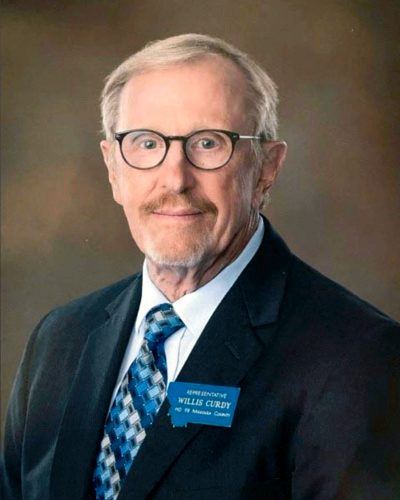
Willis Curdy
92% support rate
Top opponent
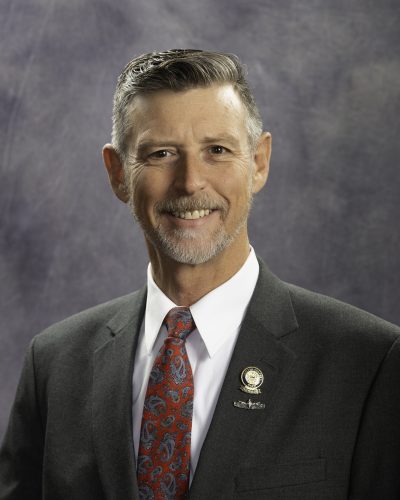
Caleb Hinkle
13% support rate
Ranked legislators
10
5 support · 5 oppose
Key legislators

Who's moving labor & employment in Montana

Legislators moving labor & employment in Montana
Legislator Party Stance Support rate Votes
Willis Curdy
Willis Curdy Senate · District 49
D
Strong +
92% 290
Pat Flowers
Pat Flowers Senate · District 31
D
Strong +
92% 288
Sara Novak
Sara Novak Senate · District 36
D
Strong +
92% 291
Dave Fern
Dave Fern Senate · District 2
D
Strong +
92% 285
Gayle Lammers
Gayle Lammers Senate · District 21
R
Strong +
91% 291
Caleb Hinkle
Caleb Hinkle House · District 68
R
Strong −
13% 261
Tom Millett
Tom Millett House · District 2
R
Strong −
17% 258
Kathy Love
Kathy Love House · District 85
R
Strong −
19% 251
Carl Glimm
Carl Glimm Senate · District 3
R
Oppose
21% 307
Jedediah Hinkle
Jedediah Hinkle House · District 67
R
Oppose
22% 255
Showing 51–60 of 173 bills

All labor & employment bills

introduced · Montana · Legislature Feb 13, 2025

LC 1653: Require state buildings to have automatic fire sprinklers or suppression systems

This bill requires all state-owned buildings in Montana to install automatic fire sprinkler or fire suppression systems. It achieves this by amending the state building code to mandate that any building owned or operated by the state must have these fire safety systems in place. The legislation directly affects state agencies and facilities that construct, renovate, or maintain state buildings. The bill does not apply to private buildings, single-family homes, or small residential buildings with two or fewer units.
introduced · Montana · Legislature Jan 28, 2025

LC 420: Provide for apprenticeship programs for certain license types

This bill requires Montana licensing boards to grant professional licenses to individuals who complete nationally recognized apprenticeship programs in specific occupations, including barbering, nursing, plumbing, and electrical work. The legislation mandates that apprenticeship applicants meet the same examination and fee requirements as those who complete traditional educational programs before seeking licensure. It authorizes relevant state boards to create rules for implementing these apprenticeship pathways and explicitly lists the professional categories eligible for this alternative training route. The law applies to over 20 different license types across multiple state boards, allowing hands-on training as a valid alternative to classroom-based education for these professions.
Sub-Topics Apprenticeships Professional Licensing Tags Licensing
introduced · Montana · Legislature Feb 18, 2025

LC 4333: Establish a right to work act

This bill, titled the Worker Freedom Act, establishes Montana as a right-to-work state by prohibiting employers from requiring employees to join or financially support a labor organization as a condition of employment. It mandates that any wage deductions for union dues must be based on written employee authorization that can be revoked at any time, and it requires employers to post notices informing workers of their freedom of choice regarding union membership. The legislation also declares illegal any agreements between employers and unions that violate these rights and imposes misdemeanor penalties with fines up to $1,000 for violations, while allowing affected individuals to seek civil damages and attorney fees. The law applies to most employers in the state but excludes federal employees, those on federal land, and industries covered by federal labor laws.
died · Montana · Legislature Jan 15, 2025

LC 1880: Revise resort tax eligibility and allow use for workforce housing

This bill modifies Montana's resort tax laws to allow an additional 1% tax rate on lodging and dining in designated resort areas, with the revenue specifically designated for infrastructure projects or workforce housing. The legislation defines workforce housing as rental properties where at least 20% of units are rent-restricted to households earning between 60% and 120% of the area median income. It also updates definitions for resort areas and communities, adjusting population thresholds and clarifying what qualifies as taxable goods and services versus exempt necessities. Local governments in resort communities and areas must still obtain voter approval before implementing or changing resort taxes, maintaining the existing requirement for public consent.
introduced · Montana · Legislature Feb 20, 2025

LC 3228: Provide for workers' compensation coverage of PTSD for first responders

This bill would allow first responders in Montana, including firefighters, law enforcement officers, and correctional facility employees, to receive workers' compensation benefits for posttraumatic stress disorder if it is diagnosed according to the American Psychiatric Association's standards and linked to their job duties. The legislation amends existing state workers' compensation laws to create a specific pathway for these claims while maintaining the requirement that the mental health condition must arise from the scope of employment. By defining "first responder" and establishing diagnostic criteria, the bill aims to provide wage-loss and medical benefits to workers who develop PTSD due to their emergency response work.
introduced · Montana · Legislature Feb 25, 2025

LC 1421: Revise labor law relating to computation of meal allowances

This bill updates Montana state law to clarify how meal allowances are calculated for employees working night shifts. It directly affects state employees who travel for work and changes the specific time windows during which they can receive meal reimbursements based on their shift schedule. Under the new rules, night-shift workers would be eligible for different meal allowance periods, including an early morning allowance between 3:01 a.m. and noon, while also limiting the number of allowances they can receive based on the length and timing of their travel. The legislation also maintains special provisions for appointed members of state boards and committees attending meetings, while excluding legislative committee members during active sessions.
Sub-Topics Labor Standards
introduced · Montana · Legislature Dec 30, 2024

LC 567: Generally revise public sector unions law

This bill revises Montana's labor laws to restrict how public sector employees and their unions can use public resources for union activities. It prohibits government agencies from using public funds to support labor organizations and bars public employees from receiving paid time off for union work, except under specific conditions where unpaid leave is allowed or personal leave is used with strict oversight. The law also requires detailed reporting and reimbursement processes when employees use compensated leave for representational activities, ensuring public funds are not indirectly used for union purposes. Additionally, the bill updates existing rules of conduct for public officers and employees to further clarify restrictions on using public resources for private or organizational business.
introduced · Montana · Legislature Jan 8, 2025

LC 1667: Revise alcohol laws related to responsible server and sales training

This bill updates Montana's alcohol training requirements by mandating that all server and sales training programs cover specific topics such as alcohol effects, legal penalties, ID checking procedures, and handling intoxicated patrons. It creates two separate training categories based on whether a workplace allows on-premises or only off-premises alcohol consumption. The bill requires that training for off-premises-only locations be completed in at least half the time needed for on-premises locations. These changes directly affect businesses that sell alcohol and the employees who work at those licensed locations.
introduced · Montana · Legislature Feb 11, 2025

LC 1664: Revise minimum wage laws to provide increases

This bill raises Montana's minimum wage to $12.06 per hour and establishes a cost-of-living adjustment mechanism that automatically updates the rate annually based on changes in the consumer price index. The law applies to most employers but maintains a $4 minimum wage for businesses with annual gross sales of $110,000 or less. The new wage rate and automatic adjustment provisions take effect on July 1, 2025, replacing the previous fixed dollar amount in state law.
introduced · Montana · Legislature Feb 13, 2025

LC 1337: Require employers to use e-verify for employment eligibility

This bill requires employers in Montana to use the federal e-Verify system to confirm the work authorization status of all new employees, with an effective date of October 1, 2025. Employers must register for an e-Verify account, submit employee information for verification within three business days of hiring, and retain verification records for the duration of employment or three years. The Montana Attorney General is given authority to investigate complaints about unauthorized workers and may impose fines ranging from $2,500 to $5,000 per violation, with potential license suspension for repeat offenders. Local governments are prohibited from passing laws that conflict with these requirements, and the bill includes protections against discrimination based on race, color, national origin, or other discriminatory factors.
Sub-Topics Work Authorization
Showing 51 to 60 of 173 bills
Previous 1 5 6 7 18 Next