Issue · Criminal Justice

Criminal Justice

Every criminal justice bill, vote, and legislator stance in Montana, automatically classified by Maddy, our AI policy reader.

Total bills
103
2025 Regular Session
Top supporter
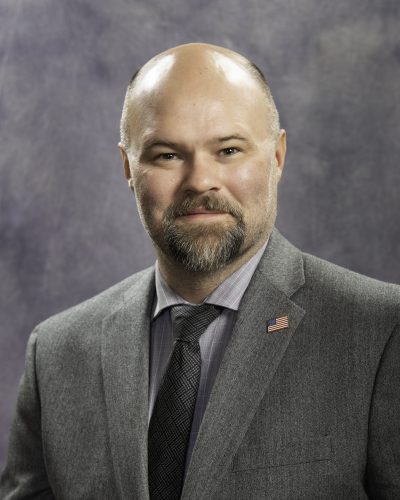
Scott Rosenzweig
73% support rate
Top opponent
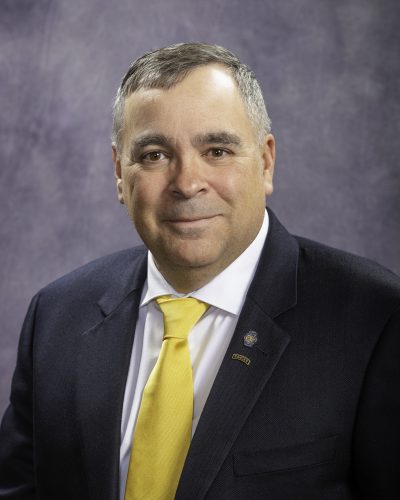
Shannon Maness
30% support rate
Ranked legislators
10
5 support · 5 oppose
Key legislators

Who's moving criminal justice in Montana

Legislators moving criminal justice in Montana
Legislator Party Stance Support rate Decisive votes
Scott Rosenzweig
Scott Rosenzweig House · District 57
D
Support
73% 113
Marilyn Marler
Marilyn Marler House · District 94
D
Support
73% 101
Tyson Running Wolf
Tyson Running Wolf House · District 16
D
Support
73% 95
Kelly Kortum
Kelly Kortum House · District 64
D
Support
73% 102
Jamie Isaly
Jamie Isaly House · District 58
D
Support
72% 102
Shannon Maness
Shannon Maness House · District 70
R
Oppose
30% 102
Braxton Mitchell
Braxton Mitchell House · District 5
R
Oppose
31% 137
Kerri Seekins-Crowe
Kerri Seekins-Crowe House · District 39
R
Oppose
33% 100
Greg Overstreet
Greg Overstreet House · District 88
R
Oppose
33% 138
Ed Byrne
Ed Byrne House · District 11
R
Oppose
34% 101
Showing 91–100 of 103 bills

All criminal justice bills

signed · Montana · House May 5, 2025

HB 102: Revise laws related to public defenders for clarity

HB 102 revises the laws governing the Office of State Public Defender, affecting its organizational structure and operations. It establishes a distinction between "conflict" and "nonconflict" regional public defender offices and updates the duties of various division administrators. Key provisions include new responsibilities for administrators in developing strategic plans, managing caseloads, and establishing policies for assigning cases based on experience and complexity, including capital cases. The bill also modifies the Central Services Division's role to include managing contracted services and agency training efforts. These changes aim to clarify how public defense services are delivered to indigent clients.
signed · Montana · House May 5, 2025

HB 475: Regulate restraints on women while giving childbirth

House Bill 475 restricts the use of physical restraints on inmates known to be pregnant during labor and delivery. It generally prohibits restraints unless there are extraordinary circumstances, such as an individualized determination that the inmate is a flight risk or poses a clear threat to themselves or others. Even in these cases, leg or waist restraints are strictly prohibited. The bill also requires that any applied restraints be the least restrictive necessary and removed when the risk is mitigated or at the request of a healthcare professional.
Sub-Topics Corrections
signed · Montana · House May 15, 2025

HB 396: Generally revise bail laws

HB 396 revises existing laws concerning bail for arrested individuals. It requires that a person must appear before a judge in a court of record before being admitted to bail, and it clarifies that interstate agreements apply in certain situations. The bill expands the criteria courts must consider when deciding whether to release or detain a defendant, adding factors like the defendant's history of absconding and the costs incurred by a government to transport them. Furthermore, it revises the factors for determining the amount of bail, including ensuring protection from bodily injury and considering a defendant's prior abscondence history.
Sub-Topics Judges
passed both · Montana · House May 6, 2025

HJ 45: Interim study on the impact collateral consequences have on criminal record expungement

HJ 45 is a joint resolution requesting an interim study in Montana on the impact of collateral consequences on criminal record expungement. The study will investigate challenges faced by individuals with expunged criminal records, particularly concerning employment and housing barriers due to existing laws, online information, and discrimination. It aims to review current expungement laws, analyze outcomes for individuals with expunged records, and examine practices in other states. The study will suggest specific changes to state law to address these barriers and report its findings to the 70th Legislature in the form of introduced legislation.
Sub-Topics Civil Rights
signed · Montana · House May 5, 2025

HB 415: Revise laws on a judge's ability to provide bail to certain defendants

HB 415 revises the laws concerning a judge's ability to admit defendants to bail. The bill specifically limits a judge's authority to grant or continue bail for individuals who have an active warrant from another jurisdiction. This means defendants with outstanding warrants from other jurisdictions will not be eligible for bail in the current proceeding.
Sub-Topics Judges
signed · Montana · House May 5, 2025

HB 612: Generally revise criminal procedure laws

HB 612 revises criminal procedure laws concerning the revocation of suspended or deferred sentences, impacting offenders who violate their probation terms. The bill mandates that if a suspended or deferred sentence is revoked, any new sentence imposed will run consecutively to an existing sentence, unless the original sentence was already running concurrently. It also outlines procedures for revocation hearings, including offender rights and the prosecution's burden of proof. Additionally, the bill defines specific types of violations, such as "absconding" and "compliance violations," and applies these provisions to all offenders facing sentence revocation.
Sub-Topics Probation & Parole
signed · Montana · House May 19, 2025

HB 117: Establish criminal justice data warehouse priorities

HB 117 establishes project priorities for the state's criminal justice data warehouse, affecting the Board of Crime Control, the Criminal Justice Oversight Council, and various state and local criminal justice agencies. It directs the Board of Crime Control to focus on tasks like creating unique identifiers to link data across agencies, acquiring specialized software for data management, and integrating more local criminal justice data. The bill also mandates regular reporting on progress to legislative committees and appropriates over $1.4 million in general funds for software, staff positions, and judicial data contributions.
died · Montana · House May 20, 2025

HB 795: Revise expungement laws to allow for certain nonviolent felony records

HB 795 proposed to expand Montana's criminal record expungement laws to include certain nonviolent felony offenses. It would have allowed individuals convicted of these offenses to petition a district court to have related arrest, investigation, and court records sealed or destroyed. To be eligible, a person would generally need to complete their sentence and remain conviction-free for 10 years, compared to 5 years for misdemeanors. The bill also specified certain offenses, like assault or DUI, for which expungement would not be presumed, and outlined factors for the court to consider. If granted, an order would direct relevant agencies to permanently seal or expunge the records.
Sub-Topics Violent Crime
died · Montana · House May 22, 2025

HB 569: Revise laws related to perjury and false swearing

HB 569 sought to revise laws related to perjury and false swearing. The bill proposed changes to the penalties for these offenses, introducing mandatory minimum jail sentences and adjusting maximum terms and fines. For perjury, the punishment would shift from state prison to county jail, while still requiring a minimum 6-month term. For false swearing, new mandatory minimums for jail time and revised fines were introduced. Additionally, the bill mandated that credible allegations of both perjury and false swearing be investigated by an agency independent of the judiciary.
Sub-Topics Sentencing
signed · Montana · House May 13, 2025

HB 718: Generally revise laws relating to incarceration

HB 718 establishes an Office of Reentry Services within the Montana Department of Labor and Industry. This office is tasked with coordinating supportive services for individuals preparing to exit or exiting incarceration and reentering communities. Its purpose is to facilitate access to programs like job training, job placement, education, housing assistance, transportation, food security, and behavioral health services. The office will collaborate with various state agencies, companies, and stakeholder organizations to achieve these goals. It also requires the department to submit regular reports to legislative committees detailing the services provided, their cost, and the number of individuals served.
Showing 91 to 100 of 103 bills