Issue · Labor & Employment

Labor & Employment (Unemployment)

Every labor & employment bill, vote, and legislator stance in Minnesota, automatically classified by Maddy, our AI policy reader.

Total bills
4
2025-2026 Regular Session
Top supporter
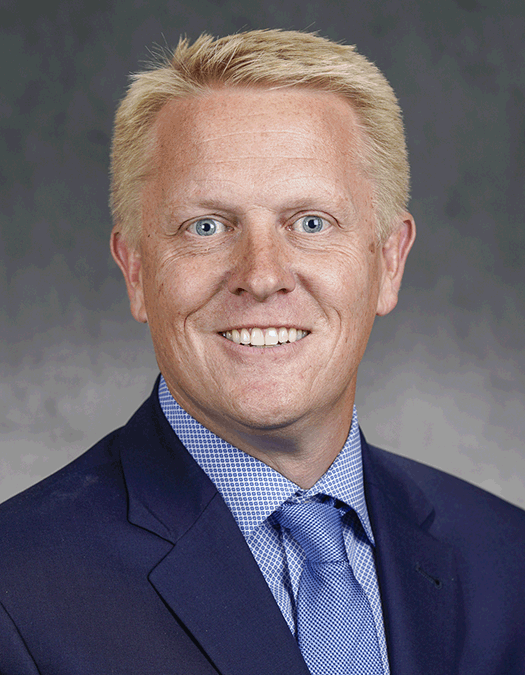
Andrew Myers
100% support rate
Top opponent
Aisha Gomez
0% support rate
Ranked legislators
10
5 support · 5 oppose
Key legislators

Who's moving unemployment in Minnesota

Legislators moving unemployment in Minnesota
Legislator Party Stance Support rate Decisive votes
Andrew Myers
Andrew Myers House · District 45A
R
Strong +
100% 4
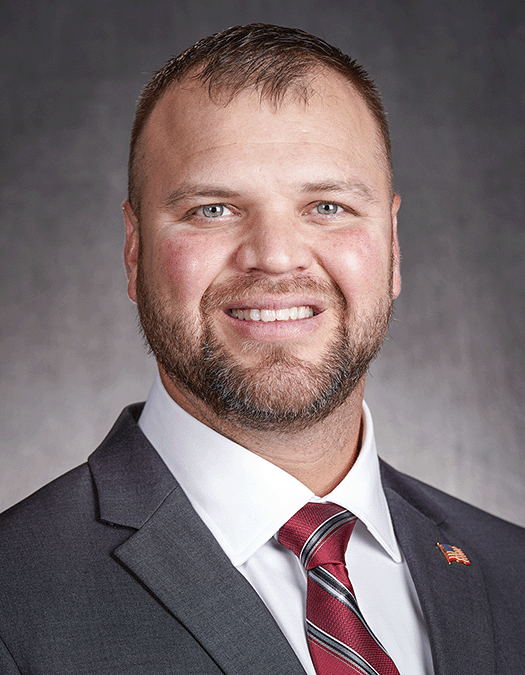
Ben Bakeberg
Ben Bakeberg House · District 54B
R
Strong +
100% 4
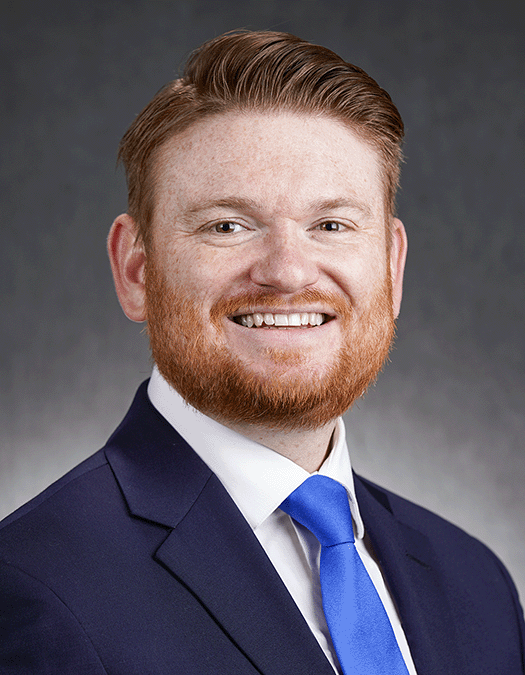
Ben Davis
Ben Davis House · District 6A
R
Strong +
100% 4
Bernie Perryman
Bernie Perryman House · District 14A
R
Strong +
100% 4
Bidal Duran
Bidal Duran House · District 2A
R
Strong +
100% 4
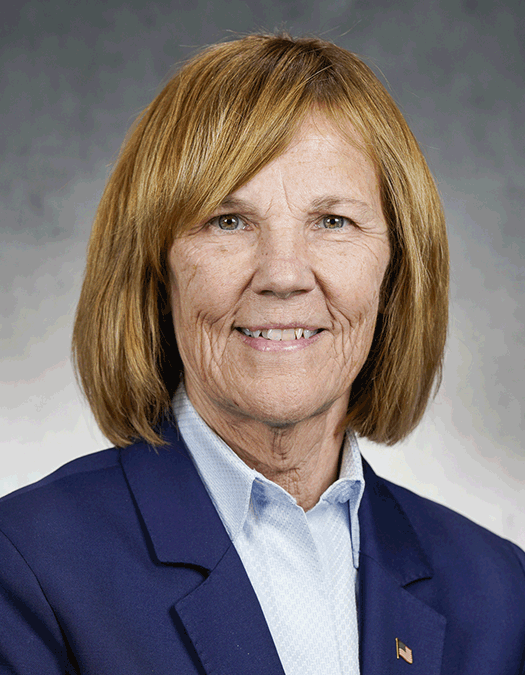
Aisha Gomez
Aisha Gomez House · District 62A
D
Strong −
0% 4
Amanda Hemmingsen-Jaeger
Amanda Hemmingsen-Jaeger Senate · District 47
D
Strong −
0% 4
Andy Smith
Andy Smith House · District 25B
D
Strong −
0% 4
Anquam Mahamoud
Anquam Mahamoud House · District 62B
D
Strong −
0% 4
Athena Hollins
Athena Hollins House · District 66B
D
Strong −
0% 4
Showing 4 of 4 bills

All labor & employment bills

in committee · Minnesota · Senate Mar 25, 2026

SF 4806: Wage credits usage by applicants employed by institutions of higher education clarification

This bill clarifies when college and university employees in Minnesota can use past wages to qualify for unemployment benefits during breaks between academic terms. It allows wage credits to be used if there is no reasonable assurance of returning to work, but restricts this for instructional, research, or administrative staff unless they have a written job offer or a contract guaranteeing 50% pay if rehiring doesn't occur. The law also defines which types of employment count as reasonable assurance and specifies that on-call work is treated differently than regular employment. These changes apply to employees at schools, colleges, universities, and related educational service agencies starting July 1, 2026.
Sub-Topics Unemployment
in committee · Minnesota · Senate Jan 27, 2025

SF 708: State loan, grant or assistance prohibition for persons convicted of offense related to protest, demonstration, rally, civil unrest, or march

SF 708 prohibits Minnesotans convicted of crimes related to protests, demonstrations, rallies, civil unrest, or marches from receiving state assistance. The bill makes such individuals ineligible for state loans, grants, or aid programs including college financial aid, housing assistance, food benefits (SNAP), unemployment benefits, business grants, and medical assistance. It applies to crimes committed on or after the effective date (the day after final enactment) and covers all state assistance programs listed in the bill. The law directly affects people convicted of offenses during these events, not protesters generally. This is a policy change to deny state aid based on specific criminal convictions related to public assemblies.
in committee · Minnesota · House Apr 1, 2025

HF 2996: Unemployment insurance; definition of available for suitable employment modified, and money appropriated.

HF 2996 modifies Minnesota's unemployment insurance rules by tightening the definition of "available for suitable employment." It requires applicants to be ready to accept work immediately if their current schedule (like regular classes) prevents it, unless they can change their schedule. The bill also states applicants absent from their local job market for personal reasons (not job searching) or with work-hour restrictions beyond typical job requirements are ineligible. This directly affects unemployment benefit applicants who have scheduling conflicts, personal absences, or restricted availability. The changes aim to clarify eligibility for unemployment insurance benefits under Minnesota Statutes 268.085.
in committee · Minnesota · Senate Mar 27, 2025

SF 3053: Available for suitable employment definition modification

This bill (SF 3053) modifies Minnesota's definition of "available for suitable employment" for unemployment benefit eligibility under Minnesota Statutes 2024, section 268.085, subdivision 15. It requires applicants to be genuinely ready, willing, and able to accept suitable work without self-imposed restrictions (e.g., refusing night shifts if daytime work is available) or circumstances preventing job acceptance. Specifically, students must show they cannot adjust class schedules to take a job, and applicants absent from their local labor market for personal reasons (not job searching) lose eligibility. The change directly affects individuals applying for unemployment benefits who may face scheduling conflicts or work-hour limitations.