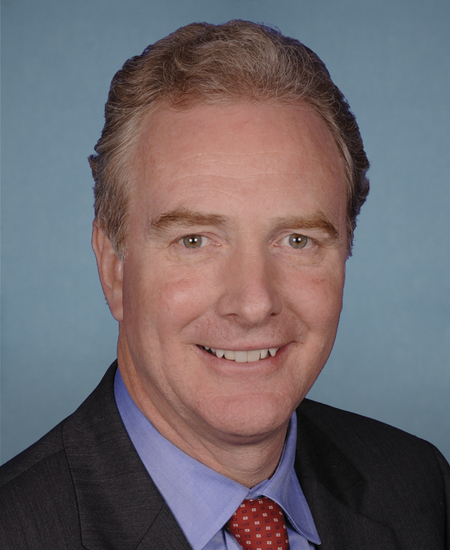
Photo of Chris Van Hollen
D United States Senate · Maryland

Sen. Chris Van Hollen

Compare
Total votes
1,044
all sessions
Attendance
99%
12 missed
Near the chamber average
With party
96%
of cast votes
Near the chamber average
Bipartisan score
2%
crosses aisle rarely
Near the chamber average
Sponsored
2,174
bills & resolutions
Higher than 94% of chamber peers
Committees
15
assignments
2,174 bills and resolutions

Sponsored bills

Total
2,174
Primary
187
Co-sponsor
1,987
This page
2,174
matching current filters
Co-sponsor S 254
In committee · Michigan Senate · Co-sponsor
A bill to establish a Homeowner Assistance Fund at the Department of the Treasury.

This bill provides funds for assistance to homeowners to prevent mortgage defaults, foreclosures, and displacements of individuals and families experiencing financial hardship after January 21, 2020. The Department of the Treasury must disburse the funds to state housing finance agencies, territories, and Indian tribes for the provision of such assistance.

In committee Feb 4, 2021 1 co-sponsor
Co-sponsor S 248
In committee · Michigan Senate · Co-sponsor
FAMILY Act

Family and Medical Insurance Leave Act or the FAMILY Act This bill entitles every employee to a family and medical leave insurance (FMLI) monthly benefit payment of two-thirds of the employee's regular pay, limited to a maximum of $4,000, for not more than 60 days of qualified caregiving. The bill establishes the Office of Paid Family and Medical Leave within the Social Security Administration to administer the FMLI program. An FMLI benefit payment must be coordinated with any periodic benefits received under a state or local temporary disability insurance or family leave program. The bill imposes a tax on employers, employees, and self-employed individuals to fund FMLI benefits. It also establishes the Federal Family and Medical Leave Insurance Trust Fund to hold tax revenues.

In committee Feb 4, 2021 1 co-sponsor
Co-sponsor S 261
In committee · Michigan Senate · Co-sponsor
All Dependents Count Act of 2021

All Dependents Count Act of 2021 This bill extends the 2020 recovery rebates of the Coronavirus Aid, Relief, and Economic Security Act to all taxpayer dependents.

In committee Feb 4, 2021 1 co-sponsor
Co-sponsor S 240
In committee · Michigan Senate · Co-sponsor
Supporting Children with Disabilities During COVID–19 Act

Supporting Children with Disabilities During COVID-19 Act This bill provides FY2021 supplemental appropriations for grants to assist states in providing special education and related services to children with disabilities and for specified early childhood education programs for children with disabilities. Additionally, the bill specifies reporting requirements related to the use of these funds. It also requires the Department of Education to publish on its website, and the Department of Health and Human Services to release, certain expenditure reports related to these funds. The amounts provided by the bill are designated as an emergency requirement pursuant to the Statutory Pay-As-You-Go Act of 2010 (PAYGO) and the Senate PAYGO rule.

In committee Feb 4, 2021 1 co-sponsor
Co-sponsor S 268
In committee · Michigan Senate · Co-sponsor
COVID–19 Whistleblower Protection Act

COVID-19 Whistleblower Protection Act This bill establishes whistleblower protections for government contractors and private sector workers who may witness waste, fraud, or abuse or be victims of misconduct with respect to a COVID-19 (i.e., coronavirus disease 2019) pandemic-related program, project, or activity. Specifically, employers may not discharge, demote, or otherwise discriminate against such protected individuals who disclose information concerning fraud, misuse, or other misconduct related to COVID-19 program funds. A protected individual may submit to the Department of Labor a complaint alleging a violation of these protections and Labor may adjudicate such complaints and award relief in accordance with the Internal Revenue Service whistleblower procedures.

In committee Feb 4, 2021 1 co-sponsor
Co-sponsor S 255
In committee · Michigan Senate · Co-sponsor
RESTAURANTS Act of 2021

Real Economic Support That Acknowledges Unique Restaurant Assistance Needed To Survive Act of 2021 or the RESTAURANTS Act of 2021 This bill temporarily establishes and provides funding for the Restaurant Revitalization Fund, from which the Department of the Treasury shall make grants to eligible food and beverage purveyors to cover specified costs such as payroll, operational expenses, and paid sick leave. For the grant program's initial period, Treasury must (1) prioritize awarding grants to marginalized and underrepresented communities, and (2) only award grants to eligible food and beverage purveyors with annual revenues of less than $1.5 million in 2019. For tax purposes, grant amounts are excluded from the recipient's gross income. An entity that received a loan under the Paycheck Protection Program established to support small businesses in response to COVID-19 (i.e., coronavirus disease 2019) may not apply for or use a restaurant revitalization grant for the same expenses for which the entity received the paycheck protection loan. Further, a grant applicant may request an additional amount to cover the cost of providing 10 days of paid sick leave to its employees. Treasury must report a list of grant recipients with the amount each recipient received, as well as demographics and other specified information.

In committee Feb 4, 2021 1 co-sponsor
Co-sponsor S 205
In committee · Michigan Senate · Co-sponsor
Paycheck Fairness Act

Paycheck Fairness Act This bill addresses wage discrimination on the basis of sex. Specifically, it (1) limits an employer's defense that a pay differential is based on a factor other than sex to only bona fide job-related factors in wage discrimination claims, (2) enhances nonretaliation prohibitions, (3) makes it unlawful to require an employee to sign a contract or waiver prohibiting the employee from disclosing information about the employee's wages, and (4) increases civil penalties for violations of equal pay provisions. Additionally, the Equal Employment Opportunity Commission (EEOC) and the Office of Federal Contract Compliance Programs must train EEOC employees and other affected parties on wage discrimination. The bill directs the Department of Labor to (1) establish and carry out a grant program for negotiation skills training for girls and women, (2) conduct studies to eliminate pay disparities between men and women, and (3) make available information on wage discrimination to assist the public in understanding and addressing such discrimination. The bill also establishes the Secretary of Labor's National Award for Pay Equity in the Workplace for an employer who has made a substantial effort to eliminate pay disparities between men and women. Finally, the bill requires the EEOC to issue regulations for collecting from employers compensation and other employment data according to the sex, race, and national origin of employees for use in enforcing laws prohibiting pay discrimination.

In committee Feb 3, 2021 1 co-sponsor
Co-sponsor S 213
In committee · Michigan Senate · Co-sponsor
TRUE EQUITY Act

Transformational Reforms and Updates to Ensure Educational Quality and Urgent Investments in Today's Youth Act of 2021 or the TRUE EQUITY Act This bill establishes various grant programs to address educational inequities in elementary and secondary schools. Specifically, the bill creates grant programs related to (1) early childhood education, (2) high-quality and diverse teachers and leaders, (3) college and career readiness pathways, and (4) additional resources for at-risk students. For each grant program, the Department of Education (ED) must award a single grant to an eligible state. To be eligible for a grant, a state must establish an independent state oversight board. The oversight board must, among other duties (1) determine whether the state and its local educational agencies (LEAs) have met state educational equity goals, and (2) hold them accountable for failing to meet those goals. ED may renew a grant if the oversight board determines the state has met its goals. In addition, for each grant program, the bill outlines the activities authorized under the program, maintenance-of-effort requirements, and matching fund requirements. Finally, the bill permits ED to enter into a local flexibility demonstration agreement, through which a state educational agency may use funds to develop and implement a school funding system based on weighted per-pupil allocations for low-income and disadvantaged students. (Currently, ED may enter into these agreements with LEAs.)

In committee Feb 3, 2021 1 co-sponsor
Co-sponsor S 215
In committee · Michigan Senate · Co-sponsor
Spotlight Act

Spotlight Act This bill renders null and void final Internal Revenue Service (IRS) regulations published on May 28, 2020, relating to the reporting requirements of tax-exempt organizations. The bill requires tax-exempt organizations that fall under sections 501(c)(4), 501(c)(5), and 501(c)(6) of the Internal Revenue Code (e.g., social welfare organizations, labor organizations, business leagues) to disclose the names and addresses of all substantial contributors (persons who contribute more than $5,000 per year to such organizations) on their information returns. The bill also eliminates the authority of the IRS to provide exceptions to the disclosure requirements for tax-exempt organizations. This provision does not apply to determinations made by the IRS before July 16, 2018.

In committee Feb 3, 2021 1 co-sponsor
Co-sponsor S 212
In committee · Michigan Senate · Co-sponsor
Access Technology Affordability Act of 2021

Access Technology Affordability Act of 2021 This bill allows a refundable tax credit equal to the amounts paid for qualified access technology for use by a blind individual who is the taxpayer, the taxpayer's spouse, or a dependent of the taxpayer. Qualified access technology is hardware, software, or other information technology with the primary function of converting or adapting information that is visually represented into forms or formats useable by blind individuals. The credit is limited to (1) costs that are not compensated by insurance or otherwise, and (2) an aggregate amount of $2,000 per blind individual in any period of three consecutive taxable years. The credit must be adjusted for inflation after 2022 and terminates after 2026.

In committee Feb 3, 2021 1 co-sponsor
Showing 2,131 to 2,140 of 2,174 bills