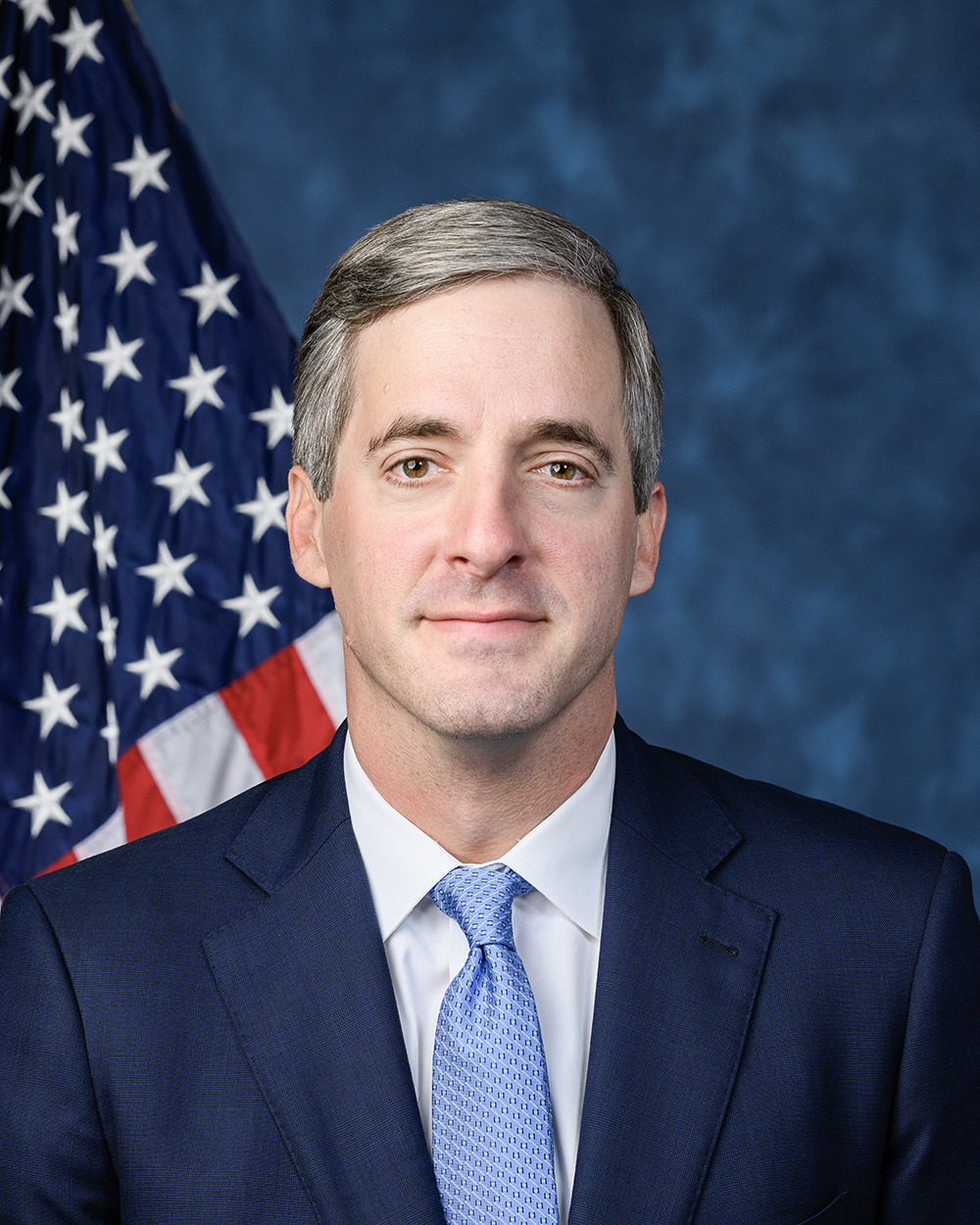
Photo of Brad Knott
R United States House · District 13 · North Carolina On the 2026 ballot

Rep. Brad Knott

Compare
Total votes
669
all sessions
Attendance
98%
11 missed
Near the chamber average
With party
94%
of cast votes
Lower than 79% of chamber peers
Bipartisan score
3%
crosses aisle rarely
Higher than 78% of chamber peers
Sponsored
93
bills & resolutions
Lower than 96% of chamber peers
Committees
11
assignments
93 bills and resolutions

Sponsored bills

Total
93
Primary
6
Co-sponsor
87
This page
93
matching current filters
Co-sponsor HR 1502
In committee · Michigan House · Co-sponsor
North Platte Canteen Congressional Gold Medal Act

Maddy summaryHR 1502 authorizes the creation of a Congressional Gold Medal to honor the volunteers and communities (primarily from Nebraska, Colorado, and Kansas) who supported the North Platte Canteen during World War II. The bill directs the Treasury Secretary to design and strike the medal, which will be presented to the individuals who contributed to the canteen’s operations and then permanently displayed at the Lincoln County Historical Museum in North Platte, Nebraska. It also permits the sale of bronze duplicates to cover production costs, with proceeds going to the U.S. Mint. This is a commemorative measure recognizing historical service, not a policy change affecting current laws or programs.

In committee Feb 21, 2025 1 co-sponsor
Co-sponsor HR 1492
In committee · Michigan House · Co-sponsor
To amend title XI of the Social Security Act to equalize the negotiation period between small-molecule and biologic candidates under the Drug Price Negotiation Program.

Maddy summaryHR 1492 amends the Social Security Act to extend the negotiation period for standard drug manufacturers under the federal drug pricing program. Specifically, it changes the timeframe from 7 years to 11 years for small-molecule drugs (like traditional pills) to negotiate prices with the government, aligning it with the existing 12-year period for complex biologic drugs (like insulin or monoclonal antibodies). This adjustment directly affects pharmaceutical companies that produce small-molecule drugs, giving them a longer window to negotiate pricing terms. The bill makes this change effective as if it had been part of the 2022 law that established the program.

In committee Feb 21, 2025 1 co-sponsor
Co-sponsor HR 1476
In committee · Michigan House · Co-sponsor
PLASMA Act

Maddy summaryHR 1476, the PLASMA Act, adjusts discount rates for plasma-derived drugs under Medicare Part D starting in 2026. It sets gradually decreasing discount percentages (from 99% down to 90% by 2030) for these specific drugs when beneficiaries reach their annual out-of-pocket spending threshold. The bill directly affects Medicare Part D beneficiaries using plasma-derived biological products (drugs made from human blood or plasma) and the manufacturers of those drugs. Certain drugs for low-income subsidy beneficiaries and small manufacturers are excluded from these discount provisions. The law phases in these changes over several years to align with existing Medicare Part D cost-sharing rules.

In committee Feb 21, 2025 1 co-sponsor
Co-sponsor HR 1301
In committee · Michigan House · Co-sponsor
Death Tax Repeal Act

Maddy summaryHR 1301, the Death Tax Repeal Act, would eliminate the federal estate tax and generation-skipping transfer tax for estates of individuals dying on or after its enactment date. It directly affects individuals inheriting significant assets, as it removes taxes on estates exceeding $10 million (adjusted for inflation) and repeals taxes on large transfers between generations. The bill modifies the gift tax by establishing a $10 million lifetime exemption with annual inflation adjustments, replacing previous tax brackets. It applies to estates, gifts, and transfers occurring on or after the bill's effective date.

In committee Feb 13, 2025 1 co-sponsor
Co-sponsor HR 1229
In committee · Michigan House · Co-sponsor
United States-Israel Defense Partnership Act of 2025

United States-Israel Defense Partnership Act of 2025 This bill requires or authorizes certain actions to increase defense-related cooperation between the United States and Israel. Specifically, the bill requires the Department of Defense (DOD) to establish a cooperative program, with the concurrence of Israel's Ministry of Defense (MOD), to develop and deploy advanced technologies for countering unmanned systems that threaten the United States and Israel; establish in Israel an office of the Defense Innovation Unit (an organization that focuses on rapidly fielding and scaling commercial technology across the U.S. military); and seek to engage Israel's MOD on the ascension of Israel into the national technology and industrial base (currently defined in law as the persons and organizations engaged in research, development, production, integration, services, or information technology activities conducted within the United States, the United Kingdom, Australia, New Zealand, and Canada). The bill authorizes DOD, upon request of Israel's MOD, to jointly conduct research, development, test, and evaluation (RDT&E) of emerging technologies such as artificial intelligence and robotics to meet defense challenges. Additionally, the bill extends the authority for DOD to (1) carry out RDT&E on a joint basis with Israel to establish anti-tunnel and counter unmanned aerial systems capabilities through 2028, and (2) transfer defense articles intended for use as reserve stocks for Israel through January 1, 2029.

In committee Feb 12, 2025 1 co-sponsor
Co-sponsor HR 1232
In committee · Michigan House · Co-sponsor
National Right-to-Work Act

Maddy summaryHR 1232, the National Right-to-Work Act, would make union membership voluntary for workers in most private-sector jobs by removing legal requirements for employees to join a union or pay dues as a condition of employment. It directly affects workers in unionized workplaces covered by the National Labor Relations Act (including most private employers) and railroad workers covered by the Railway Labor Act. The key change eliminates provisions that allowed "union security agreements" (requiring dues or membership), meaning workers could no longer be forced to pay union fees to keep their jobs. This bill does not change other labor rights or create new programs - it only modifies existing laws to allow workers to opt out of union membership and financial obligations.

In committee Feb 12, 2025 1 co-sponsor
Co-sponsor HR 1195
In committee · Michigan House · Co-sponsor
Protect Medicaid Act

Maddy summaryHR 1195, the Protect Medicaid Act, prohibits federal Medicaid funds from covering administrative costs related to health benefits provided to unauthorized immigrants who lack lawful immigration status and are ineligible for Medicaid. This directly affects states that currently provide such benefits, requiring them to separate these administrative costs from general Medicaid program expenses. The bill adds a new provision to the Social Security Act clarifying that federal funds cannot be used for these specific administrative costs, while allowing funds for systems designed to enforce this rule. It also mandates an Inspector General report detailing how states separate costs, ensure compliance, finance these programs (e.g., through provider taxes), and the impact on drug pricing for this population.

In committee Feb 11, 2025 1 co-sponsor
Co-sponsor HR 1151
In committee · Michigan House · Co-sponsor
Freedom to Invest in Tomorrow’s Workforce Act

Maddy summaryThis bill expands 529 college savings account flexibility by allowing funds to cover costs for industry-recognized postsecondary credentials, not just traditional degrees. It defines "qualified expenses" to include tuition/fees for recognized credential programs (like certifications or apprenticeships), required testing fees, and continuing education needed to maintain credentials. To qualify, programs must meet specific criteria, such as appearing on state lists under the Workforce Innovation and Opportunity Act or being listed in VA or Defense directories. The change applies to 529 distributions made after the law's enactment, giving families more options to use these accounts for job-focused training.

In committee Feb 7, 2025 1 co-sponsor
Co-sponsor HR 987
In committee · Michigan House · Co-sponsor
Fair Access to Banking Act

Fair Access to Banking Act This bill places restrictions on certain banks, credit unions, and payment card networks if they refuse to do business with a person who complies with the law. Restrictions include prohibiting the use of electronic funds transfer systems and lending programs, termination of an institution's depository insurance, and specified civil penalties. Banks and other specified financial institutions are allowed to deny financial services to a person only if the denial is justified by a documented failure of that person to meet quantitative, impartial, risk-based standards established in advance by the institution. This justification may not be based upon reputational risks to the institution. The bill establishes the right for a person to bring a civil action for a violation of this bill.

In committee Feb 5, 2025 1 co-sponsor
Co-sponsor HR 925
In committee · Michigan House · Co-sponsor
Dismantle DEI Act of 2025

Maddy summaryHR 925, the "Dismantle DEI Act of 2025," would eliminate diversity, equity, and inclusion (DEI) programs across federal government operations. The bill requires federal agencies to close DEI offices, rescind related executive orders, and prohibit the use of federal funds for DEI training, offices, or initiatives. It defines "prohibited diversity, equity, or inclusion practice" as any activity that discriminates based on race, ethnicity, religion, biological sex, or national origin, or requires employees to complete training asserting that certain groups are inherently superior or inferior. The legislation also prohibits requiring employees to sign statements about race, ethnicity, or gender, and establishes private lawsuits for violations with potential damages of $1,000 per violation per day. This bill would directly affect federal agencies, contractors, grantees, and advisory committees receiving federal funding.

In committee Feb 4, 2025 1 co-sponsor
Showing 71 to 80 of 93 bills
Previous 1 … 7 8 9 … 10 Next