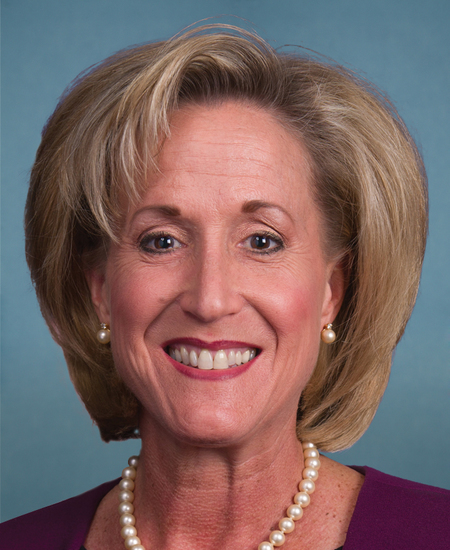
Photo of Ann Wagner
R United States House · District 2 · Missouri On the 2026 ballot

Rep. Ann Wagner

Compare
Total votes
2,837
all sessions
Attendance
98%
55 missed
Near the chamber average
With party
93%
of cast votes
Near the chamber average
Bipartisan score
4%
crosses aisle rarely
Near the chamber average
Sponsored
668
bills & resolutions
Lower than 81% of chamber peers
Committees
6
assignments
668 bills and resolutions

Sponsored bills

Total
668
Primary
62
Co-sponsor
606
This page
668
matching current filters
Co-sponsor HRES 1252
Passed · Michigan House · Co-sponsor
Resolution memorializing law enforcement officers killed in the line of duty.

This resolution expresses support for police officers and other law enforcement personnel. The resolution further recognizes law enforcement officers across the United States in the pursuit of preserving safe and secure communities; the need to ensure that such officers have the equipment, training, and resources necessary to protect their health and safety while they are protecting the public; and the law enforcement community for acts of sacrifice and heroism. The resolution expresses condolences and appreciation to the loved ones of each law enforcement officer who has made the ultimate sacrifice in the line of duty.

Passed May 13, 2026 1 co-sponsor
Co-sponsor HR 2853
Passed · Michigan House · Co-sponsor
Combating Organized Retail Crime Act of 2025

Maddy summaryThis bill would amend federal law to strengthen penalties for organized retail crime by expanding definitions of theft to include digital goods, gift cards, and setting a $5,000 aggregate value threshold for charges over a 12-month period. It would establish a new "Organized Retail and Supply Chain Crime Coordination Center" under Homeland Security to coordinate Federal, State, local, and Tribal law enforcement efforts against cross-jurisdictional theft groups. The Center would share information with retailers, transportation companies, and law enforcement agencies, track crime trends, and produce annual reports on organized retail crime. This legislation directly affects retailers, supply chain businesses, and law enforcement agencies, while targeting organized crime groups responsible for a 93% increase in larceny incidents and rising safety concerns for retail employees. The bill aims to address significant financial losses and supply chain disruptions noted in the National Retail Federation's 2023 data.

Passed May 13, 2026 1 co-sponsor
Co-sponsor HR 8730
In committee · Michigan House · Co-sponsor
Connected Vehicle Security Act of 2026

Maddy summaryThe Connected Vehicle Security Act of 2026 restricts the importation, sale, and manufacture of vehicles and related technology from specific countries, including China, Russia, Iran, and North Korea, to address national security concerns. The law defines prohibited items as connected vehicles, their software, and hardware components and sets different effective dates, with vehicle bans starting in 2027 and hardware restrictions beginning in 2030. A government official can grant exceptions for specific items after reviewing security risks and notifying Congress, while the agency must publish annual reports on enforcement actions and compliance.

In committee May 11, 2026 1 co-sponsor
Co-sponsor HR 8599
In committee · Michigan House · Co-sponsor
St. Louis Postal Accountability and Reform Act

Maddy summaryThis bill requires the Postmaster General to submit a detailed report on the performance of the United States Postal Service in the St. Louis region, specifically addressing issues identified in recent audits regarding slow mail processing and delivery delays. The report must analyze workforce conditions such as staffing shortages and high turnover rates, while also evaluating the accuracy of the system used to track delayed mail. Additionally, the legislation mandates that the report outline current management accountability measures and describe the steps taken to fix the specific operational problems found in previous government reviews.

In committee Apr 30, 2026 1 co-sponsor
Primary HR 8564
In committee · Michigan House · Lead sponsor
Local Law Enforcement Support Act of 2026

Maddy summaryThe Local Law Enforcement Support Act of 2026 expands funding opportunities for local police departments through the Byrne JAG and COPS programs. These funds can be used to recruit and train officers, purchase protective gear, and acquire specific tools like digital forensics equipment, drone technology, and ballistics analysis systems. The bill also allows for investments in software for cyber investigations and victim services. By adding these categories to the list of eligible expenses, the legislation provides law enforcement agencies with more options for addressing modern crime challenges.

In committee Apr 28, 2026 0 co-sponsors
Co-sponsor HR 8092
In committee · Michigan House · Co-sponsor
Native American Housing Assistance and Self-Determination Modernization Act of 2026

Maddy summaryThis bill modernizes housing assistance programs for Native American tribes and Native Hawaiians by streamlining environmental reviews, extending funding authorization through 2032, and expanding loan guarantee options. Key provisions include consolidating environmental review requirements to reduce paperwork for tribes, allowing 99-year leasehold interests on trust lands for housing, and creating new rental assistance specifically for homeless or at-risk Native American veterans. The legislation also clarifies rent rules, waives certain housing counseling certifications for tribal entities, exempts tribal housing projects from some federal civil rights and Buy America requirements, and establishes a direct loan guarantee process for tribal housing projects.

In committee Apr 23, 2026 1 co-sponsor
Primary HR 8169
In committee · Michigan House · Lead sponsor
Export Control Enforcement and Enhancement Act

Maddy summaryThis bill, the Export Control Enforcement and Enhancement Act, streamlines the process for adding or removing entities from the Entity List, a Commerce Department list that restricts exports to companies or individuals deemed a national security risk. It requires the End-User Review Committee to vote on such proposals within 30 days, with a possible 15-day extension if more information is needed, and ensures each committee member has one vote without the chairperson having veto power. The legislation establishes a presumption of denial for export licenses involving entities on the list, though the committee can vote to apply different rules if it serves national security interests. These changes aim to make export control decisions more efficient and transparent while maintaining oversight over sensitive technology transfers.

In committee Apr 22, 2026 0 co-sponsors
Co-sponsor HR 5543
In committee · Michigan House · Co-sponsor
Baltic Security Assessment Act of 2025

Maddy summaryHR 5543, the Baltic Security Assessment Act of 2025, requires the U.S. State and Defense Departments to submit a report within 180 days of enactment. The report will assess emerging military, cyber, hybrid, and political threats to Estonia, Latvia, and Lithuania, including the roles of Russia, Belarus, China, Iran, and other actors. It will also evaluate U.S. and NATO military presence in the region, opportunities for defense cooperation, and recommendations to strengthen deterrence, cybersecurity, and democratic resilience in the Baltic countries. This bill directly affects U.S. foreign policy and defense planning regarding the Baltics, but does not create new programs or funding.

In committee Apr 22, 2026 1 co-sponsor
Primary HR 8245
In committee · Michigan House · Lead sponsor
GRACIE Act of 2026

Maddy summaryThe GRACIE Act of 2026 provides federal grants to state child welfare agencies to help them record and keep all interviews related to child abuse and neglect investigations. Under this bill, states receiving funding must create or update rules requiring electronic recording of these interviews and store the recordings securely for at least five years. The funds can only be used for costs directly tied to conducting and retaining these recordings, including audio or video capture. States must also establish access controls that limit who can view the recordings while allowing caregivers to request copies in certain legal situations. The program is authorized for six years, with up to $30 million available annually from 2026 through 2031.

In committee Apr 9, 2026 0 co-sponsors
Co-sponsor HR 556
Passed · Michigan House · Co-sponsor
Protecting Access for Hunters and Anglers Act

Maddy summaryHR 556, the Protecting Access for Hunters and Anglers Act, prevents federal agencies from banning lead ammunition or tackle on public lands and waters managed for hunting or fishing. It directly affects hunters and anglers using federal lands (like national wildlife refuges, public forests, and BLM lands) by blocking nationwide restrictions on lead products. The bill allows limited exceptions only for specific locations where wildlife decline is directly linked to lead use, and the restriction must align with state law or get approval from the state wildlife agency. This changes how federal land managers can regulate lead, requiring state coordination for any local restrictions.

Passed Mar 19, 2026 1 co-sponsor
Showing 41 to 50 of 668 bills
Previous 1 … 4 5 6 … 67 Next