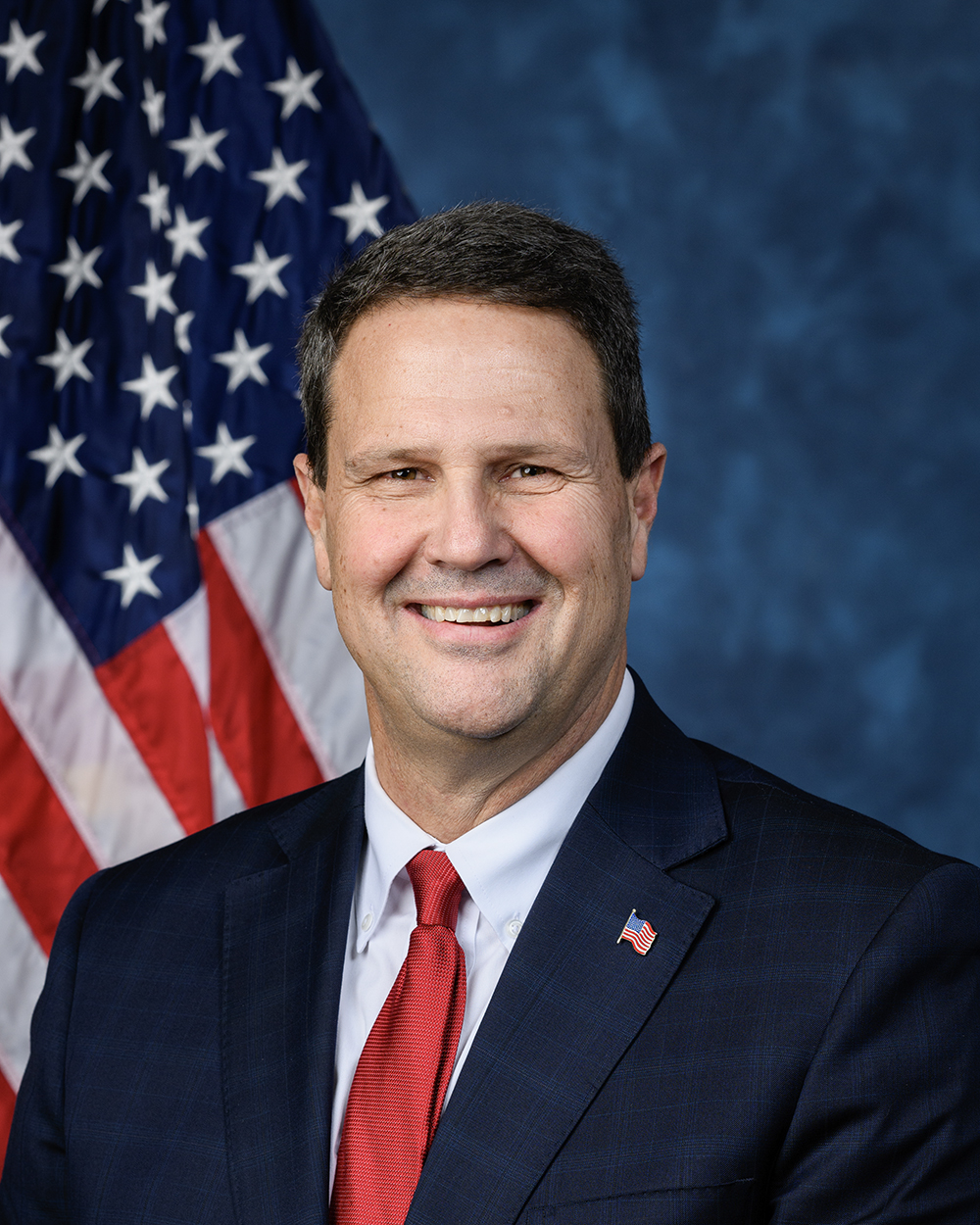
Photo of Jeff Crank
R United States House · District 5 · Colorado On the 2026 ballot

Rep. Jeff Crank

Compare
Total votes
669
all sessions
Attendance
100%
2 missed
Higher than 89% of chamber peers
With party
94%
of cast votes
Lower than 78% of chamber peers
Bipartisan score
3%
crosses aisle rarely
Higher than 77% of chamber peers
Sponsored
149
bills & resolutions
Lower than 87% of chamber peers
Committees
7
assignments
149 bills and resolutions

Sponsored bills

Total
149
Primary
10
Co-sponsor
139
This page
149
matching current filters
Co-sponsor HR 9106
In committee · Michigan House · Co-sponsor
Robert Lodge Medal of Honor Act

Maddy summaryThis bill, known as the Robert Lodge Medal of Honor Act, authorizes the President to award the Medal of Honor to Robert Lodge. It directly affects Lodge by recognizing his acts of valor as an Air Force member during the Vietnam War on May 10, 1972. The legislation specifically overrides existing time limits that usually prevent such awards decades after service. By doing so, it ensures Lodge receives the nation's highest military decoration for his bravery.

In committee Jun 2, 2026 1 co-sponsor
Co-sponsor HR 6047
Passed · Michigan House · Co-sponsor
Sharri Briley and Eric Edmundson Veterans Benefits Expansion Act of 2026

Maddy summaryThis bill increases monthly disability compensation for veterans eligible for aid and attendance by adding a $833.33 supplemental payment, effective December 2026. It also creates an automatic adjustment for dependency and indemnity compensation (DIC) payments, tying them to Social Security benefit increases plus an additional 1%, for up to five years starting December 2026. Additionally, it temporarily allows the VA to collect fees for certain housing loans from veterans with a 70% or lower disability rating (2025-2035), effective August 2026. These changes directly affect veterans receiving disability compensation, surviving family members receiving DIC, and veterans applying for VA-guaranteed housing loans.

Passed Jun 2, 2026 1 co-sponsor
Co-sponsor HR 1041
Passed · Michigan House · Co-sponsor
Veterans 2nd Amendment Protection Act

Maddy summaryHR 1041, the Veterans 2nd Amendment Protection Act, prevents the Department of Veterans Affairs (VA) from automatically sending veterans' personal information to the national background check system (NICS) solely because a court has appointed a fiduciary (like a guardian) to manage their benefits. This directly affects veterans who have a fiduciary appointed due to mental health or cognitive challenges but are not deemed a danger to themselves or others. The bill requires a court order finding the veteran poses a danger before any such information can be shared with the NICS. It changes VA procedures to block unnecessary barriers to firearm ownership for veterans who qualify for fiduciary support without a judicial determination of danger.

Passed Jun 2, 2026 1 co-sponsor
Co-sponsor HR 8820
In committee · Michigan House · Co-sponsor
Prohibit Deactivation of the ECABs Act of 2026

Maddy summaryThis bill prevents the Army from deactivating or reducing the capabilities of its Expeditionary Combat Aviation Brigades between 2027 and 2031 without first getting approval from Congress. It requires the Army Secretary to submit a detailed plan and certification showing how aircraft and personnel levels will be restored before any reductions can happen. Additionally, the law mandates that any brigades already cut back before the bill passes must be fully reinstated within one year, and it authorizes $35 million for aircraft operations and training in 2027.

In committee May 14, 2026 1 co-sponsor
Co-sponsor HR 6993
In committee · Michigan House · Co-sponsor
BEACON Act of 2026

Maddy summaryThe BEACON Act of 2026 establishes two grant programs to improve treatment for veterans with chronic mild traumatic brain injury (mTBI). It authorizes $30 million over three years for grants to nonprofits, academic institutions, and health providers to develop and test non-drug neurorehabilitation approaches, focusing on mental health outcomes, suicide risk reduction, and long-term recovery. The bill requires grantees to prioritize patient-centered care, conduct clinical studies, and partner with VA facilities, with each grant capped at $5 million annually. A separate $10 million annual program funds independent research on TBI treatments, requiring third-party analysis and annual reports to Congress. The pilot programs expire after three years, with evaluations to determine future expansion.

In committee May 14, 2026 1 co-sponsor
Primary HR 8680
In committee · Michigan House · Lead sponsor
Armed Forces Carry Rights Protection Act of 2026

Maddy summaryThe Armed Forces Carry Rights Protection Act of 2026 modifies federal law to make it easier for military personnel to carry personal firearms on military bases when they are not on duty. Under this bill, commanders would face a legal presumption in favor of approving such requests, shifting the default stance toward allowing carry rather than restricting it. If a commander does deny a request, the law requires them to provide a written explanation that is specific to the individual and based on objective criteria. This change directly affects active-duty service members and the commanders who evaluate their requests for firearm authorization on installation.

In committee May 7, 2026 0 co-sponsors
Co-sponsor HR 1163
In committee · Michigan House · Co-sponsor
Prove It Act

Maddy summaryThis bill requires federal agencies to analyze indirect economic costs on small businesses when creating new rules, including costs affecting businesses that interact with regulated entities (like suppliers or partners). It creates a new process allowing small businesses to petition the Small Business Administration's Chief Counsel to review agency certifications claiming a rule won't significantly impact them. Agencies must then provide detailed cost analyses, publish guidance online for small business feedback, and face penalties if they fail to cooperate with reviews. The bill does not change existing regulations but adds new review steps for small business input.

In committee May 4, 2026 1 co-sponsor
Co-sponsor HRES 1242
In committee · Michigan House · Co-sponsor
Supporting the first Friday of May as "National Space Day" in recognition of the significant positive impact the aerospace community has and will continue to have on the United States of America.

Maddy summaryH.R. 1242 is a resolution that officially designates the first Friday of May as National Space Day to honor the contributions of the aerospace community. It recognizes the achievements of government agencies like NASA and the Space Force, as well as private industry and educational partners, in advancing space exploration and technology. The bill highlights specific milestones such as the Apollo moon landing, the Artemis program, and the development of the James Webb Space Telescope. By supporting this observance, the House aims to celebrate past innovations and encourage STEM education for future generations.

In committee Apr 30, 2026 1 co-sponsor
Co-sponsor HRES 1237
In committee · Michigan House · Co-sponsor
STOP Resolution

Maddy summaryThis bill, known as the STOP Resolution, mandates that all Members, officers, and employees of the House of Representatives who access classified information complete specific counterintelligence and security training each Congress. The House Administration Committee will establish rules requiring this training within 90 days of the resolution's adoption, with exemptions for individuals who already completed similar training during their initial orientation. As a direct consequence of non-compliance, Members will be denied access to classified materials until they finish the course, while officers and employees will face an additional 180-day waiting period before receiving such access.

In committee Apr 30, 2026 1 co-sponsor
Co-sponsor HR 6387
Passed · Michigan House · Co-sponsor
FIRE Act

Maddy summaryThe FIRE Act amends the Clean Air Act to clarify when air quality monitoring data affected by wildfires or prescribed fire (a state-approved wildfire risk mitigation practice) can be excluded from compliance calculations with air quality standards. It expands the definition of "exceptional events" to include natural wildfires and human activities mimicking natural events (like prescribed burns), while excluding common weather patterns and pollution from noncompliance. The bill requires the EPA to conduct regional analysis for multistate wildfire events and create a public website tracking state petitions for data exclusion. This change primarily affects how states and the EPA handle air quality data during wildfire seasons and when using prescribed fire as a management tool.

Passed Apr 27, 2026 1 co-sponsor
Showing 21 to 30 of 149 bills
Previous 1 … 2 3 4 … 15 Next