Maddy summaryThis bill proposes a constitutional amendment requiring Michigan's state budget bills to be passed into law by a specific annual deadline. If the budget isn't enacted by that date, both state legislators and the governor would lose their pay until the budget is approved. The amendment modifies three sections of the state constitution to establish this deadline and link compensation to budget passage. It specifically targets the general appropriation bills that fund state operations, not other legislation. The deadline is defined by existing law (MCL 18.1365) as the date set for budget enactment each year.
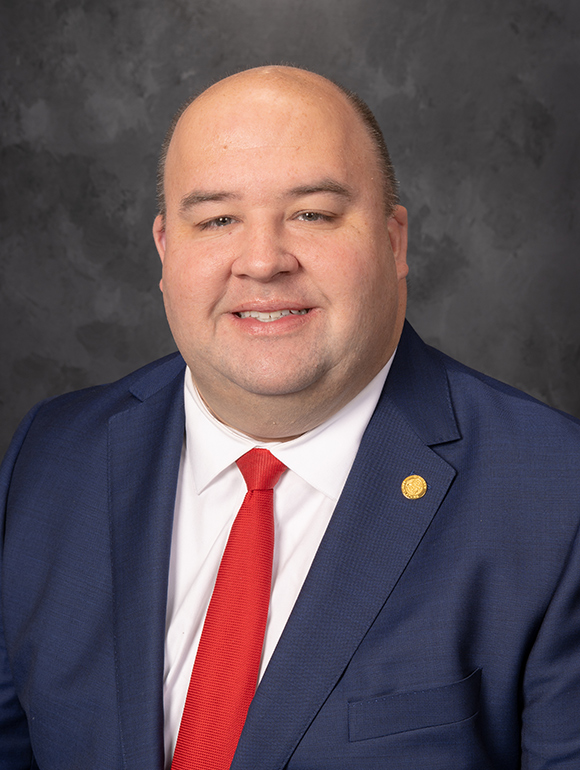
Sen. Michael Webber
Sponsored bills
Maddy summarySB 522 amends Michigan law to explicitly include human trafficking violations as a grounds for terminating parental rights. The bill adds human trafficking to the list of abusive conduct under existing subsection (k), which allows courts to terminate rights when a parent's actions (including abuse) create a reasonable likelihood of future harm to the child. This change directly affects parents who commit human trafficking against their children, providing courts with a specific legal basis to pursue termination in such cases. The amendment does not alter other existing grounds for termination but clarifies that human trafficking violations qualify as grounds under the same standard as other forms of abuse.
Maddy summarySB 523 amends Michigan's Child Protection Law to explicitly include human trafficking violations as a qualifying form of abuse that allows the state Department of Health and Human Services to seek court intervention for children. The bill adds human trafficking (as defined in Michigan law) to the list of serious harms - alongside physical abuse, sexual assault, and neglect - that trigger the department's duty to petition a court for authority over a juvenile. This change directly affects parents, guardians, or adults living in a child's home who commit human trafficking or place a child at risk through such activity. The key mechanism expands the grounds for state action, ensuring human trafficking is treated with the same seriousness as other severe child abuse under existing legal standards.
Maddy summarySB 524 amends Michigan's prostitution-related laws to increase penalties for repeat offenses and create a new diversion program for first-time offenders. It adds a mandatory human trafficking awareness program for first-time offenders instead of immediate conviction, and establishes a legal presumption that minors under 18 involved in prostitution were coerced by traffickers. The bill directly affects individuals accused of solicitation, operating brothels, or aiding prostitution, with enhanced penalties for those with prior convictions. Key provisions include stricter sentencing tiers based on prior offenses and mandatory reporting of minors to human services for trafficking investigations.
Maddy summarySB 514 creates a corporate income tax credit for beverage distributors who charge deposits on returnable containers. It allows eligible distributors to claim a $0.005 credit per container sold starting in 2026, with annual adjustments based on the U.S. Consumer Price Index beginning in 2027. Distributors must attach a specific report to their tax return to claim the credit, and any unused credit amount is refundable. The bill directly affects beverage distributors who originate container deposits and depends on the passage of companion bill SB 512 to take effect.
Maddy summarySB 506 prevents schools in Michigan from unenrolling a student solely because another school requested their records. It also requires school administrators to obtain written confirmation from the receiving school before unenrolling a student, including specific details like the student's full name, date of birth, grade level, school name/address, enrollment date, and an authorized signature. This applies to both public and nonpublic schools and directly affects students transferring between schools. The law creates a clear, documented process to ensure smooth transitions and prevent arbitrary unenrollment during transfers.
Maddy summarySB 438 repeals 2023 PA 10, which required prevailing wages and fringe benefits for workers on state construction projects. This bill directly affects state contractors and construction workers by removing the requirement to pay prevailing wages on state-funded projects. The repeal eliminates the specific legal provisions (MCL 408.1101-408.1126) that governed wage standards and penalties for noncompliance. As a procedural repeal, it makes no new policy changes but removes the existing law.
Maddy summarySB 460 modifies Michigan's penalties for manufacturing, delivering, or possessing with intent to deliver certain controlled substances, primarily targeting Schedule 1 and 2 drugs (like narcotics and fentanyl derivatives). It establishes tiered penalties based on the substance's danger and quantity - for example, 1,000 grams or more of fentanyl or heroin now carries a potential life sentence or $1 million fine, while smaller amounts face reduced but still severe penalties. This directly affects individuals convicted of drug offenses under Michigan law, with specific provisions for fentanyl-related crimes and adjustments to prior sentencing structures.
Maddy summarySB 468 prohibits Michigan jurisdictions from acquiring or using electronic voting systems after January 1, 2026, if those systems contain parts or equipment from entities providing "covered communications equipment" listed by the Federal Communications Commission (FCC) under federal law. This directly affects local election officials and voting system vendors purchasing new equipment for state elections. The key mechanism requires voting systems to avoid components from vendors designated by the FCC as security risks, referencing the FCC’s official list. Existing systems and voting requirements (like paper ballots and accessibility features) remain unchanged under this bill.
Maddy summarySB 461 amends Michigan's sentencing guidelines for specific drug offenses under MCL 777.13m. It directly affects individuals convicted of manufacturing, creating, delivering, or possessing with intent certain Schedule 1 and 2 controlled substances. The bill changes the sentencing structure for these offenses by adjusting the applicable guidelines within the criminal procedure code. This is a policy change to the sentencing framework for these particular drug-related crimes, not a general sentencing reform.