Maddy summaryThis is a ceremonial resolution (not a law) introduced by Senator Chang designating March 2025 as Social Work Month. It recognizes the contributions of social workers in Michigan and across the U.S., highlighting their roles in mental health care, child welfare, advocacy for vulnerable populations, and community support. The resolution calls on citizens to join the National Association of Social Workers in celebrating this month. It does not create new policies or affect specific groups through legislative action.
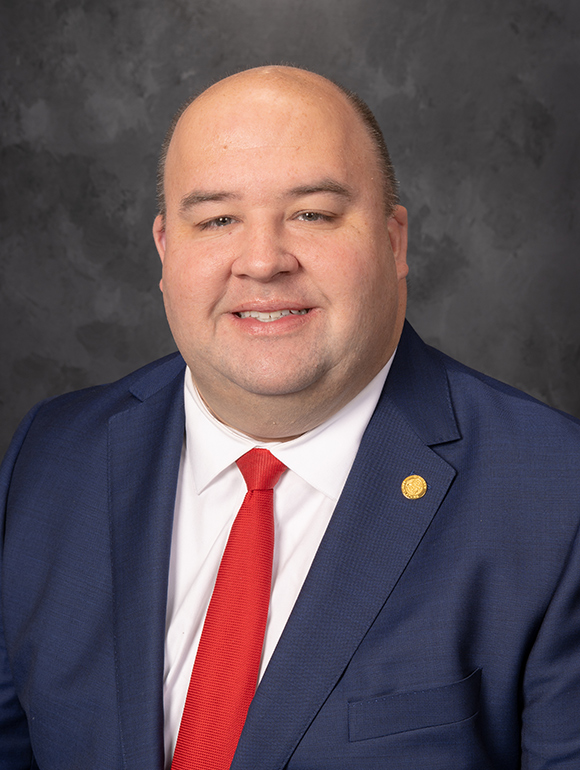
Sen. Michael Webber
Sponsored bills
Maddy summarySB 152 exempts sales of large aircraft (6,000+ pound takeoff weight) and qualifying parts/materials used for transporting cargo or passengers from Michigan's state sales tax. It directly affects domestic air carriers (businesses primarily transporting cargo or passengers) and aircraft sellers, provided the aircraft isn't based or registered in Michigan before/after the sale or maintenance. Key conditions include requiring the aircraft to leave Michigan within 15 days after qualifying transactions and excluding shop equipment, fuel, and smaller aircraft from the exemption. The bill modifies Michigan's General Sales Tax Act (MCL 205.54x) to create these specific tax exemptions.
Maddy summarySB 153 exempts certain aircraft parts and materials from Michigan's use tax when affixed to qualifying aircraft used by domestic air carriers. It applies to aircraft meeting specific weight requirements (e.g., 6,000+ pounds for post-1996 taxes) used for cargo, passenger transport, or mixed purposes. The bill also creates tax exemptions for aircraft temporarily in Michigan for maintenance, sales, or repairs (if removed within 15 days) and for interstate trucking equipment meeting usage criteria. These changes directly affect air carriers and motor carriers operating across state lines by reducing their tax burden on qualifying equipment purchases.
Maddy summarySB 143 requires mental health providers in Michigan to clearly explain a patient's rights - including the right to end voluntary treatment - in both oral and written form when treatment begins. It also mandates that providers give patients and the person who signed the consent form copies of the written consent agreement and a standard form for ending treatment, regardless of whether the patient has requested to stop care. This applies to all mental health treatment in Michigan, directly affecting patients, their designated representatives (like family members), and providers by ensuring informed consent and transparency from the start of care.
Maddy summarySB 142 amends Michigan's Mental Health Code (MCL 330.1100d and 330.1756) to modify the membership and advisory role of the State Recipient Rights Advisory Committee. Specifically, it clarifies that this committee advises both the director of the department and the director of the department's State Office of Recipient Rights, as established under Section 756. The bill updates definitions related to mental health services, substance use disorder treatment, and specialized residential care but does not create new programs or funding. This is a procedural amendment focused on clarifying committee structure and responsibilities.
Maddy summarySB 127 prohibits public bodies (such as state agencies, schools, and universities) from using dogs in research or training activities that cause pain or distress. It defines prohibited actions as those requiring federal reporting (e.g., USDA regulations), causing injury/fear, or involving invasive procedures like surgery. Exceptions include veterinary training for treating existing conditions and routine procedures like spaying/neutering performed by veterinarians or students. Violations carry civil fines of $1,000-$5,000 per dog per day, enforceable by county prosecutors or the Attorney General.
Maddy summarySB 103 modifies Michigan's psychology licensing rules by requiring new limited license holders (except those working for government or certain nonprofits) to have supervision by a fully licensed psychologist for 180 days after the law takes effect. After this period, limited licensees must continue to have supervision unless they work for government/nonprofits without diagnosing autism spectrum disorders, or have held their limited license for at least 3 years while diagnosing autism. The bill directly affects psychology professionals seeking or holding limited licenses under current rules. It creates a temporary transition period followed by a permanent supervision requirement with specific exceptions for certain employment settings.
Maddy summarySB 104 modifies Michigan's licensing requirements for psychologists by updating the postgraduate experience rule. It directly affects individuals seeking a psychology license who hold a doctoral degree, requiring them to complete at least one year of supervised postdoctoral experience in a health care setting. The bill clarifies that this supervised experience must be overseen by a fully licensed psychologist (not a limited license holder) and specifies the arrangements approved by the licensing board. These changes apply to new applicants under the revised rules, streamlining the path to full licensure while maintaining supervision standards.
Maddy summarySB 110 adds a property tax exemption for the surviving spouse of an emergency first responder (police, firefighter, etc.) who died while on duty. It directly affects surviving spouses who own their primary residence (homestead) and do not remarry. The bill expands existing homestead tax exemptions - previously limited to disabled veterans and their spouses - to include this group, allowing them to avoid property taxes on their home indefinitely. To qualify, the spouse must apply annually by December 31, and the exemption applies to any homestead property they own, including property acquired after the first responder's death.
Maddy summaryThis is a symbolic resolution (not a law) introduced by Senator Santana to formally recognize February 2025 as Black History Month in Michigan. It does not create new policies or affect specific groups; instead, it affirms the legislature's support for the annual observance of Black History Month. The resolution cites historical context, honors African-American contributions, and encourages public awareness of both achievements and ongoing efforts toward racial equality. It was introduced and adopted by the Senate on February 12-13, 2025, with no further legislative action required.