

Maddy summaryHB 5562 amends Michigan's Consumer Financial Services Act to add the "Earned Wage Access Services Act" to the list of financial licensing acts requiring state regulation. This change directly affects companies offering earned wage access services (like apps allowing workers to access earned wages early), requiring them to obtain licenses under the same framework as other financial service providers. The bill modifies Section 2 of the act by explicitly including earned wage access services in the definition of "Financial licensing acts," aligning them with existing regulatory requirements. This is a definitional update without creating new rules or fees, ensuring these services fall under the state's financial licensing oversight.
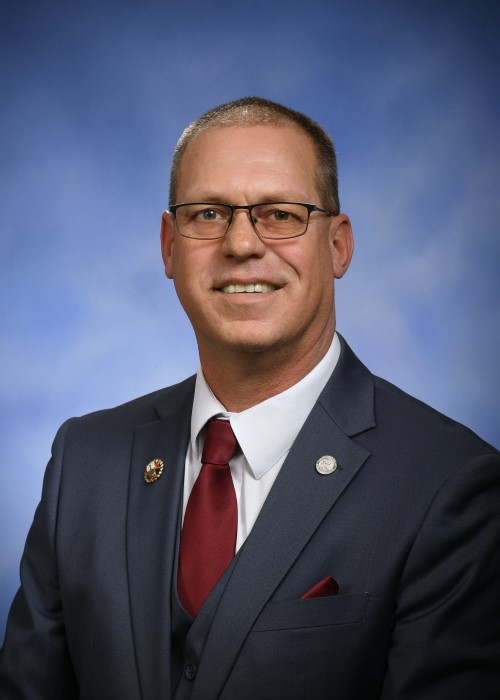
Rep. Greg Alexander
Sponsored bills
Maddy summaryHB 5564 amends Michigan's garnishment law to clarify rules for withholding wages or salary (referred to as "periodic payments"). It requires plaintiffs to send regular payment statements to defendants and garnishees (like employers), sets strict deadlines for default judgments, and establishes a 28-day cure period for employers who miss garnishment requirements. The bill specifically excludes earned wage access services (like paycheck advance apps) from these garnishment rules, as noted in section 13(d). This update aims to streamline the process for all parties involved in wage garnishments while ensuring transparency and reducing errors.
Maddy summaryHB 4733 amends Michigan's fishing regulations to clarify possession limits for processed fish. It allows recreational anglers to carry up to two additional days' worth of fish that are canned, smoked, dried, or frozen (processed) outside their home, while permitting unlimited processed fish at home. The bill does not change daily limits for fresh fish or affect how fish are taken. It specifically states that processed fish on a boat count toward the two-day limit outside the home. This directly affects Michigan anglers who process and transport fish.
Maddy summaryThis bill amends Michigan's property tax laws to clarify how disabled veterans and their surviving spouses qualify for tax exemptions on their homes. It establishes specific criteria for eligibility based on U.S. Department of Veterans Affairs ratings and outlines a streamlined process where exemptions granted after January 1, 2025, remain in effect without needing annual reapplication. The legislation also introduces an audit program to verify eligibility every three years and defines clear rules for prorating tax exemptions when property ownership changes during the year.
Maddy summaryThis House Resolution officially designates the week of April 18-25, 2026, as Lineman Appreciation Week in Michigan to honor electrical lineworkers. The measure recognizes the vital role these professionals play in maintaining the state's power grid and responding to emergencies, while acknowledging the hazardous conditions they face. By adopting this resolution, the legislative body aims to publicly express gratitude for the dedication and sacrifice of linemen who keep essential services running for communities across the state.
Maddy summaryThis bill requires the Michigan National Guard to pay all servicemembers their compensation through direct deposit or electronic transfer starting with their first eligible pay period. The legislation amends existing state wage payment laws to mandate this specific payment method for National Guard members, who must provide the necessary banking information to enable the transfers. While the bill maintains existing protections for other employees regarding payroll debit cards and direct deposit consent, it creates a special provision that applies exclusively to the National Guard without requiring individual opt-in consent from each servicemember. This change ensures consistent electronic payment processing for military compensation while preserving the broader legal framework governing wage payments for other Michigan employees.
Maddy summaryHB 4902 repeals a specific provision (MCL 333.18109) from Michigan's Public Health Code that previously allowed certain counselors to obtain a limited license. This change eliminates an existing pathway for counselors to practice under a restricted license. The bill directly affects counselors who might have qualified for this limited license option under the repealed law. The action removes this specific licensing mechanism from state law without creating new requirements or benefits.
Maddy summaryHB 4903 modifies relicensing requirements for licensed professional counselors and limited licensed counselors in Michigan. It simplifies renewal for those applying more than three years after their license expires by allowing them to either retake a national exam (like the National Counselor Examination) or prove they meet certification standards, instead of requiring additional training. The bill also updates verification processes for out-of-state licenses and maintains existing disclosure statement requirements. These changes directly affect counselors seeking to renew expired licenses, particularly those with significant gaps in practice. The bill does not create new requirements but adjusts existing relicensing pathways for greater flexibility.
Maddy summaryHB 4904 eliminates a requirement for licensed professional counselors and limited licensed counselors in Michigan to submit a "professional disclosure statement" when renewing their licenses. The bill amends Section 18114 of the Public Health Code to remove this requirement and repeals Section 18113, which previously defined the disclosure statement's content. This change directly affects counselors applying for relicensure under the existing rules for renewing licenses within 3 years or more after expiration. The bill simplifies the relicensure process by removing this specific documentation obligation.
Maddy summaryHB 5407 expands property tax exemptions for surviving spouses of disabled veterans in Michigan. It modifies existing law to include surviving spouses who receive dependency and indemnity compensation from the U.S. Department of Veterans Affairs (under 38 USC 1310-1318), in addition to those already covered. The exemption applies to homestead property owned by the surviving spouse without requiring reapplication after 2025, continuing as long as they don’t remarry. This directly affects eligible surviving spouses of veterans who died while receiving VA disability benefits.