Maddy summaryThis bill prohibits Michigan school districts, academies, and intermediate districts from hiring or retaining individuals who worked for specific federal immigration agencies between September 1, 2025, and January 20, 2029. The affected agencies include Immigration and Customs Enforcement, Customs and Border Protection, and Citizenship and Immigration Services. The law applies to any role within these educational institutions and targets people who were employed by these organizations during that specific future time frame.
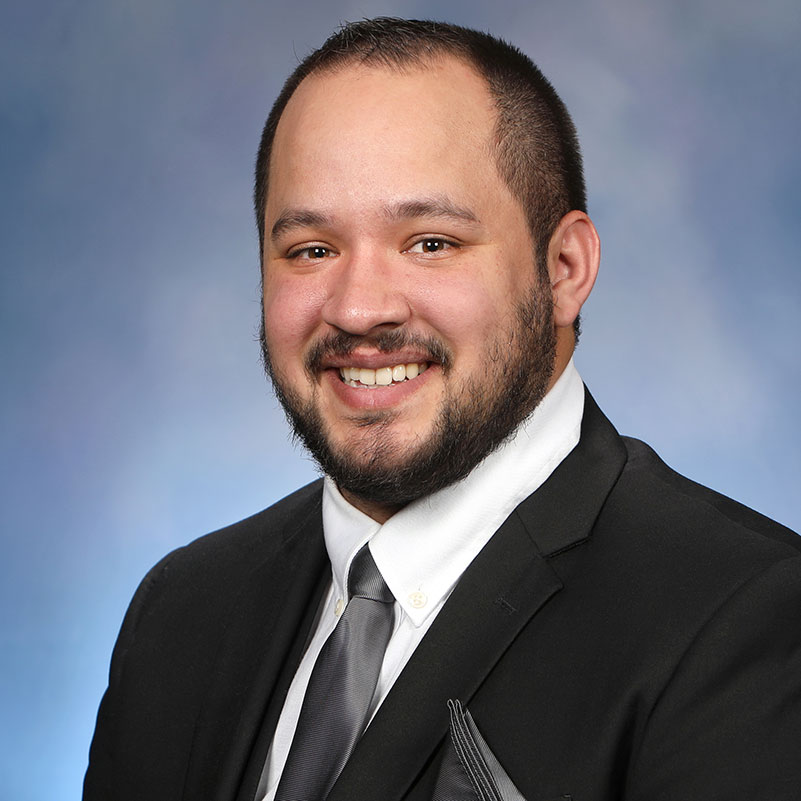
Rep. Dylan Wegela
Sponsored bills
Maddy summaryThis bill requires health insurance plans in Michigan to count payments made by patients or on their behalf toward out-of-pocket maximums and cost-sharing requirements for prescription drugs. The rule applies to both standard plans and high-deductible plans, with a specific exception for high-deductible plans where counting such payments would disqualify a patient's health savings account. The legislation takes effect for policies delivered, issued, or renewed in the state after December 31, 2025.
Maddy summaryThis bill prohibits the certification or recertification of certain individuals as local corrections officers in Michigan if they have worked for specific federal immigration agencies between September 1, 2025, and January 20, 2029. The law directly affects people seeking to become local corrections officers on or after January 1, 2005, by adding a new requirement that they must not have been employed by U.S. Immigration and Customs Enforcement, U.S. Customs and Border Protection, or U.S. Citizenship and Immigration Services during that three-year window. While the bill maintains existing requirements for U.S. citizenship, age, and high school education, it introduces this specific employment restriction to prevent federal immigration workers from transitioning into local correction roles.
Maddy summaryThis bill prohibits individuals who worked for specific U.S. immigration agencies between September 1, 2025, and January 20, 2029, from becoming or remaining state correctional officers in Michigan. It requires all correctional officers to be certified or recertified by the Michigan Commission of Corrections, but explicitly excludes those with recent employment at U.S. Immigration and Customs Enforcement, Customs and Border Protection, or U.S. Citizenship and Immigration Services from this requirement. The law applies to anyone seeking certification or recertification after six months from the act's effective date, ensuring that only eligible candidates meet the state's training standards.
Maddy summaryThis bill amends the Michigan Limited Liability Company Act to explicitly prohibit domestic LLCs from spending money to support or oppose candidates, political parties, or ballot issues, while allowing them to continue existing financial obligations and news-related commentary. It also restricts foreign LLCs from engaging in similar political spending within the state, with the added consequence that any such unauthorized spending would be considered invalid and subject to disgorgement. Furthermore, the legislation grants the state administrator the authority to revoke the business license of a foreign LLC that violates these spending restrictions and allows the state to dissolve a domestic LLC that engages in prohibited political expenditures.
Maddy summaryHB 6218 amends the Michigan Business Corporation Act to explicitly prohibit corporations from spending money to support or oppose candidates, political parties, committees, or ballot questions. This new restriction, added as Section 261a, applies to both domestic and foreign corporations operating in the state and declares any such spending invalid. While corporations retain the ability to make donations for charitable, educational, or public welfare purposes, they cannot use funds for direct political advocacy. The bill also outlines penalties for violations, including potential dissolution for domestic corporations or revocation of business authority for foreign ones, and grants the attorney general the power to seek legal remedies to enforce these limits.
Maddy summaryHB 6217 amends the Michigan Nonprofit Corporation Act to clarify and expand the legal powers of nonprofit organizations regarding financial transactions and investments. The bill explicitly allows nonprofits to engage in a broader range of activities, such as lending money, investing funds, and making donations for public welfare, educational, or charitable purposes, provided these actions further the corporation's specific purposes. By adding a new section and updating existing ones, the legislation removes previous restrictions that limited how nonprofits could manage their assets and participate in financial agreements. This change directly affects nonprofit corporations across Michigan, giving them greater flexibility to operate financially without violating state laws.
Maddy summaryThis bill clarifies how Michigan would appoint presidential electors if the state joins an agreement to choose the President based on the national popular vote rather than the Electoral College. It requires the state Board of State Canvassers to calculate the total national popular vote for each candidate and designate the winner accordingly, while also reporting these results to other participating states. If a tie occurs for the national popular vote, the bill specifies that Michigan would appoint electors based on which candidate received the most votes within Michigan itself. The legislation updates existing election laws to ensure these procedures are followed and includes requirements for issuing official certificates of appointment.
Maddy summaryThis bill updates Michigan's Medicaid False Claim Act to clarify what counts as a kickback or bribe. It maintains that offering, soliciting, or accepting payments to refer patients for medical services is a felony punishable by up to four years in prison or a fine of $30,000. The law explicitly excludes government-approved "model arrangements" and "model patient incentives" from being considered illegal kickbacks. This change aims to provide clearer guidance on which financial incentives are permissible under federal and state programs.
Maddy summaryThis bill requires anyone applying for a building permit for a data center in Michigan to submit a detailed acoustic engineering report. The report must include measurements of current noise levels, projections of construction and operational noise, and a comparison of these levels against local rules or national standards. An enforcing agency cannot issue the permit until this report is provided and shared with the Michigan Public Service Commission and the local government. The law only takes effect if several other related bills are also passed.