Issue · Technology

Technology

Every technology bill, vote, and legislator stance in Michigan, automatically classified by Maddy, our AI policy reader.

Total bills
130
2025-2026 Regular Session
Top supporter
Curt VanderWall
100% support rate
Top opponent
Thomas Albert
7% support rate
Ranked legislators
10
5 support · 5 oppose
Key legislators

Who's moving technology in Michigan

Legislators moving technology in Michigan
Legislator Party Stance Support rate Votes
Curt VanderWall
Curt VanderWall House · District 102
R
Strong +
100% 65
Sarah Lightner
Sarah Lightner House · District 45
R
Strong +
100% 65
J.R. Roth
J.R. Roth House · District 104
R
Strong +
100% 62
Matt Maddock
Matt Maddock House · District 51
R
Strong +
100% 65
Greg Markkanen
Greg Markkanen House · District 110
R
Strong +
100% 65
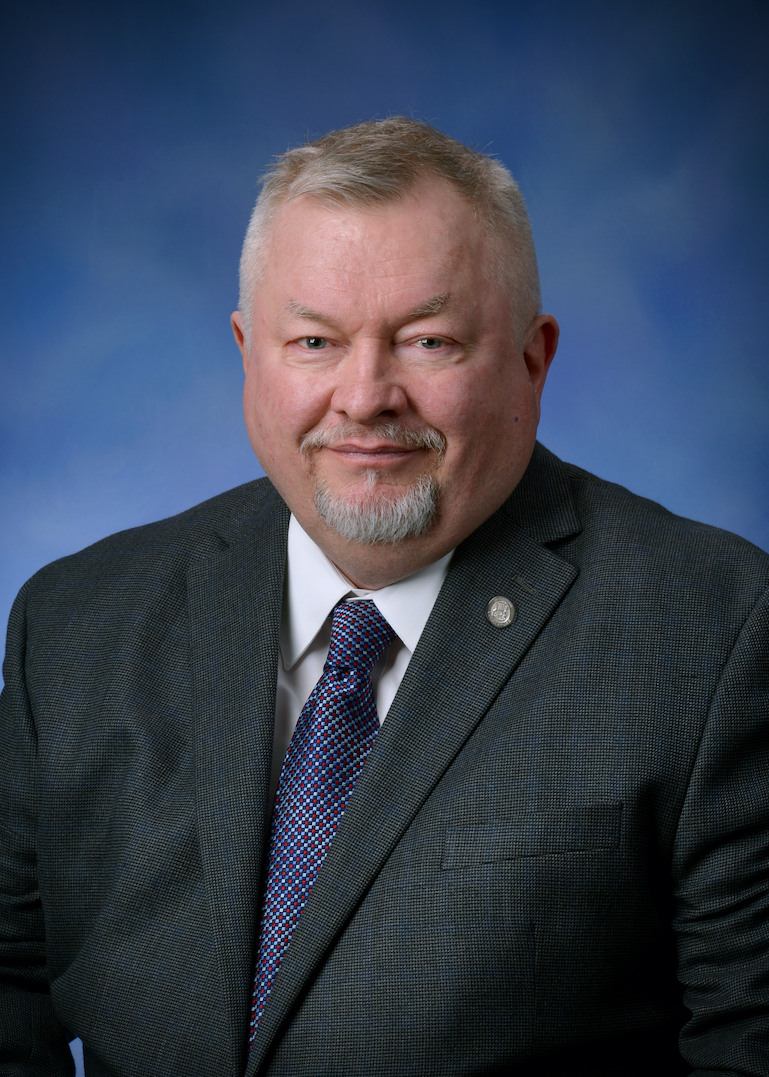
Thomas Albert
Thomas Albert Senate · District 18
R
Strong −
7% 40
Dylan Wegela
Dylan Wegela House · District 26
D
Strong −
8% 65
Veronica Paiz
Veronica Paiz House · District 10
D
Strong −
10% 55
Kimberly Edwards
Kimberly Edwards House · District 12
D
Strong −
12% 49
Jonathan Lindsey
Jonathan Lindsey Senate · District 17
R
Strong −
13% 40
Showing 101–110 of 130 bills

All technology bills

in committee · Michigan · Senate Feb 11, 2026

SB 549: Insurance: other; data security enforcement; modify. Amends secs. 553, 561 & 563 of 1956 PA 218 (MCL 500.553 et seq.) & adds secs. 564 & 564a.

SB 549 amends Michigan's Insurance Code to strengthen data security requirements for insurers handling personal information. It requires insurers to notify Michigan residents if their unencrypted personal data (like Social Security numbers or financial account details) was accessed by unauthorized parties, or if encrypted data was accessed with the encryption key. The law also mandates that insurers notify data owners if a breach affects information they own but the insurer maintains. These notifications must be provided without unreasonable delay after determining the breach could cause substantial harm or identity theft. The bill directly affects Michigan residents whose data is held by insurers and the insurers themselves, who must now follow specific breach notification protocols.
in committee · Michigan · Senate Oct 22, 2025

SB 618: Traffic control: driver license; mobile enhanced driver license or mobile enhanced official state personal identification card; provide for. Amends secs. 2 & 4 of 2008 PA 23 (MCL 28.302 & 28.304). TIE BAR WITH: SB 0620'25

SB 618 amends Michigan's Enhanced Driver License Act to create mobile versions of enhanced licenses and identification cards. It allows residents who already hold a physical enhanced driver license or enhanced official state ID card to access a mobile digital version through a state-developed app. Key provisions include requiring the mobile version to match physical card data, using encrypted radio frequency technology (without biometrics), and charging a $4 fee for issuance or renewal. This directly affects Michigan residents with existing enhanced licenses who choose to use mobile versions for entering the U.S. at ports of entry or as digital ID. The bill does not change eligibility requirements but adds a secure mobile option for current enhanced license holders.
in committee · Michigan · House Oct 28, 2025

HB 5132: Businesses: other; regulation of convertible virtual currency; limit. Creates new act.

HB 5132, the "Use of Convertible Virtual Currency Protection Act," prohibits Michigan government entities from restricting how individuals or businesses use digital money (like Bitcoin) for personal purchases, as collateral, or via self-managed digital wallets. It specifically bans taxes or reporting requirements for transactions under $200 using digital money. The bill also allows people harmed by violations to sue for triple their actual damages. This directly affects residents and businesses using digital currency in Michigan, ensuring their transactions remain tax-free and unregulated for small amounts.
passed both · Michigan · House Oct 30, 2025

HB 4128: Corporate income tax: credits; credit for advanced small modular reactor generated power; provide for. Amends 1967 PA 281 (MCL 206.1 - 206.847) by adding sec. 678. TIE BAR WITH: HB 4127'25, HB 4129'25, HB 4125'25, HB 4126'25, HB 4124'25

HB 4128 creates a new corporate income tax credit for businesses generating power from advanced small modular reactors (SMRs) in Michigan. It directly affects utility companies and energy developers investing in SMR technology by providing a financial incentive to offset project costs. The key provision adds Section 678 to Michigan's tax code, allowing qualifying entities to claim a credit against their state corporate income tax liability for SMR-generated electricity. This policy change aims to support clean energy development without specifying expected outcomes or endorsing particular technologies. The bill passed the House on October 28, 2025, and is now pending final approval in the Senate.
passed both · Michigan · House Apr 16, 2026

HB 4720: Elections: voting equipment; use of electronic voting systems that contain certain parts or equipment; prohibit. Amends secs. 795 & 795a of 1954 PA 116 (MCL 168.795 & 168.795a).

HB 4720 prohibits Michigan jurisdictions from using electronic voting systems containing parts or equipment from foreign entities listed by the FCC under federal law, effective January 1, 2026. This directly affects election officials and voting equipment vendors who must ensure their systems comply with this ban. The bill amends existing requirements to maintain paper ballots, accessibility standards, audit trails, and other voting system safeguards under Michigan's election law (MCL 168.795). It does not change current voting procedures but adds a new security-related restriction on equipment sourcing.
Tags Elections
in committee · Michigan · House Nov 4, 2025

HB 5165: Environmental protection: other; electronic submissions for registrations, notices, inspection and test reports, and other documentary information required under part 211; require. Amends sec. 21105 of 1994 PA 451 (MCL 324.21105).

HB 5165 requires Michigan's Department of Environment to transition from paper-based to electronic submissions for environmental compliance documents related to underground storage tanks starting October 1, 2026. It directly affects businesses managing underground fuel tanks, as well as other entities submitting registrations, inspection reports, and test results under Part 211 of Michigan's environmental law. The bill mandates a web-based digital system with features like mobile access, GPS tracking for facilities, embedded digital cameras for inspections, and 24/7 searchable document storage. This replaces current paper-based processes with a standardized electronic platform for all required submissions. The key change is making digital submission mandatory for all specified documents, improving data accessibility and management for the department.
in committee · Michigan · House Mar 19, 2026

HB 4512: Businesses: other; orphaned well partnership program and fund; create for bitcoin mining. Amends secs. 61601, 61603 & 61604 of 1994 PA 451 (MCL 324.61601 et seq.) & adds secs. 61609, 61611, 61613, 61615, 61617, 61619 & 61621.

HB 4512 establishes a program allowing bitcoin mining companies to partner with Michigan to plug abandoned oil and gas wells. Companies bid to temporarily use residual oil or gas from these wells to power bitcoin mining operations, with the state covering costs through its existing orphan well fund. Bidders must submit detailed plans including startup costs, mining projections, and repayment schedules. This directly affects the state's well remediation fund and bitcoin mining businesses seeking to utilize abandoned well resources.
passed · Michigan · House Mar 11, 2026

HB 4511: State finance: other; limitations on holding a digital asset; prohibit. Creates new act.

HB 4511 prohibits Michigan state and local governments from banning digital asset holdings, requiring permits for them, imposing extra taxes based solely on digital asset use, or restricting blockchain-related activities like node operations, asset transfers, or staking. It also bans state agencies from advocating for U.S. central bank digital currency and shields individuals validating transactions or operating nodes from civil liability. The bill directly affects Michigan residents, businesses, and blockchain service providers using digital assets like cryptocurrency or stablecoins. Key provisions define "digital assets" broadly and require state actions to align with blockchain protocols without unnecessary restrictions.
Sub-Topics Emerging Technology
in committee · Michigan · Senate Dec 2, 2025

SB 713: Gaming: other; regulation of advertisements and promotions for internet gaming; provide for. Amends 2019 PA 152 (MCL 432.301 - 432.322) by adding sec. 9a.

SB 713 regulates advertisements for internet gaming in Michigan by requiring all ads to be approved by the state board and comply with state law. It bans deceptive marketing, prohibits advertising to anyone under 21 (with strict proof that under 30% of an ad's audience is under 21), and mandates addiction disclaimers with a helpline number. Internet gaming operators face fines up to $5,000 for first violations and license revocation for repeat offenses. The bill directly affects online gaming companies and advertisers, while allowing municipalities to set reasonable sign restrictions that don’t conflict with the law.
in committee · Michigan · Senate Feb 4, 2025

SB 57: Civil procedure: civil actions; lawsuits for exercising rights to free expression; provide protections against. Creates new act.

SB 57 creates the "Uniform Public Expression Protection Act" to shield individuals and organizations from abusive lawsuits targeting free speech. It directly affects people sued for expressing views on public issues, such as through protests, social media, or public comments about government actions. Key provisions require courts to quickly dismiss such cases (within 60 days) by staying discovery, shifting the burden to prove the lawsuit is valid to the plaintiff, and imposing sanctions for frivolous claims. The law excludes lawsuits involving government employees, civil rights claims, or commercial speech about goods/services, focusing solely on protecting constitutional expression rights.
Sub-Topics Social Media Tags Civil Liberties
Showing 101 to 110 of 130 bills
Previous 1 10 11 12 13 Next