Issue · Education

Education

Every education bill, vote, and legislator stance in Michigan, automatically classified by Maddy, our AI policy reader.

Total bills
277
2025-2026 Regular Session
Top supporter
Sean McCann
95% support rate
Top opponent
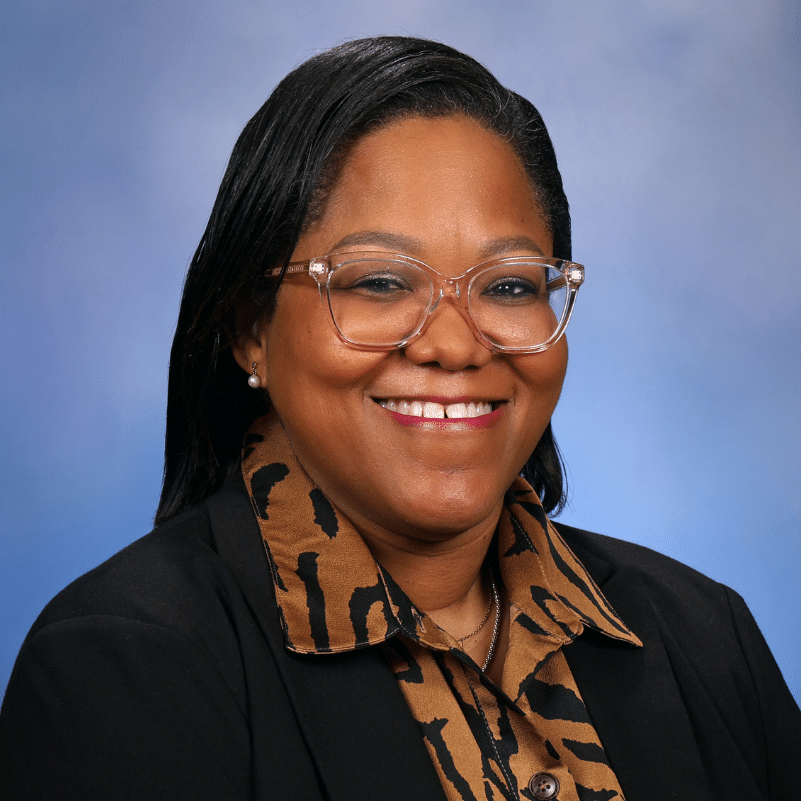
Michele Hoitenga
11% support rate
Ranked legislators
10
5 support · 5 oppose
Key legislators

Who's moving education in Michigan

Legislators moving education in Michigan
Legislator Party Stance Support rate Votes
Sean McCann
Sean McCann Senate · District 19
D
Strong +
95% 55
Winnie Brinks
Winnie Brinks Senate · District 29
D
Strong +
95% 56
Sarah Anthony
Sarah Anthony Senate · District 21
D
Strong +
95% 56
Veronica Klinefelt
Veronica Klinefelt Senate · District 11
D
Strong +
95% 54
John Cherry
John Cherry Senate · District 27
D
Strong +
95% 55
Michele Hoitenga
Michele Hoitenga Senate · District 36
R
Strong −
11% 53
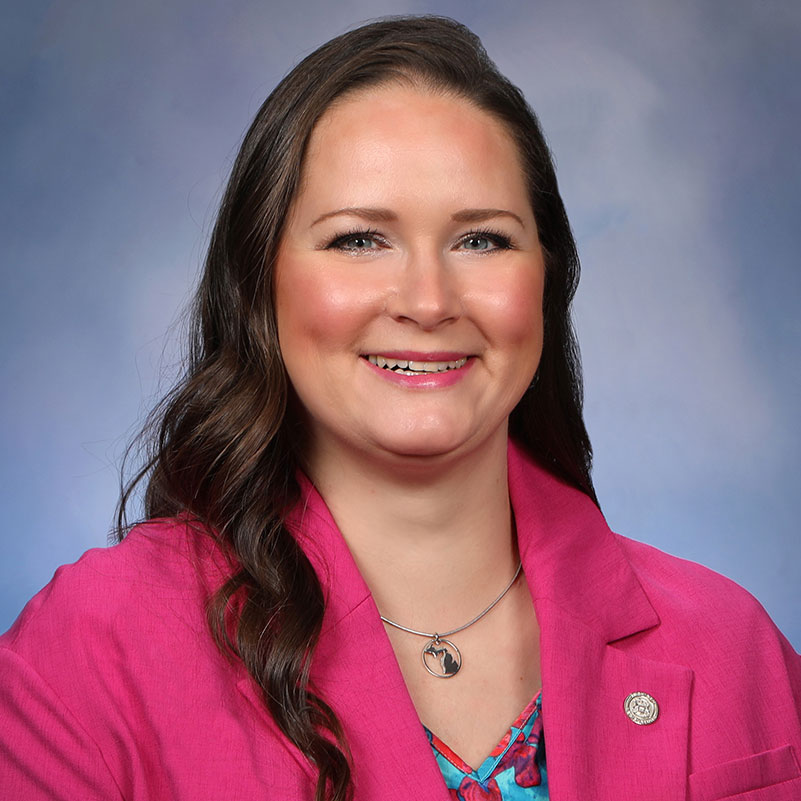
Kimberly Edwards
Kimberly Edwards House · District 12
D
Strong −
15% 49
Carrie Rheingans
Carrie Rheingans House · District 47
D
Strong −
15% 62
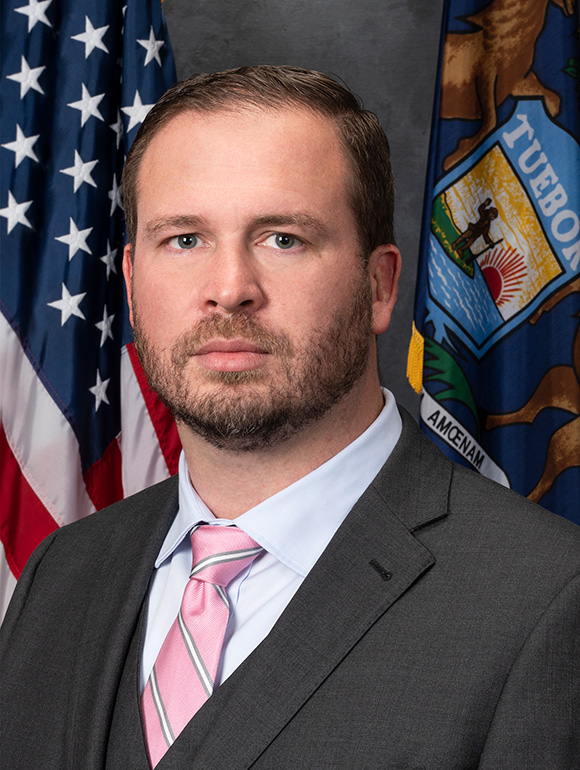
Joe Bellino
Joe Bellino Senate · District 16
R
Strong −
16% 54
Jonathan Lindsey
Jonathan Lindsey Senate · District 17
R
Strong −
16% 53
Showing 111–120 of 277 bills

All education bills

passed both · Michigan · House Jun 10, 2026

HB 5520: Education: elementary; grade 3 reading requirements; provide for. Amends sec. 1280f of 1976 PA 451 (MCL 380.1280f).

HB 5520 requires Michigan's Department of Education to approve 3+ reading assessments for schools that minimize instructional time loss and provide timely results. It mandates school districts to implement literacy coaches by 2027 who support teachers in evidence-based reading instruction, data analysis, and intervention for struggling readers in grades K-3. The bill also directs the department to develop dyslexia expertise, provide professional learning on structured literacy, and update the Michigan Dyslexia Handbook every 5 years. These provisions directly affect school districts, K-3 teachers, students needing reading support, and parents through improved reading instruction and assessment practices. The bill focuses on systemic changes to address reading deficiencies using research-backed methods.
signed · Michigan · House Jul 29, 2026

HB 5630: Appropriations: school aid omnibus; fiscal year 2026-2027 appropriations for K-12 school aid, higher education, and community colleges; provide for. Amends, adds & repeals (See bill).

HB 5630 allocates funding for Michigan's public K-12 schools and community colleges for fiscal years 2026-2027. It provides $18.37 billion for K-12 schools from the state school aid fund, general fund, and other education trust funds, plus $493 million for community colleges across 12 institutions. The bill specifies exact funding amounts for each community college's operations and includes provisions for unused funds to transfer to a stabilization fund. This omnibus appropriations bill directly affects all public school districts and community colleges statewide by setting their state funding levels for the next two fiscal years.
in committee · Michigan · House Mar 3, 2026

HB 5632: Appropriations: supplemental; supplemental appropriations in the school aid act for fiscal year 2027-2028; provide for. Amends secs. 11 & 17b of 1979 PA 94 (MCL 388.1611 & 388.1617).

HB 5632 is a supplemental appropriations bill that increases funding for Michigan public schools in fiscal year 2027-2028. It amends the School Aid Act to add specific supplemental amounts from multiple funds, including $481,400,000 from the MPSERS retirement reserve fund and $97,037,400 from the state school aid pupil support reserve fund. The bill also modifies the payment schedule for school aid, requiring monthly disbursements from October through August using a 1/11 installment structure, and allows for advance payments under limited circumstances. This directly affects all public school districts and intermediate districts receiving state education funding in Michigan.
in committee · Michigan · House Mar 3, 2026

HB 5603: Appropriations: department of education; appropriations for fiscal year 2026-2027; provide for. Creates appropriation act.

HB 5603 is a routine appropriations bill that allocates funding for the Michigan Department of Education for the fiscal year ending September 30, 2027. It formally authorizes the state to spend specific amounts of money to support public education programs and operations. This bill directly affects the Department of Education and the schools, districts, and students it serves through state-funded programs. As a procedural budget measure, it does not change education policy but provides the necessary financial framework for existing programs to continue operating.
passed · Michigan · House Feb 4, 2026

HR 238: A resolution to declare February 2026 as Career and Technical Education Month in the state of Michigan.

This resolution designates February 2026 as Career and Technical Education (CTE) Month in Michigan. It symbolically recognizes CTE's role in preparing students for high-demand, high-wage careers (like healthcare, IT, and skilled trades) without creating new laws or funding. The resolution urges continued awareness of CTE programs, which support over 115,000 Michigan high school students annually and align with projected job openings requiring postsecondary training. As a procedural resolution, it has no binding requirements and serves only to raise public awareness.
in committee · Michigan · House May 20, 2026

HB 5480: Education: other; transfer of enrollment due to certain bullying issues; provide for. Amends sec. 1401 of 1976 PA 451 (MCL 380.1401) & adds sec. 1310f.

HB 5480, known as the "Natalia Moore Law," allows parents to transfer children to another school district if the child experiences bullying at their current school. To qualify, parents must provide documented bullying incidents, proof of reporting to school staff, and evidence that prior interventions failed. The receiving district must accept the transfer and share academic records within 7 days, while the child’s original district cannot charge tuition for such transfers under the amended school code. This law directly affects students experiencing bullying and their families seeking safer school environments.
in committee · Michigan · House Mar 18, 2026

HB 5310: Education: school choice; enrollment of nonresident pupils; modify. Amends secs. 3, 6, 20, 105, 105c & 111 of 1979 PA 94 (MCL 388.1603 et seq.) & adds sec. 105d. TIE BAR WITH: HB 5311'25, HB 5312'25

HB 5310 amends Michigan's School Aid Act to clarify rules for counting students enrolled in schools outside their home district (nonresident pupils) for funding purposes. It modifies definitions and provisions related to "district of residence" and student membership calculations, specifically addressing when a school district can count nonresident students for funding. The bill directly affects school districts, public school academies, and students attending schools outside their home district without a cooperative education agreement. Key changes include updating how districts account for nonresident pupils in membership counts and ensuring consistent application of funding formulas. These adjustments aim to streamline administrative processes without creating new school choice programs.
in committee · Michigan · Senate Dec 9, 2025

SR 88: A resolution calling on Governor Whitmer to opt-in to the new Federal Tax Credit Scholarship Program for K-12 education.

This Senate Resolution (SR 88) requests Governor Whitmer to join the federal Tax Credit Scholarship Program for K-12 education. The resolution directly addresses the governor, asking her to opt-in to a federal program that would allow Michigan taxpayers to receive a $1,700 tax credit for donations to scholarship organizations. These organizations would then provide tax-free scholarships to K-12 students in Michigan public and private schools, starting in 2027. The resolution is non-binding and seeks to encourage state participation in the federal program, which Michigan has not yet elected to join.
in committee · Michigan · House Dec 31, 2025

HB 5431: School aid: supplemental; supplemental appropriations in the school aid act; provide for. Amends secs. 11, 11s, 33, 201 & 236 of 1979 PA 94 (MCL 388.1611 et seq.) & adds secs. 27g, 97h, 201j, 201k & 236t.

HB 5431 allocates supplemental funding for Michigan public schools, primarily targeting districts affected by drinking water emergencies. It provides $10 million from the state school aid fund and $4.8 million from the general fund (2025-2026) for districts with at least 4,500 students (or 2,600+ post-2016) in cities with declared water emergencies, to hire staff like nurses and mental health workers and provide related services. The bill also allocates $12.5 million for educator talent programs through intermediate districts. All funds require reporting on service usage and must be expended by 2030.
in committee · Michigan · House Dec 31, 2025

HB 5428: School aid: other; virtual instruction days; allow. Amends sec. 21f of 1979 PA 94 (MCL 388.1621f). TIE BAR WITH: HB 5427'25

HB 5428 amends Michigan's school aid law to clarify rules for virtual courses. It allows students in grades 6-12 to take up to two virtual courses per term without special approval, with exceptions requiring district determination of the student's best interest. School districts must publish virtual courses in district or statewide catalogs, provide mentors for enrolled students, and cover costs using foundation allowance funds (capped at 6.67% of target foundation allowance). The bill also lists specific, non-negotiable reasons districts may deny virtual course enrollment (e.g., grade level, insufficient prerequisites, or course quality) and requires written denial notices with appeal processes.
Showing 111 to 120 of 277 bills
Previous 1 11 12 13 28 Next