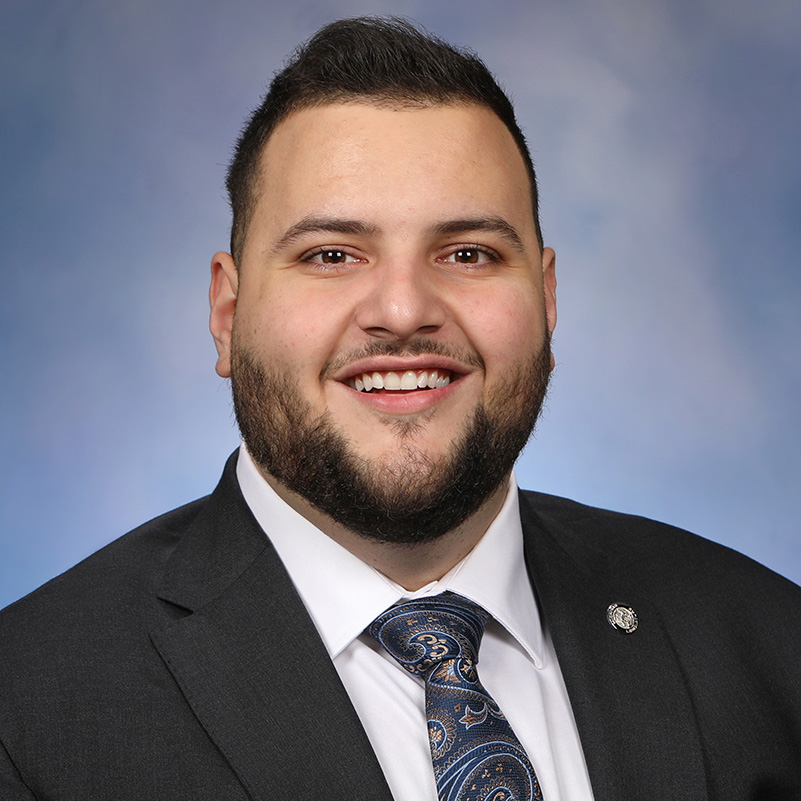
This bill updates Michigan's Child Abduction Broadcast Act to rename it the Child Abduction and Missing Child Broadcast Act and expand how radio and television stations can share information about missing children. It allows broadcasters to disseminate child abduction alerts through various channels, including social media, when they receive information from the Michigan Department of State Police under the existing Amber Alert system. The legislation also provides legal immunity to broadcasters who accurately share this information from the state police. The bill will not take effect unless it is passed together with a companion bill, SB 892.
HB 5574 prohibits approaching within 25 feet of a first responder who is lawfully performing their duties after being verbally warned not to approach, if the person intends to interfere, threaten, or harass them. It directly affects individuals who target first responders (like police, firefighters, or EMTs) during emergency operations. Violations are misdemeanors punishable by up to 60 days in jail or $500 fines, but become felonies causing injury (up to 2 years) or death (up to 15 years), with fines up to $7,500. The law focuses on preventing direct obstruction or harm during critical incidents, not general public behavior.
HB 5527 amends Michigan's penal code to increase penalties for assaulting public officials while they are performing their duties, such as police officers, firefighters, and emergency medical personnel. Penalties range from up to 2 years in prison for basic assault to up to 20 years for causing death, based on the severity of harm (e.g., bodily injury requiring medical care or serious impairment of body function). The bill also adds a provision clarifying that attending a protest is protected under the First Amendment and does not by itself violate disorderly conduct laws.
HB 5576 amends Michigan's sentencing guidelines to specifically address crimes targeting first responders. It adds intimidation or harassment of individuals based on their actual or perceived employment as a first responder (like police, firefighters, or EMTs) to the list of offenses that warrant enhanced sentencing. The bill changes Section 16t of the Michigan Code of Criminal Procedure (MCL 777.16t) to require courts to consider this factor when determining sentences for such crimes. This directly affects individuals convicted of threatening or harassing first responders, ensuring their actions are treated with greater severity under sentencing rules.
HB 5493 regulates how state and local law enforcement agencies use automatic license plate reader (ALPR) systems. It prohibits most ALPR use except for specific purposes like checking for stolen vehicles, outstanding warrants, uninsured vehicles, or active criminal investigations. The bill requires agencies to delete captured plate data within 14 days (unless used as evidence or for ongoing investigations), adopt public policies on ALPR use, and submit quarterly usage reports. It directly affects police departments and other government entities that operate ALPR systems, limiting their data collection and retention practices.
HB 5424 amends Michigan's vehicle code (MCL 257.217c) to change how law enforcement agencies can use revenue collected from fees for salvage vehicle inspections. Currently, these fees must be spent on specific purposes like vehicle inspections or law enforcement operations, but the bill modifies the allowable uses. This directly affects local police departments and sheriff's offices that collect these fees. The change would allow them to allocate the revenue toward additional law enforcement needs beyond the current restrictions.
SB 388 increases penalties for drivers who fail to exercise caution around blind pedestrians using approved travel aids like canes, dog guides, or white walkers. It amends Michigan law to raise misdemeanor fines for violating crosswalk safety rules from $25-$200 to $100-$500, with higher penalties for injuries ($1,000 fine) or deaths ($7,500 fine, up to 10 years in prison). The bill clarifies that blind pedestrians not using aids retain full pedestrian rights and cannot be deemed negligent for not using them. It also establishes procedures for reporting violations to police and requires prosecutors to inform blind pedestrians of case outcomes. The law directly affects drivers near crosswalks and blind pedestrians using specified travel aids.
HB 4587 creates a court process for Michiganders with certain court-ordered mental health commitments or adjudications (triggering federal firearm restrictions under 18 U.S.C. 922(d)(4)/(g)(4)) to seek relief from firearm disabilities. It requires courts to forward only necessary identifying information to state police for background checks and allows affected individuals to petition courts for relief after meeting specific criteria, including demonstrating they no longer pose a public safety risk. Courts must review petitions confidentially using evidence on the petitioner's mental health, criminal history, reputation, and changed circumstances. If approved, the state police must remove the disability from background check systems within 10 business days. This bill directly affects people barred from firearm purchases due to Michigan court decisions.
HB 4517 amends Michigan's Child Abduction Broadcast Act to update its title and expand how radio and TV stations can share missing child information. It specifically allows stations to broadcast alerts via social media (beyond traditional radio/TV) when sharing details from the Michigan Department of State Police under the Amber Alert system. The bill also maintains legal immunity for stations that accurately broadcast this information. This directly affects broadcasters, law enforcement, and the public by broadening the channels for urgent child safety alerts.
HB 4941 prohibits Michigan law enforcement agencies - including the state police, city, village, township, and county police - from entering into, modifying, or renewing agreements with U.S. Immigration and Customs Enforcement (ICE) under federal Section 287(g) of the immigration law. These agreements currently allow local officers to enforce federal immigration laws. The bill defines "immigration enforcement agreement" as such federal partnerships and takes effect immediately upon passage, barring any new or renewed arrangements. It directly affects all local and state law enforcement entities in Michigan by restricting their ability to collaborate on federal immigration enforcement.