

Maddy summaryThe Stand with Israel Act would prohibit U.S. federal funds from being used to pay the U.S. share of United Nations dues or contributions to UN programs, specialized agencies, or related entities if the UN or a UN entity expels, downgrades, or suspends Israel's membership or restricts Israel's full and equal participation as a member state. This means the U.S. government would withhold payments to the UN in cases where the UN takes such actions against Israel. The bill directly affects the Department of State and other federal agencies responsible for UN funding, requiring them to block these payments under specified conditions. It does not compel the UN to act but would prevent U.S. financial support in response to UN decisions impacting Israel's membership status.
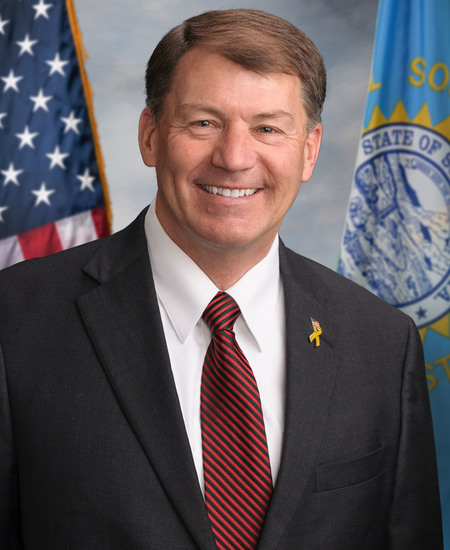
Sen. Mike Rounds
Sponsored bills
Maddy summaryThis bill directs the Department of Education to use the International Holocaust Remembrance Alliance (IHRA) definition of antisemitism when reviewing discrimination complaints under Title VI of the Civil Rights Act. It specifically applies to cases involving discrimination based on Jewish ancestry or ethnic characteristics in schools and programs receiving federal funding. The bill clarifies that this guidance does not expand the Department’s authority, alter existing discrimination standards, or affect First Amendment rights. It aims to ensure consistent enforcement against antisemitism in federally funded education settings, building on existing Department practices since 2019.
Maddy summaryThe Affordable Housing Credit Improvement Act of 2025 updates the Low-Income Housing Tax Credit program to increase affordability and accessibility for low-income households. It raises state allocation amounts through revised per capita calculations, modifies income eligibility rules to better serve extremely low-income households, and adds protections for domestic violence victims in housing. The bill expands "difficult development areas" to include rural areas and Indian lands, and changes the program's name from "Low-Income Housing Credit" to "Affordable Housing Credit" to better reflect its purpose. These changes aim to make affordable housing more accessible while improving transparency and accountability in the program's implementation.
Maddy summaryThis resolution designates the week of April 19-27, 2025, as "National Park Week" in the U.S. Senate. It encourages the public to responsibly visit, experience, and support national parks across the United States. The resolution highlights the National Park System’s role in preserving natural and cultural resources while acknowledging its economic impact and recreational value. It does not create new laws or alter funding, focusing solely on recognition and public engagement.
Maddy summaryThe POWER Act of 2025 amends the Stafford Act to help electric utilities recover from disasters more effectively. It allows utilities to combine hazard mitigation (like hardening infrastructure) with emergency power restoration efforts using federal disaster funds, and ensures that receiving emergency restoration aid doesn't block them from later qualifying for hazard mitigation assistance. This directly affects electric utilities that receive federal disaster relief under Section 403 of the Stafford Act. The changes apply only to funds appropriated after the bill's enactment.
Maddy summaryThis bill allows utility and telecom companies to report on-time payment history for services like electricity, gas, and internet to credit bureaus, helping consumers build credit who may lack traditional credit history. It specifically permits reporting on lease payments for housing (including HUD-subsidized units) and utility/telecom payments, but only includes payment-related details - not usage data like how much electricity was used. The bill also prohibits companies from reporting late payments for customers in approved payment plans (e.g., deferred payments or debt forgiveness). A government study will later assess the impact of this reporting on consumers.
Maddy summaryThe Livestock Indemnity Program Improvement Act of 2025 updates how market value is determined for payments to livestock producers who suffer losses from natural disasters or disease. It requires the Secretary of Agriculture to set this market value quarterly, in coordination with the Agricultural Marketing Service and using other appropriate resources. This change ensures payments reflect current market conditions more frequently without altering eligibility or payment formulas. The bill directly affects livestock producers receiving indemnity payments and the agencies administering the program.
Maddy summaryThis bill removes exclusions for grazing crops and grasses from the Noninsured Crop Disaster Assistance Program (NAP), expanding eligibility for disaster aid to farmers who grow these crops. Previously, farmers raising crops used for grazing were excluded from NAP benefits, but this change would allow them to access the same disaster assistance as other farmers. The Secretary of Agriculture must issue new regulations within 90 days of the bill's enactment to implement these changes. The policy directly affects ranchers and farmers who rely on grazing land for livestock, providing them with access to federal disaster support during crop failures or natural disasters.
Maddy summaryS 1495 reforms how the Natural Resources Conservation Service (NRCS) handles wetland compliance and appeals for farmers and ranchers. It requires NRCS to prove violations (not farmers to prove innocence), prohibits retroactive penalties for past wetland conversions, and prevents NRCS from changing its arguments after a successful appeal. The bill also mandates on-site visits during appeals, creates farmer-led State oversight committees, and requires customer satisfaction surveys after wetland determinations. These changes directly affect agricultural landowners who interact with NRCS regarding wetland assessments.
Maddy summaryThis bill amends federal meat and poultry inspection laws to allow state-inspected meat and poultry products to be sold across state lines. It removes the previous restriction that limited such products to sales only within the state where they were inspected, enabling interstate commerce for products meeting state inspection standards. The bill requires the Secretary of Agriculture to permit interstate shipments of properly inspected state products and prohibits states from blocking the movement or sale of these items. It directly affects small meat and poultry producers, processors, and retailers who rely on state inspection programs instead of federal oversight. The change aims to expand market access for these businesses without altering inspection standards.