Chinese Communist Party Visa Disclosure Act of 2023 or the CCP Visa Disclosure Act of 2023 This bill requires an applicant for an F, J, or M (student or exchange visitor) visa to disclose in the application certain information about whether the applicant has received or will receive funds from the Chinese government, the Chinese Communist Party (CCP), or an entity controlled by either. If an individual receives such funds after receiving such a visa, the individual must inform the Department of Homeland Security and the Department of State. Any visa issued to an individual who violates these disclosure requirements may be revoked.
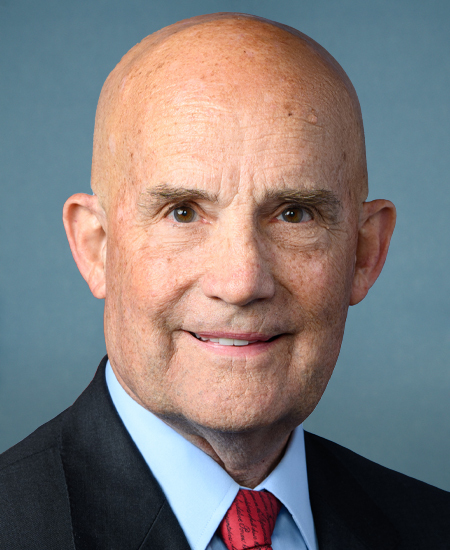
Rep. Keith Self
Sponsored bills
No Support for Terror Act This bill establishes measures to prevent the allocation or use of certain funds to support genocide or terrorism. Specifically, the bill requires the Department of the Treasury to instruct the U.S. Executive Director at the International Monetary Fund (IMF) to oppose the allocation of Special Drawing Rights (a currency support tool) to any country that is a perpetrator of genocide or a state sponsor of terrorism and to advocate that the IMF adopt a rule prohibiting such allocation. Further, the bill requires Treasury, the Department of State, and the U.S. Agency for International Development to jointly review and report on assistance provided to nongovernmental organizations and international organization to ensure such assistance is not being provided to the Taliban or other terrorist organizations. Each prime awardee of this assistance must provide evidence that all subawardees are complying with U.S. anti-terrorism financing laws.
Keep Huawei on the Entity List Act This bill continues export controls on Huawei Technologies Co. Ltd., and it requires the Department of Commerce to designate Honor Device Co. Ltd. for inclusion on the list of entities subject to certain license requirements for exports. The bill prohibits Commerce from removing Huawei (or its subsidiaries or affiliates) from the entity list unless Commerce certifies that Huawei (1) has not engaged in activities that are contrary to U.S. national security or foreign policy interests and is unlikely to do so in the future; and (2) is not owned, controlled, or influenced by the Communist Party of China. Commerce must submit a monthly report identifying and describing all license applications to export, reexport, or transfer (in-country) certain items to Huawei or Honor, as well as whether those applications were approved or denied.
Maddy summaryThis bill prohibits U.S. colleges and universities receiving federal education funds from employing instructors who received funding from the Chinese Communist Party (CCP) while working at the institution. Institutions that employ such instructors lose eligibility for federal funding during the affected award year. To regain funding, institutions must demonstrate to the Secretary of Education that they no longer employ CCP-funded instructors, with eligibility restored in the following award year. The law takes effect 180 days after enactment.
Taliban Rare Earth Minerals Sanctions Act This bill requires the President to impose sanctions on foreign individuals and entities that knowingly engage in a significant transaction involving the rare earth mineral sector of Afghanistan. The President must impose property-blocking sanctions on such foreign individuals and entities, as well as visa-blocking sanctions on the individuals.
This resolution expresses support for the Supreme Court's holding in Dobbs v. Jackson Women's Health Organization (that there is no constitutional right to abortion). The resolution also applauds the courage of the Justices for standing by their allegiance to the Constitution and the legitimacy of the Supreme Court, and it expresses a commitment to supporting policies that continue to protect all life.
Prohibiting Abortion Industry's Lucrative Loopholes Act This bill expands the prohibition on the sale or purchase of human fetal tissue in interstate commerce to include any payments associated with the transportation, implantation, processing, preservation, quality control, or storage of such tissue.
Protecting Life and Integrity in Research Act of 2023 This bill restricts research that uses human fetal tissue from an induced abortion. Specifically, it prohibits the Department of Health and Human Services from conducting or supporting such research. Additionally, the bill applies requirements on the research of transplantation of fetal tissue for therapeutic purposes to research on fetal tissue in general. The bill also prohibits soliciting or acquiring a donation of human fetal tissue from an induced abortion, other than for purposes of an autopsy or burial.
Maddy summaryThis bill would prohibit the FDA from approving new abortion medications or investigational uses of existing ones. It would restrict currently approved abortion drugs to in-person administration only in clinics, hospitals, or medical offices by certified providers who can handle complications like ectopic pregnancy or severe bleeding. The law requires detailed adverse event reporting (excluding patient identifiers) to the FDA by both manufacturers and prescribers, and mandates provider certification covering pregnancy assessment, surgical intervention capabilities, and patient safety documentation. These provisions apply directly to healthcare providers, patients seeking medication abortions, and manufacturers of abortion drugs.
Protecting Life from Chemical Abortions Act This bill nullifies certain changes made by the Food and Drug Administration (FDA) to dispensing requirements for mifepristone. (Mifepristone is a drug that is approved to end pregnancies through 10 weeks gestation when used in conjunction with the drug misoprostol. The procedure is often referred to as medication abortion or the abortion pill.) The FDA regulates the use of mifepristone through the Mifepristone Risk Evaluation and Mitigation Strategy (REMS) program. The program requires health care providers to comply with certain requirements in order to prescribe or dispense mifepristone to end a pregnancy; the program previously included an in-person dispensing requirement that required mifepristone to be directly dispensed to patients in clinics, medical offices, or hospitals. During the COVID-19 public health emergency, the FDA temporarily stopped enforcing the in-person dispensing requirement, which allowed mail-order pharmacies to fill and dispense mifepristone prescriptions. In January 2023, the FDA modified program requirements so as to (1) remove the in-person dispensing requirement, and (2) require pharmacies to be certified in the program in order to dispense mifepristone. The modifications allow retail pharmacies, after receiving certification, to dispense mifepristone pursuant to prescriptions that are written by program-certified prescribers. The bill nullifies the January 2023 changes and prohibits the FDA from (1) exercising any enforcement discretion with respect to program requirements, or (2) reducing program protections until every state submits certain data regarding abortions to the Centers for Disease Control and Prevention. The bill also generally prohibits the declaration of a public health emergency with respect to abortions.