Maddy summaryThis bill would require the revocation of U.S. passports for citizens with overdue child support payments exceeding $2,500. It amends the Social Security Act to mandate automatic passport revocation (replacing previous options for restriction or limitation) and requires advance notice to the individual before revocation. An exception allows temporary passports for emergency return to the U.S. from abroad. The policy directly affects parents who owe significant child support arrears, with no mention of broader implementation or outcomes.
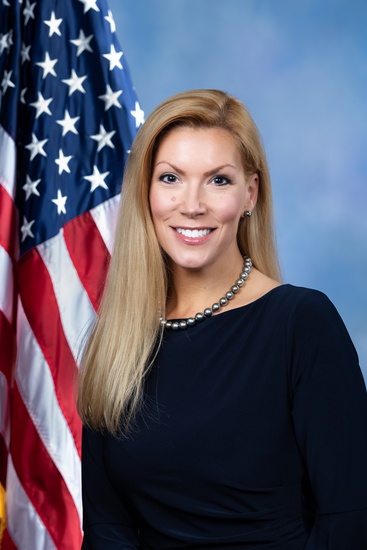
Rep. Beth Van Duyne
Sponsored bills
Clergy Act This bill establishes a two-year window for certain members of the clergy and Christian Science practitioners to revoke their exemption from Social Security and Medicare taxes on ministerial earnings. Under current law, such individuals who object to participation in public insurance programs on religious or conscientious grounds may apply to the Internal Revenue Service (IRS) for an irrevocable exemption and will not receive Social Security or Medicare benefits in retirement unless they have qualifying credits from other employment. The IRS must develop a plan to inform members of the clergy and Christian Science practitioners of their eligibility to revoke prior exemptions, pursuant to the bill's changes.
Maddy summaryThe Medicare Advantage Improvement Act of 2026 aims to speed up care decisions and increase transparency for Medicare Advantage enrollees and providers. Starting in 2028, the bill requires insurance plans to respond to most prior authorization requests within 72 hours and to provide real-time decisions for low-risk services, while also banning requirements for re-authorization when a treatment plan is clinically modified. The legislation introduces a new compliance scoring system that will publicly rank plans and reduce payments to those with poor performance, alongside stricter rules ensuring medical necessity standards match those of traditional Medicare.
Equal Representation Act This bill requires that the statement sent by the President to Congress after the decennial census indicating the number of persons in each state exclude noncitizens. (This statement is the basis for reapportionment of U.S. Representatives.) The bill also requires any questionnaire used in the decennial census to include a checkbox or other similar option for respondents to indicate whether the respondent and each household member is (1) a U.S. citizen, (2) a U.S. national but not a citizen, (3) a non-U.S. national ( alien under federal law) lawfully residing in the United States, or (4) a non-U.S. national unlawfully residing in the United States. The Department of Commerce must make public the number of persons in each state, disaggregated by each of these four categories.
Maddy summaryThis bill, the Breast Cancer Research Stamp Reauthorization Act of 2026, extends the period during which a special postage stamp can be sold to raise funds for breast cancer research. It amends existing law to change the program's expiration date. Specifically, the bill allows the U.S. Postal Service to continue selling the Breast Cancer Research Stamp until 2037, extending its current authorization which was set to expire in 2027. This change aims to continue providing a dedicated funding source for breast cancer research through stamp sales, affecting stamp purchasers and breast cancer research institutions.
Maddy summaryThe Senior Citizens’ Freedom to Work Act of 2026 aims to repeal the Retirement Earnings Test (RET) for Social Security beneficiaries. This means that individuals collecting Social Security benefits, including those under the Railroad Retirement program, would no longer have their benefits reduced if they continue to work and earn above a certain income threshold. The bill achieves this by repealing specific subsections of the Social Security Act and making conforming amendments across related benefit provisions. This change directly affects senior citizens and other beneficiaries who choose to remain employed while receiving their benefits, ensuring they receive their full entitlement. The provisions of this act are set to take effect for taxable years ending after December 31, 2026.
Maddy summaryThe Stop Climate Shakedowns Act of 2026 prohibits state and local governments from suing energy companies for damages related to climate change or greenhouse gas emissions. This bill declares that regulating emissions is exclusively a federal responsibility and voids any state laws that hold energy businesses liable for alleged climate harms. Consequently, all pending lawsuits of this nature against energy producers must be dismissed immediately, preventing states from imposing retroactive penalties for past lawful operations. The legislation directly affects companies involved in the production, refinement, and sale of oil, gas, and coal by shielding them from civil liability in both state and federal courts.
Maddy summaryThis resolution expresses support for the Working Families Tax Cuts, a law already enacted in July 2025 that provides various tax benefits to American taxpayers. The bill directly affects individuals and families by recognizing specific provisions that reduce tax liability, including expanded child tax credits, increased standard deductions, and tax relief for tipped workers and overtime pay. Key provisions include making a four-person household earning under $73,000 generally face zero federal income tax, increasing the child tax credit to $2,200 per child, and allowing 529 accounts to cover K-12 and trade school expenses. The resolution also acknowledges tax relief for seniors, auto loan interest deductions for American-made vehicles, and expanded health savings account access. This is a procedural measure that formally acknowledges existing tax policies rather than creating new legislation.
Maddy summaryHR 8295, the Protecting Families from Fertility Fraud Act of 2026, creates a new federal crime for knowingly misrepresenting the nature or source of DNA used in assisted reproductive technology or assisted insemination. This directly affects fertility clinics, practitioners, and patients undergoing such procedures. Individuals found guilty could face up to 10 years in prison, a fine, or both. The bill defines federal jurisdiction for these offenses, primarily involving interstate commerce, and extends the statute of limitations to 10 years after identification through DNA testing. It also adds this new crime to the list of "racketeering activities" under federal law.
Maddy summaryThis resolution establishes an annual Congressional Quilt Show to honor American quilters and their 250-year tradition of craftsmanship. The program would select winners through a lottery system among constituents who have received recognition at county fairs or similar events within their congressional districts. Winning quilts would be displayed outside Members of Congress offices by the Architect of the Capitol, with rules set by the House Administration Committee. The measure expresses support for the cultural and community value of quilting without mandating funding or creating new federal programs.