

Preventing Future Pandemics Act of 2021 This bill establishes measures to address global public health risks posed by wildlife markets, which are commercial markets that sell or slaughter wildlife for human consumption as food or medicine in communities where alternative nutritional or protein sources are available. Specifically, the bill prohibits importing, exporting, purchasing, or selling live wild animals in the United States for human consumption as food or medicine. The Department of the Interior must hire, train, and deploy at least 50 new U.S. Fish and Wildlife Service law enforcement attachés around the world, and the U.S. Agency for International Development must increase specified activities to address the threats and causes of zoonotic (animal-to-human transmission) disease outbreaks. Additionally, the United States must work with other United Nations member states to urge a global ban on commercial wildlife markets and enforcement of laws to end wildlife trafficking. Further, the President may impose sanctions against a foreign country or foreign nationals that the Department of State has determined are taking certain actions that enable or facilitate commercial wildlife markets. Among other reports required by the bill, the National Academies of Sciences, Engineering, and Medicine must conduct a study and submit a report that includes an evaluation of (1) the impact that consumption of terrestrial wildlife as food or medicine has on the transmission of novel viral and other pathogens, (2) the role of consuming terrestrial wildlife as food or medicine in the transmission of microbes from animals to humans, and (3) the conditions at live wildlife markets that lead to this transmission.
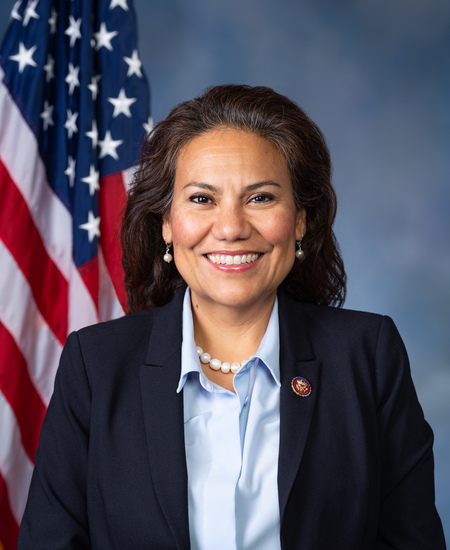
Rep. Veronica Escobar
Sponsored bills
Build America's Libraries Act This bill establishes and provides funds through FY2024 for the Build America's Libraries Fund, from which the Institute of Museum and Library Services (IMLS) must allocate funding to states and, through them, need-based grants to libraries to make long-term improvements to library facilities. The IMLS must also award grants to Indian tribes and organizations that primarily serve and represent Native Hawaiians. Specifically, the bill requires each state that receives an allocation, and each library that receives a grant, to carry out certain activities to improve library facilities. These activities include constructing and renovating library facilities, investing in infrastructure projects to improve internet access and connectivity, improving indoor air quality, and making facilities accessible to individuals with disabilities. The bill also outlines administrative and oversight provisions, including by requiring library projects to use iron and steel products that are produced in the United States.
Alzheimer's Caregiver Support Act This bill authorizes grants to expand training and support services for families and caregivers of individuals living with Alzheimer's disease or a related dementia. The Department of Health and Human Services may award these grants to community organizations and health care and social service providers.
This resolution expresses support for the designation of COVID-19 Victims and Survivors Memorial Day to memorialize the lives lost to COVID-19 (i.e., coronavirus disease 2019).
This bill requires the Joint Committee on the Library to obtain, and the Architect of the Capitol to permanently install in the U.S. Capitol or on the U.S. Capitol Grounds, a monument honoring Associate Justice of the Supreme Court Ruth Bader Ginsburg.
Federal Death Penalty Abolition Act of 2021 This bill prohibits the imposition of a death penalty sentence for a violation of federal law. It eliminates statutory authority for the death penalty as a sentencing option for federal offenses. It also requires a person who was sentenced to death before enactment of this bill to be resentenced.
Coronavirus Medicaid Response Act This bill increases the Medicaid federal matching rate, also known as the Federal Medical Assistance Percentage (FMAP), for states and U.S. territories that experience economic downturns (i.e., high unemployment) beginning on or after January 1, 2020, in accordance with specified requirements and limitations. The bill's increase is in addition to previously enacted FMAP increases relating to COVID-19 (i.e., coronavirus disease 2019) but may not result in an FMAP greater than 95%.
This bill provides for the presentation of a Congressional Gold Medal to the Freedom Riders, in recognition of their contribution to civil rights by fighting for equality in interstate travel.
Juneteenth National Independence Day Act This bill establishes Juneteenth Independence Day as a federal holiday.
This resolution declares that (1) the United States needs a Marshall Plan for Moms to revitalize and restore mothers in the workforce; and (2) mothers, especially mothers of color have been pushed to the brink of economic, social, and emotional collapse during the COVID-19 (i.e., coronavirus disease 2019) pandemic because of the existing economic and social inequalities women have long faced. The resolution also states that any relief and long-term recovery package to address the COVID-19 crisis must recognize and rebuild moms in the workforce by including certain policies such as establishing a robust paid leave plan; rebuilding and stabilizing the child care industry; providing necessary child poverty reduction tools for families' economic security that include recurring child benefits and an expanded and improved child tax credit and earned income tax credit; establishing an expanded unemployment insurance program that benefits struggling workers, including those experiencing long-term unemployment; raising the federal minimum wage to $15 per hour or higher for all minimum wage workers; and providing access to mental health support for mothers. Finally, the resolution declares that employers and policymakers must prioritize addressing the economic cliff facing mothers and make permanent the policies set forth in this resolution so that mothers are protected against any future economic calamities.