

Developing Responsible Individuals for a Vibrant Economy Act or the DRIVE-SAFE Act This bill directs the Department of Transportation to promulgate regulations to implement an apprenticeship program for licensed commercial motor vehicle drivers under the age of 21. Under the program, an apprentice must complete two probationary periods that total 400 hours of on-duty time, of which at least 240 hours must be driving time in a commercial motor vehicle. Additionally, the apprentice must be accompanied in the cab of the commercial motor vehicle by an experienced driver. Further, the bill requires all commercial motor vehicles used in the program for training to be equipped with safety technology such as active braking collision mitigation systems and video event capturing systems. An employer shall not knowingly allow, require, permit, or authorize a driver under the age of 21 to operate a commercial motor vehicle unless the driver is participating in, or has completed, an apprenticeship program that meets the requirements set forth in this bill.
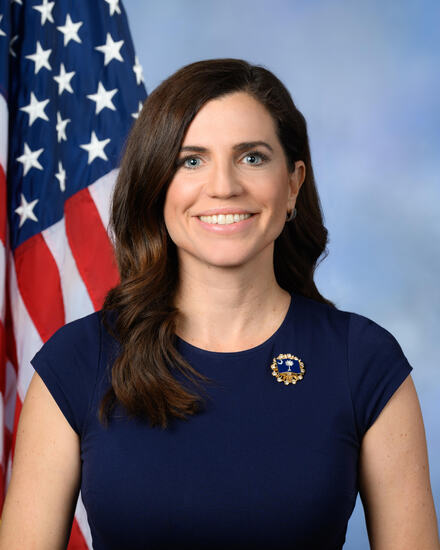
Rep. Nancy Mace
Sponsored bills
Death Tax Repeal Act This bill repeals the estate and generation-skipping transfer taxes. It also makes conforming amendments related to the gift tax.
This joint resolution proposes a constitutional amendment limiting Representatives to three terms and Senators to two terms. Terms beginning before the ratification of this amendment do not count towards these term limits.
This joint resolution proposes an amendment to the Constitution to require that the Supreme Court consist of nine Justices.
Sand Acquisition, Nourishment, and Development Act or the SAND Act This bill allows the Department of the Army to acquire fill material for beach erosion and nourishment purposes from non-domestic sources even if such materials are available from domestic sources.
This bill invalidates certain provisions of the District of Columbia Municipal Regulations as added by the final rulemaking of the State Superintendent of Education of the District of Columbia issued on December 7, 2016, that require a staff member of a child development facility to have a degree, a certificate, or a minimum number of credit hours from an institution of higher education. The requirements of this rulemaking apply to personnel including child development center directors, teachers, and assistant teachers; expanded child development home caregivers; and out-of-school time program directors and group leaders.
Concealed Carry Reciprocity Act This bill establishes a federal statutory framework to regulate the carry or possession of concealed firearms across state lines. Specifically, an individual who is eligible to carry a concealed firearm in one state may carry or possess a concealed handgun (other than a machine gun or destructive device) in another state that allows its residents to carry concealed firearms. It sets forth requirements for the lawful concealed carry across state lines. The bill preempts most state and local laws related to concealed carry and establishes a private right of action for a person adversely affected by interference with a concealed-carry right established by this bill.
This resolution calls on the President to abandon the One China policy in favor of one that recognizes Taiwan as an independent country that is not a part of China. The resolution also urges the President to bolster diplomatic and economic relations between the United States and Taiwan through specified means.
Promoting Women in Trucking Workforce Act This bill directs the Federal Motor Carrier Safety Administration to establish and facilitate a Women of Trucking Advisory Board to promote organizations and programs that (1) provide education, training, mentorship, or outreach to women in the trucking industry; and (2) recruit, retain, or advance women into the trucking industry.
Telehealth Modernization Act This bill modifies requirements relating to coverage of telehealth services under Medicare. Specifically, the bill extends certain flexibilities that were initially authorized during the public health emergency relating to COVID-19 (i.e., coronavirus disease 2019). Among other things, the bill allows (1) rural health clinics and federally qualified health centers to serve as the distant site (i.e., the location of the health care practitioner); (2) the home of a beneficiary to serve as the originating site (i.e., the location of the beneficiary) for all services (rather than for only certain services); and (3) all types of practitioners to furnish telehealth services, as determined by the Centers for Medicare & Medicaid Services.