By Representatives Vargas of Haverhill and Garcia of Chelsea, a petition (subject to Joint Rule 12) of Andres X. Vargas, Judith A. Garcia and others for legislation to further regulate state and local participation in federal civil immigration enforcement. Public Safety and Homeland Security.
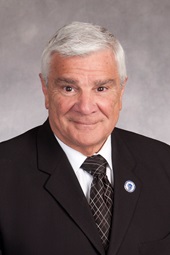
Rep. Paul Donato
Sponsored bills
Maddy summaryThis bill (HD 2322) gives Massachusetts' state secretary authority to manage elections during declared emergencies (state or federal). It allows postponing or extending candidate qualification periods and election dates - up to 45 days - for municipal, county, or state-wide races. The secretary must also create a contingency plan outlining procedures for notifying voters, officials, and media if elections are delayed, and for handling election returns after rescheduling. This directly affects election administrators, candidates, and voters in affected areas during emergencies.
Maddy summaryThis bill creates a refundable tax credit for adoptive parents in Massachusetts. It provides $2,500 per adopted child from foster care and $2,000 per adopted child from private or public adoption agencies, refundable against state income taxes. The credit covers expenses like agency fees, attorney fees, court costs, and medical copayments directly related to adopting a minor child. It directly affects adoptive parents who pay these costs through licensed agencies or foster care systems. The change modifies existing tax law to expand and clarify eligible adoption-related expenses.
Maddy summaryThis bill (HD 4223) adds a $50,000 income tax exemption for Massachusetts residents aged 65 or older during the taxable year. It directly affects seniors who meet the age requirement by reducing their taxable income. The key provision inserts a new section into state tax law, allowing eligible seniors to exclude $50,000 from their taxable income when calculating state income tax. This is a concrete policy change that lowers tax liability for qualifying seniors without altering other tax rates or brackets. The exemption applies automatically to eligible individuals who reach age 65 by year-end.
Maddy summaryThis bill requires parents or guardians to provide proof of a dental screening by a licensed professional within the past year for children entering kindergarten or starting school. Schools must notify parents about this requirement and provide information on oral health's importance, while maintaining privacy. It establishes a standardized form for dental professionals to record screening details and a reporting system for schools to submit annual data on screening completion and oral health status to the health department. The collected data will be used for public health analysis, focusing on access barriers and dental health outcomes for students.
Maddy summaryThis bill requires the Department of Conservation and Recreation to conduct a formal review of its forest management practices every five years, starting with an assessment of current guidelines and operations. The review must evaluate how well existing practices protect natural resources, improve transparency and public participation, and address climate change impacts while considering opportunities to expand forest reserves and nature-based solutions. During the review period, the department cannot lease, sell, or remove timber from public forests except for emergencies, and must hold public hearings and accept written testimony from residents across the state. The department must submit its findings and recommendations to state legislative committees by June 30, 2027, including updated guidelines and proposed changes to improve forest management accountability.
Maddy summaryThis bill designates all Commonwealth watershed lands as either "Parks" (for recreation with strict resource protection) or "Reserves" (for minimal human interference to protect ecosystems). It establishes a Reserves Scientific Advisory Council of eight scientific experts to oversee Reserve management and provide biennial reports to the governor. The bill requires the commissioner to develop public-input watershed management plans every five years, focusing on forest protection, climate resilience, carbon storage, and water quality. These plans must align with the new land classifications and prohibit selling or removing natural resources except for specific management needs like erosion control or public safety. The bill directly affects how Massachusetts manages its watershed systems, including the Quabbin Reservoir area.
Maddy summaryThis bill creates a new "Reserves Scientific Advisory Council" to guide Massachusetts' forest reserve system. The eight-member council, including experts from environmental organizations and universities, will oversee reserve management, recommend new acquisitions, and ensure minimal human intervention in reserves. It requires public hearings for major changes and mandates that management plans for all reserves include public input and protect natural resources. The bill directly affects how state forests and protected lands are managed across Massachusetts, particularly within the urban parks district areas defined in the law.
Maddy summaryThis bill requires Massachusetts to designate at least 30% of its Wildlife Management Area lands as "Reserves" by January 1, 2030, maintaining this percentage as new lands are acquired. Reserves must be selected based on ecological criteria like old-growth forests, contiguous habitats, wetlands, and carbon storage capacity, and will be managed to preserve natural conditions with minimal human intervention. A new Scientific Advisory Council of eight environmental experts will oversee Reserve designations, submit biennial reports to the governor, and advise on management, while prohibiting new commercial infrastructure like solar farms, pipelines, or cell towers in Reserves (except for limited public facility upgrades with minimal environmental impact). The bill defines Reserves as protected areas for scientific research, habitat conservation, and carbon storage, banning resource extraction except for specific management needs like erosion control or invasive species removal.
Maddy summaryHD 665 establishes a state Office of Restorative Justice within the executive office for administration and finance. The office, led by a director with restorative justice expertise, will serve as the central hub for developing, funding, and supporting restorative justice programs across Massachusetts. It will assist courts, local governments, community organizations, and the public in implementing restorative practices like victim-offender conferences and community circles - focusing on healing harm rather than solely punishment. The office must also create a diverse statewide advisory committee and submit annual reports to state officials on its activities and finances. This bill directly affects state agencies, courts, and community groups implementing restorative justice initiatives.