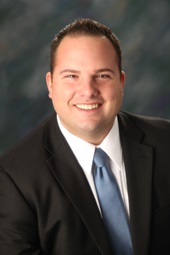
By Representative Blais of Deerfield, a petition (accompanied by bill, House, No. 904) of Natalie M. Blais, Joanne M. Comerford and Mindy Domb relative to solar and battery decommissioning and recycling. Environment and Natural Resources.
This bill allocates $2.65 billion in state funds for capital improvements at Massachusetts public colleges and universities. It directly affects all 15 public institutions by funding deferred maintenance, modernization, decarbonization projects, and facility upgrades - including $1.25 billion for campus infrastructure at state universities and community colleges, $80 million for energy efficiency and fossil fuel reduction, and $10 million for lab modernization and student support facilities. Key mechanisms include requiring projects to align with campus master plans and decarbonization plans, mandating inclusion in a capital asset management system, and creating reporting requirements on student collaboration outcomes. The funding covers repairs, construction, renovations, and adaptive reuse projects like converting campuses for housing, all subject to oversight by the Division of Capital Asset Management.
This bill transfers the Massachusetts Community Climate Bank's assets, staff, and ongoing projects to the Massachusetts Clean Energy Technology Center. The Center will now serve as the state's official Green Bank, responsible for financing clean energy projects across residential, municipal, small business, and commercial sectors. Key provisions include providing loans, grants, and investments to reduce greenhouse gases, with priority given to projects advancing climate goals, lowering emissions, and ensuring equitable access to clean energy. This directly affects residents, local governments, small businesses, and clean energy companies seeking financing for projects like solar installations, building decarbonization, and electric vehicle programs.
By Ms. Creem, a petition (accompanied by bill, Senate, No. 556) of Cynthia Stone Creem, Michael D. Brady and Dylan A. Fernandes for legislation to establish a lithium-ion battery stewardship program. Environment and Natural Resources.
This bill creates a summer energy assistance program in Massachusetts to help low-income residents pay energy bills during extreme heat months (May 15-September 30). It directly affects residents earning up to 150% of the federal poverty level or 60% of the state median income (whichever is higher), plus those already enrolled in the existing Low-Income Home Energy Assistance Program (LIHEAP). The program uses LIHEAP’s existing application and verification systems, sets benefit limits based on available funding, and allows up to 10% of funds for administrative costs. It requires coordination with federal LIHEAP rules and must be implemented through new state regulations within six months.
By Mr. Tarr, a petition (accompanied by bill, Senate, No. 2092) of Bruce E. Tarr for legislation to apply rebates to reduce the MSRP of an electric vehicle in the calculation of motor vehicle excise tax. Revenue.
H 4420 creates the Agriculture and Fishery Vulnerability Preparedness Grant Fund to help Massachusetts farms and fisheries prepare for climate change impacts. The fund, managed by state agricultural and fishery departments, provides grants for climate resilience projects like energy-efficient farming, climate-resilient infrastructure, and data collection. It also supports technical assistance to help applicants plan and secure funding for these initiatives. Grants are awarded based on sector and regional needs, with quarterly reports tracking applicants, recipients, funding amounts, and administrative costs to state legislative committees. The fund permanently retains unspent money, ensuring ongoing support without annual re-appropriation.
By Mr. Barrett, a petition (accompanied by bill, Senate, No. 1926) of Michael J. Barrett and Vanna Howard for legislation to exempt electric vehicle chargers from the sales tax. Revenue.
This bill creates a commission to assess and improve the health and energy efficiency of Massachusetts public college and university buildings, directly affecting all 15 public institutions (including UMass, community colleges, and state universities). The commission will evaluate factors like air quality, water safety, energy use, and accessibility, then develop standards and publish findings online. It establishes two funds: one to cover debt service on campus construction (freeing up money for faculty hiring and student support programs) and another to finance renovations and new construction meeting the commission's green and healthy standards. The bill mandates that by 2027, all new academic/administrative buildings must be fully funded by the state, eliminating reliance on institutional debt.
This bill amends Chapter 179 of Massachusetts law by removing a 2035 deadline that would have ended in-state sales of non-zero-emission vehicles. It deletes a specific requirement (section 46) and modifies another provision (section 81) to eliminate the sales cessation mandate while retaining language about advancing EV charging access and affordability. The bill directly affects vehicle dealerships, manufacturers, and consumers by removing a future sales restriction. Key change: shifting focus from a mandated sales cutoff to prioritizing infrastructure development for electric vehicles.