Maddy summaryThis bill amends VA medical coverage to explicitly include adaptive prostheses and terminal devices designed for sports and recreational activities alongside standard artificial limbs. It directly affects eligible veterans using prosthetic devices who wish to participate in sports or recreational therapy. The key provision expands existing VA coverage under 38 U.S.C. §1701 to cover these specific adaptive devices without requiring separate authorization. This change ensures veterans can access equipment for recreational purposes through the VA's standard medical services. The bill does not create new benefits but clarifies and broadens existing coverage for a defined category of prosthetic devices.
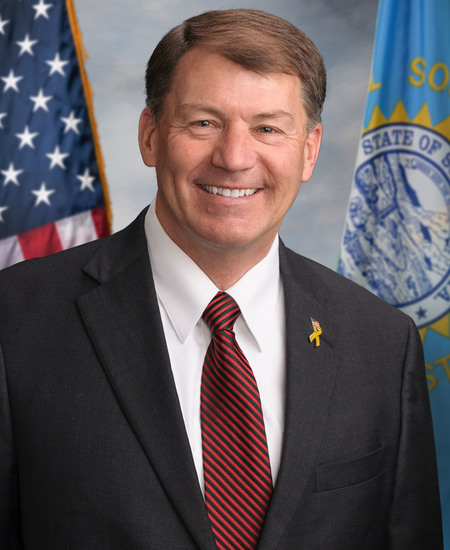
Sen. Mike Rounds
Sponsored bills
Fighting for the Overlooked Recognition of Groups Operating in Toxic Test Environments in Nevada (FORGOTTEN) Veterans Act of 2025 This bill requires increased Department of Defense (DOD) documentation related to toxic exposures by military personnel and establishes eligibility for certain disability compensation and benefits for individuals who served at the Nevada Test and Training Range (NTTR). DOD must (1) expand the Individual Longitudinal Exposure Record to include specified medical information and document all toxic exposures of members of the Armed Forces, and (2) document in service records whether a member of the Armed Forces served at a location with potential toxic exposure. Members of the Armed Forces and civilian DOD employees who are or have been stationed at specified nuclear facilities must be presumed to have been exposed to toxic substances. DOD must classify the NTTR as a location where contamination occurred and the Department of the Air Force must identify those who have been stationed there since January 27, 1951. The bill establishes that onsite participation on or after January 27, 1951, at NTTR locations where there was a potential of toxic exposure is a radiation-risk activity, therefore providing a presumption of service-connection for specified conditions. The bill also establishes a presumption of toxic exposure for veterans who performed active service at NTTR locations with potential toxic exposure, including airspace above such locations. Additionally, lipomas and tumor related conditions must be considered as service-connected conditions for veterans who served at the NTTR locations.
Automotive Support Services to Improve Safe Transportation Act of 2025 or the ASSIST Act of 2025 This bill expands the definition of medical services for purposes of veterans’ benefits to include additional medically necessary automobile adaptations. Under the bill, the Department of Veterans Affairs may provide funding for the following medically necessary automobile adaptations for driver or passenger use: ramp and kneeling systems, lowered floors, occupied and unoccupied mobility lifts, ingress or egress accessibility modifications, and adapted seating. The bill also extends the limitation on pension amounts for certain hospitalized or institutionalized veterans through September 30, 2032.
Maddy summaryThe Love Lives On Act of 2025 modifies veterans' and military survivors' benefit rules to prevent remarriage from automatically ending eligibility. It directly affects surviving spouses of veterans or military members who remarried, ensuring they retain access to key benefits. Key provisions include: (1) preventing termination of veterans' dependency compensation (under 38 U.S.C. §1311/1562) due to remarriage; (2) stopping termination of military Survivor Benefit Plan annuities solely for remarriage, with specific rules for those who remarried before age 55; and (3) expanding TRICARE coverage to include remarried widows/widowers whose subsequent marriage ended (via death, divorce, or annulment). These changes restore or maintain benefits that were previously lost upon remarriage.
Maddy summaryThis resolution formally recognizes 2026 as the International Year of Rangelands and Pastoralists, acknowledging the ecological and economic importance of these lands to the United States. The bill highlights that rangelands cover a significant portion of U.S. territory and support domestic production of food, fiber, and energy while providing critical ecosystem services like carbon storage and wildfire risk reduction. It encourages federal agencies, universities, and organizations to engage in education, research, and outreach activities related to sustainable rangeland management during the designated year. The measure does not create new laws or funding but serves to raise awareness and promote collaboration among stakeholders involved in rangeland stewardship.
Maddy summaryThis bill would remove the federal approval for the drug mifepristone, which is used in combination with other medications to end pregnancies, and would make it illegal to distribute the drug for that purpose. It also creates a new federal lawsuit option allowing individuals to sue drug manufacturers for physical or mental harm they claim resulted from using mifepristone. The law would take effect 14 days after passing, with the new lawsuit provision becoming active 90 days after enactment.
Maddy summaryThis bill establishes the Economy of the Future Commission, a temporary legislative body designed to study how artificial intelligence adoption is affecting the U.S. economy. The Commission will consist of 10 members appointed by congressional leaders, including representatives from various congressional committees and experts in AI, education, workforce development, and taxation, along with four nonvoting deputy secretaries from federal departments. Its main duties include developing legislative recommendations on AI-related economic changes, evaluating impacts on education and workforce programs, and producing reports on employment shifts and federal revenue over the next five and ten years. The Commission will operate for approximately 13 months, concluding with a final report submitted to Congress and relevant federal agencies, and will be funded with $5.25 million.
Maddy summaryThis bill, titled the Investments in Rural Transit Act, aims to improve funding and administrative support for public transportation in rural areas and on Tribal lands. It increases the Federal operating share for rural transit from 50 percent to 80 percent and allows Tribal transit agencies to receive up to 100 percent Federal funding for eligible projects. The legislation also streamlines how rural and Tribal agencies can purchase vehicles and equipment through cooperative purchasing arrangements and requires the creation of a new Associate Administrator position focused on Tribal transit support. Additionally, the bill mandates a joint report from the Departments of Transportation and Energy on improving the procurement of low-emission vehicles in rural communities.
Maddy summaryThis bill requires the Assistant Secretary of Commerce for Economic Development to create simplified application forms for rural communities seeking federal economic development grants. It defines rural communities as incorporated municipalities, Tribal areas, or territories with populations of 10,000 or fewer people or those outside metropolitan statistical areas. The legislation mandates that the Assistant Secretary gather input from rural stakeholders on reducing application length, minimizing required documentation, standardizing forms across programs, and eliminating repetitive information requests. Additionally, the bill requires the agency to publicly share sample successful applications, decision-making criteria, and standardized guidance to help rural applicants navigate the grant process.
Maddy summaryThis resolution designates February 21-28, 2026, as "National FFA Week" to honor the National FFA Organization’s work in agricultural education. It recognizes FFA’s role in developing leadership and career skills for students (with over 1 million members nationally) and celebrates the 50th anniversary of Alaska’s State FFA Association, which has 19 chapters and 493 members. As a symbolic resolution, it has no legal effect but formally expresses Senate support for FFA’s mission.