Maddy summaryHRES 855 is a symbolic resolution passed by the U.S. House of Representatives to support designating the first week of December 2022 as "National United States Miners Week." It does not create new laws or policies but formally recognizes miners' contributions to the economy and supply chains. The resolution highlights miners' role in providing critical minerals and coal, supporting over 500,000 jobs, and securing domestic resources for everyday products. It directly affects miners and their communities by offering a formal, non-binding acknowledgment of their work. This is a procedural resolution with no concrete policy changes or funding implications.
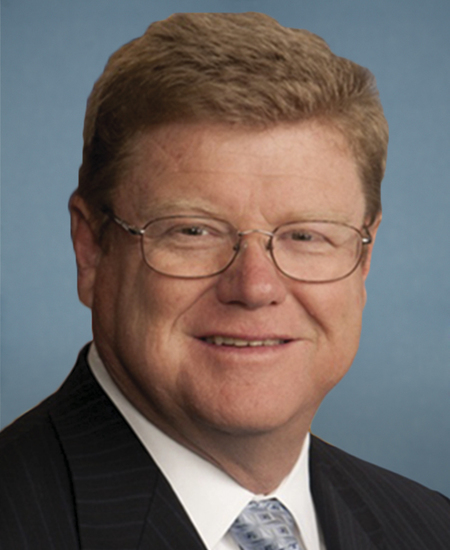
Rep. Mark E. Amodei
Sponsored bills
Radiation Exposure Compensation Act Amendments of 2021 This bill expands two programs that compensate individuals who were exposed to radiation during certain nuclear testing or uranium mining and subsequently developed medical conditions, including cancers. First, the bill expands and extends a program that compensates individuals who were exposed to radiation from atmospheric nuclear testing or other sources and subsequently developed specified cancers. Under current law, this program compensates individuals who were present in a designated geographic area during a period of nuclear testing and certain individuals employed in uranium mining. The bill expands the designated areas to include Colorado, Idaho, Montana, New Mexico, and Guam and additional areas in Arizona, Nevada, and Utah; makes more individuals who worked in uranium mining eligible for the program; increases the amount of compensation awarded to and provides medical benefits for eligible claimants; and extends for 19 years following the bill's enactment the fund that supports this program and the statute of limitations for filing claims (currently, the program terminates on July 10, 2022). Second, the bill makes certain individuals employed in uranium mines or mills eligible for a program that compensates workers, including Department of Energy employees and contractors, for illnesses caused by occupational exposure to radiation and hazardous substances during development and testing of the nation's nuclear weapons stockpile. The bill also establishes a grant program in the National Institute of Environmental Health Sciences for institutions of higher education to study the epidemiological impacts of uranium mining and milling among individuals without occupational exposure.
Community Bank Relief Act of 2021 This bill requires banking agencies to set the community bank leverage ratio between 8% and 8.5% for calendar years 2022, 2023, and 2024 for community banks seeking to satisfy simplified capital adequacy requirements. Currently, banking agencies are statutorily required to set the rate between 8% and 10% through rulemaking. Under current regulations, the rate will increase from 8.5% to 9% on January 1, 2022.
Employee Retention Tax Credit Reinstatement Act This bill provides for a reinstatement of the employee retention tax credit through 2021. The credit was established to compensate employers whose businesses were negatively impacted by the COVID-19 pandemic for wages paid to their employees.
This bill prohibits the Small Business Administration from directly making a loan under the 7(a) Program, which authorizes loans and loan guaranties to small businesses that meet certain requirements.
Fairness for Federal Contractors Act of 2021 This bill prohibits executive agencies from requiring contractors to receive a COVID-19 vaccination. The bill also requires the Government Accountability Office to study the degree to which Executive Order 14042 (Ensuring Adequate COVID Safety Protocols for Federal Contractors) caused disruptions to federal contracts, supply chains, and transportation systems.
This joint resolution nullifies a Department of Labor emergency temporary standard for preventing the transmission of COVID-19 in employment settings. Under the standard issued on November 5, 2021, employers with 100 or more employees must require their onsite employees to either be fully vaccinated against COVID-19 or undergo weekly COVID-19 testing.
Credit Union Governance Modernization Act of 2021 This bill revises the procedure for expelling members from a federal credit union. Specifically, a member may be expelled for cause pursuant to a policy adopted by a majority vote of a quorum of the directors of a credit union. Currently, a member may be expelled by a two-thirds vote of the credit union membership present at a special meeting. The member may request a hearing from the board of directors. After the hearing, the board shall hold a vote on expelling the member. The expelled member may request reinstatement through a two-thirds vote of the members present at a meeting. Member conduct that may be cause for expulsion includes a material loss to the credit union, a violation of the credit union membership agreement, a substantial disruption to the operations of a credit union, fraud or attempted fraud, and other illegal or inappropriate behavior.
This concurrent resolution declares that Congress should not impose any new performance fee, tax, royalty, or other charge relating to the public performance of sound recordings on a local radio station for broadcasting sound recordings over the air, or on any business for such public performance of sound recordings.
FHA Fairness Act This bill increases the mortgage limit for federal mortgage insurance eligibility for homes in certain cities and counties. Specifically, this increase applies to metropolitan cities and urban counties with higher housing costs that have experienced a decrease in home values over a specified time period.