National Right-to-Work Act This bill repeals those provisions of the National Labor Relations Act and the Railway Labor Act that permit employers to make an agreement with a labor union to require employees to join such union as a condition of employment. Currently, at least 27 states have enacted laws prohibiting employers from compelling employees to become members of a union as a condition of employment.
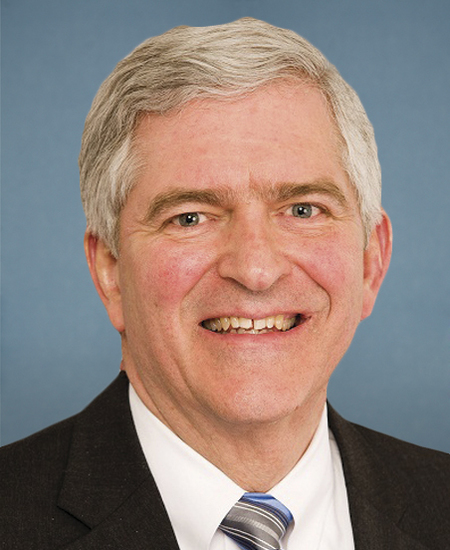
Rep. Daniel Webster
Sponsored bills
Iran Hostages Congressional Gold Medal Act This bill requires the Speaker of the House of Representatives and the President pro tempore of the Senate to arrange for the award of a Congressional Gold Medal commemorating the bravery and endurance of the 53 hostages of the Iran Hostage Crisis. Following its award, the medal shall be given to the National Museum of American History of the Smithsonian Institution for display and research. The Department of the Treasury must strike duplicate medals in silver for presentation to a hostage (or the personal representative of a deceased hostage), and Treasury may also strike and sell duplicate medals in bronze.
This resolution urges the U.S. Postal Service to take steps to ensure the continuation of its six-day mail delivery service.
This resolution expresses the sense of the House of Representatives that the U.S. Postal Service should restore mail delivery service standards to those of July 1, 2012.
Education Freedom Scholarships and Opportunity Act This bill allows individual and corporate taxpayers a tax credit for cash contributions to tax-exempt scholarship-granting organizations for elementary and secondary education expenses. It imposes a cap of $5 billion on the amount of contributions that qualify for a tax credit. The bill directs the Department of Education, in coordination with the Department of the Treasury, to establish, host, and maintain a web portal that (1) lists all eligible scholarship-granting organizations; (2) enables contributions to such organizations; (3) provides information about the benefits of this bill; and (4) enables a state to submit and update information about its programs and scholarship-granting organizations, including information on student eligibility and allowable educational expenses.
This bill requires the President to notify Congress and the public of executive orders relating to the natural resources of the United States before issuing such orders.
This bill requires the President to notify Congress and the public of executive orders relating to energy policy before issuing such orders.
This bill requires the President to provide Congress with certain information at least 30 days before issuing an executive order related to abortion. Before issuing an abortion-related executive order, the President shall provide Congress with (1) the executive order text, (2) a list of the federal laws affected, (3) information about how the President is working within the parameters of federal law and the Constitution, (4) information about how the executive order will be accomplished, and (5) a list of all the individuals and entities that the President engaged with before issuing the order.
Reopen Schools Act This bill requires a local educational agency (LEA) to reopen its elementary and secondary schools as a condition for receiving certain supplemental education emergency relief funding. Specifically, an LEA must provide in-person instruction to at least 50% of its students in order to receive the full funding. An LEA that provides in-person instruction to at least some of its students shall have its funding reduced on a pro rata basis.
This bill requires the President to provide Congress with certain information at least 30 days before issuing an executive order related to agriculture, food, and the livelihood of farmers, ranchers, and producers in the United States. Before issuing such an order, the President shall provide Congress with (1) the executive order text, (2) a list of the federal laws affected, (3) information about how the President is working within the parameters of federal law and the Constitution, (4) information about how the executive order will be accomplished, and (5) a list of all the individuals and entities that the President engaged with before issuing the order.