Issue · Transportation

Transportation

Every transportation bill, vote, and legislator stance in Maryland, automatically classified by Maddy, our AI policy reader.

Total bills
145
2026 Regular Session
Top supporter
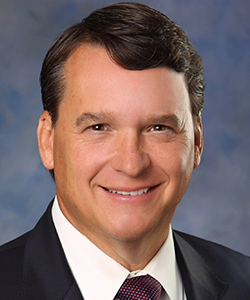
Craig Zucker
100% support rate
Top opponent
Johnny Mautz
0% support rate
Ranked legislators
10
5 support · 5 oppose
Key legislators

Who's moving transportation in Maryland

Legislators moving transportation in Maryland
Legislator Party Stance Support rate Votes
Craig Zucker
Craig Zucker Senate · District 14
D
Strong +
100% 40
Shelly Hettleman
Shelly Hettleman Senate · District 11
D
Strong +
100% 37
Nick Charles
Nick Charles Senate · District 25
D
Strong +
100% 27
Katie Hester
Katie Hester Senate · District 9
D
Strong +
100% 40
Dalya Attar
Dalya Attar Senate · District 41
D
Strong +
100% 17
Johnny Mautz
Johnny Mautz Senate · District 37
R
Strong −
0% 40
Jack Bailey
Jack Bailey Senate · District 29
R
Strong −
7% 39
Jason Gallion
Jason Gallion Senate · District 35
R
Strong −
7% 40
Steve Hershey
Steve Hershey Senate · District 36
R
Strong −
8% 36
Paul Corderman
Paul Corderman Senate · District 2
R
Strong −
13% 40
Showing 111–120 of 145 bills

All transportation bills

in committee · Maryland · House of Delegates Jan 19, 2026

HB 8: Vehicle Laws - Dangerous Driver Abatement Program - Establishment (Dangerous Driver Accountability Act)

HB 8 establishes Maryland's Dangerous Driver Abatement Program to address repeat traffic violations captured by automated systems. It directly affects drivers who accumulate three or more violations (e.g., running red lights, ignoring stop signs, or speeding near schools) within 12 months, as recorded by traffic cameras or speed monitoring devices. The program requires the Motor Vehicle Administration to send written notices detailing violations, list approved safety courses online, and mandate that repeat offenders complete a course within 30 days - or face suspension of their vehicle registration. Low-income offenders (with income at or below 200% of the federal poverty level) are exempt from the course requirement but must still receive the notice.
signed · Maryland · Senate May 12, 2026

SB 68: Driver’s Licenses – Driver Skills Examination – Motorcycle Safety Awareness (D. Torch Road Safety Act)

SB 68 requires Maryland's Motor Vehicle Administration to add at least five motorcycle safety questions to the driver skills exam for all new or upgraded driver's licenses. These questions will cover specific topics like motorcycle visibility, proper lane positioning, safe following distances, and crash prevention around motorcycles. The bill directly affects every driver's license applicant in Maryland who takes the skills exam, including those seeking motorcycle licenses. It becomes effective on October 1, 2026, without altering existing vision or road test requirements.
signed · Maryland · House of Delegates May 12, 2026

HB 246: Video Tolls - Class G (Trailer) Vehicles - Liability

HB 246 clarifies that the registered owner of a Class G (trailer) vehicle is responsible for paying video tolls when a trailer passes through a toll facility without using an electronic toll system. The bill requires the Maryland Transportation Authority to send a notice of toll due to the registered owner’s address on file, giving them 30 days to pay before penalties apply. This directly affects commercial trailer owners who use Maryland toll roads, as it establishes clear billing procedures and penalties for unpaid tolls captured by video systems. The law updates existing toll regulations to specifically include trailers under video toll liability rules.
Sub-Topics Freight
in committee · Maryland · House of Delegates Jan 28, 2026

HB 510: Motor Vehicles - Automated Speed Enforcement - Improper Registration

HB 510 requires Maryland's Motor Vehicle Administration to partner with Virginia to obtain data on Maryland residents who own vehicles improperly registered in Virginia. The bill creates a searchable database of this information, making it available to law enforcement for automated speed enforcement citations. It increases penalties for drivers or owners of such vehicles, raising the maximum fine for speeding violations from $40 to $250 for offenses recorded by automated systems. This directly affects Maryland residents who register vehicles in Virginia instead of Maryland, impacting how speed violations are enforced and fined for these specific vehicles.
passed · Maryland · House of Delegates Mar 24, 2026

HB 646: Driver Licensing – Self–Reporting of Medical Conditions

HB 646 requires Maryland’s Motor Vehicle Administration (MVA) to prioritize a medical provider’s report or referral - not its own assessment - as the main factor in deciding whether to issue, refuse, or cancel a driver’s license for individuals who self-report certain medical conditions. The MVA may still request additional testing for those reporting conditions, and must create an expedited process for issuing learner’s permits to people whose medical conditions have improved but who need to complete driver education or testing. This bill directly affects drivers and applicants who self-report qualifying medical conditions, such as those impacting vision, cognition, or physical ability. It shifts decision-making authority to medical professionals while maintaining MVA flexibility for safety reviews.
Sub-Topics Driver Licensing
in committee · Maryland · House of Delegates Jan 19, 2026

HB 302: Maryland Transportation Authority - Patapsco River Toll Bridge - Design

HB 302 requires the Maryland Transportation Authority to design entrances and exits for the new Patapsco River bridge (replacing the collapsed Francis Scott Key Bridge) so vehicles not crossing the bridge won’t be charged a toll. It specifically amends state law to mandate that the bridge’s access points prevent toll collection for non-crossing vehicles. The bill directly affects drivers using the Patapsco River bridge area, ensuring tolls are only charged for those actually using the bridge. The provision takes effect October 1, 2026, and focuses solely on physical design changes to toll collection systems.
Sub-Topics Bridges
in committee · Maryland · Senate Jan 22, 2026

SB 288: Transportation - Highway User Revenues Capital Grants - Calculation

SB 288 adjusts how Maryland calculates capital grants distributed from highway user revenues to local governments. It increases Baltimore City's share from 8.3% to 12.2% starting in fiscal year 2026, raises county allocations from 4.8% to 15.2% beginning in 2027, and modifies municipal percentages (to 3.0% then 2.4% after 2027). These changes apply to funds in the Gasoline and Motor Vehicle Revenue Account, which includes fuel taxes and vehicle-related fees. The bill directly affects Baltimore City, counties, and municipalities receiving transportation capital grants.
passed both · Maryland · Senate Apr 13, 2026

SB 389: Land Use - Transit-Oriented Development - Alterations (Maryland Transit and Housing Opportunity Act)

SB 389, the Maryland Transit and Housing Opportunity Act, automatically designates transit-oriented development (TOD) areas near rail stations with hourly weekday service (8 a.m.-6 p.m.) as enterprise zones - bypassing normal limits on such designations. It requires Maryland’s development corporation to prioritize loans for projects redeveloping state-owned land near rail stations and delays development taxes/fees for qualifying residential projects. The bill also adds project labor agreements as a scoring factor for TOD funding and adjusts local land-use regulations to support transit-focused development. Directly affecting developers, local governments, and communities near transit hubs, it aims to accelerate housing and infrastructure near rail corridors.
signed · Maryland · Senate Apr 8, 2026

SB 283: Creation of a State Debt – Maryland Consolidated Capital Bond Loan of 2026, and the Maryland Consolidated Capital Bond Loans of 2014, 2015, 2016, 2017, 2018, 2019, 2020, 2021, 2022, 2023, 2024, and 2025

SB 283 authorizes Maryland to borrow $1.824 billion through a new 2026 capital bond loan, updating previous bond programs from 2015-2025. The funds will finance state construction, renovations, equipment, and grants to local governments for infrastructure projects, requiring matching local funds and strict spending deadlines. It modifies prior bond law provisions to clarify eligible uses, extend project timelines, and adjust budget allocations for ongoing capital projects. This bill primarily affects state agencies, local governments receiving grants, and public infrastructure projects across Maryland.
Sub-Topics Debt & Bonds
in committee · Maryland · Senate Feb 5, 2026

SB 62: Transportation - Consolidated Transportation Program - Prioritization (Transportation Investment Priorities Act of 2026)

SB 62 requires Maryland’s Department of Transportation to create a scoring system evaluating major surface transportation projects against state goals, such as safety and economic impact. Projects must undergo this scoring to be included in the state’s Consolidated Transportation Program, directly affecting local governments, transit agencies, and metropolitan planning organizations that submit project proposals. The bill mandates the Department publish project scores and recommended projects, altering how transportation funds are allocated. It also updates the Maryland Transportation Commission’s structure and responsibilities to align with this new prioritization process.
Showing 111 to 120 of 145 bills
Previous 1 11 12 13 15 Next