Issue · Labor & Employment

Labor & Employment (Collective Bargaining)

Every labor & employment bill, vote, and legislator stance in Maryland, automatically classified by Maddy, our AI policy reader.

Total bills
25
2026 Regular Session
Top supporter
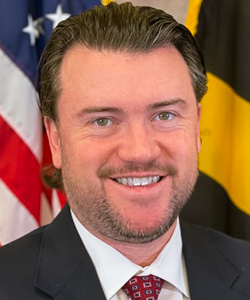
Kevin Hornberger
100% support rate
Top opponent
Ric Metzgar
0% support rate
Ranked legislators
10
5 support · 5 oppose
Key legislators

Who's moving collective bargaining in Maryland

Legislators moving collective bargaining in Maryland
Legislator Party Stance Support rate Votes
Kevin Hornberger
Kevin Hornberger House · District 35B
R
Strong +
100% 15
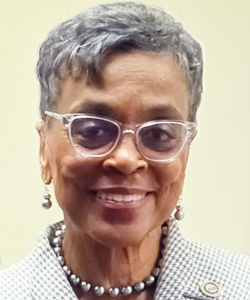
Cheryl Pasteur
Cheryl Pasteur House · District 11A
D
Strong +
100% 12
Jennifer White Holland
Jennifer White Holland House · District 10
D
Strong +
100% 12
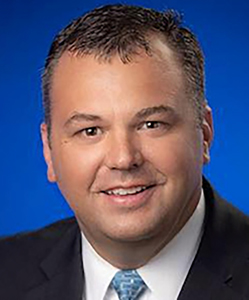
Sarah Wolek
Sarah Wolek House · District 16
D
Strong +
100% 12
Caylin Young
Caylin Young House · District 45
D
Strong +
100% 11
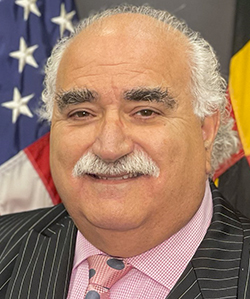
Ric Metzgar
Ric Metzgar House · District 6
R
Strong −
0% 9
J.B. Jennings
J.B. Jennings Senate · District 7
R
Strong −
0% 7
Jack Bailey
Jack Bailey Senate · District 29
R
Strong −
0% 7
Jason Gallion
Jason Gallion Senate · District 35
R
Strong −
0% 7
Johnny Mautz
Johnny Mautz Senate · District 37
R
Strong −
0% 7
Showing 11–20 of 25 bills

All labor & employment bills

passed both · Maryland · House of Delegates Apr 13, 2026

HB 1433: Community Colleges - Collective Bargaining - Definition of Supervisory Employee

HB 1433 defines "supervisory employee" for collective bargaining purposes in Maryland community colleges. It specifies that a supervisory employee must have authority to hire, discipline, direct over 50% of work hours, or resolve complaints, while excluding department heads and faculty below assistant dean level. This definition determines which staff (non-supervisory employees) can participate in union negotiations. The bill amends Maryland’s Education Code and takes effect July 1, 2026.
died · Maryland · House of Delegates Mar 9, 2026

HB 1307: State Finance and Procurement - Employers Receiving State Public Funds - Unfair Labor Practices

HB 1307 requires employers receiving $250,000 or more in state public funds under a single contract to agree they will not engage in unfair labor practices defined under federal law (29 U.S.C. §158) and acknowledge that violations may result in the state recapturing those funds. It directly affects large state contractors by linking funding eligibility to compliance with federal labor protections under the National Labor Relations Act. The bill authorizes the state to recapture funds for up to two years after disbursement if violations occur, and allows employees to file complaints with the Attorney General, who must investigate and may sue for damages including full fund recovery. The law takes effect July 1, 2026.
in committee · Maryland · Senate Feb 12, 2026

SB 887: Labor and Employment - Greenhouse Workers - Collective Bargaining and Heat Protection

SB 887 establishes collective bargaining rights for greenhouse workers in Maryland, requiring employers in controlled-environment agricultural operations (like greenhouses) to allow employees to form or join unions. The bill creates new procedures for union elections, certification of representatives, and good-faith bargaining, overseen by the Secretary of Labor. It also mandates employer-provided rest breaks during extreme heat conditions to prevent heat-related illness, aligning with existing heat safety standards. This law directly affects greenhouse workers and their employers, adding specific protections not previously covered under Maryland labor law.
signed · Maryland · House of Delegates May 26, 2026

HB 388: Baltimore County Public Library - Collective Bargaining - Supervisory Employees

HB 388 allows supervisory employees at Baltimore County Public Library to form unions and engage in collective bargaining, creating a dedicated bargaining unit for them alongside the existing unit for non-supervisory staff. It clarifies that some supervisory roles may be reclassified as "management employees" if their duties involve routine tasks rather than independent judgment, using specific criteria like whether they spend significant time working with non-supervisory staff. The bill preserves existing bargaining agreements and units in place before June 30, 2026, and takes effect July 1, 2026. This change directly affects library supervisors in Baltimore County by granting them formal collective bargaining rights previously restricted to non-supervisory employees.
signed · Maryland · Senate Apr 14, 2026

SB 136: Collective Bargaining - Alcohol, Tobacco, and Cannabis Commission - Police Officers

SB 136 extends collective bargaining rights under Maryland's state employee laws to police officers employed by the Alcohol, Tobacco, and Cannabis Commission (ATCC) who are authorized to make arrests. It amends state law to explicitly include these officers under Section 3-102(a)(4) of the State Personnel and Pensions article, placing them in the same category as other covered state employees. This change applies to all full-time ATCC police officers at the rank of first sergeant and below, excluding supervisory or confidential roles as defined by regulations. The bill takes effect on October 1, 2026.
passed · Maryland · Senate Mar 24, 2026

SB 387: Food Retailers and Third-Party Food Delivery Service Providers - Dynamic Pricing and Personal Data (Protection From Predatory Pricing Act)

SB 387 prohibits large food retailers (15,000+ sq ft) in Maryland from using dynamic pricing (real-time price changes based on demand or AI) or consumer surveillance data (like location or biometric tracking) to set prices for individual customers. It also bans using protected class data (e.g., race, gender) to deny accommodations or advantages to consumers. The bill further prevents retailers from reducing union-guaranteed employee benefits without negotiating with union representatives. These provisions aim to regulate pricing practices, prevent discriminatory data use, and protect collective bargaining agreements, with violations subject to enforcement under Maryland’s consumer protection laws.
passed · Maryland · House of Delegates Apr 13, 2026

HB 106: State Personnel - Collective Bargaining - Nontenure Track Faculty

HB 106 grants collective bargaining rights to nontenure track faculty at Maryland's public higher education institutions, specifically at the University System of Maryland, Morgan State University, and St. Mary’s College of Maryland. It creates a separate bargaining unit for these faculty members - including full-time, part-time, and adjunct employees with academic responsibilities like teachers and researchers - who were previously excluded from collective bargaining under state law. The bill amends existing statutes to explicitly include nontenure track faculty in bargaining units, allowing them to negotiate wages, hours, and working conditions through union representation. This change takes effect July 1, 2026.
signed · Maryland · Senate Apr 28, 2026

SB 28: Arbitration Reform for State Employees Act of 2026

SB 28 requires state agencies and institutions (like the University System of Maryland and Maryland Environmental Service) to use a neutral third-party arbitrator from the American Arbitration Association's panel when collective bargaining reaches an impasse. It mandates that budget bills include all necessary funds to implement agreements reached through bargaining, including memoranda of understanding (MOUs) covering employee terms and conditions. The bill makes the arbitrator's recommendations advisory (not binding) and sets deadlines for negotiations to conclude by September 30. This directly affects state employees represented by exclusive bargaining units and ensures funding for negotiated terms is included in annual budgets.
signed · Maryland · House of Delegates May 12, 2026

HB 503: Baltimore City Sheriff's Office - Collective Bargaining - Compensation

HB 503 allows full-time sworn deputy sheriffs (at lieutenant rank or below) and court security officers in Baltimore City to collectively bargain over compensation - including salary, wages, and city-managed benefits - as well as leave, hours, working conditions, and job security. It requires these officers to negotiate jointly with both the Sheriff and Baltimore City (not just one entity) for these matters, removing previous restrictions that excluded salary from bargaining. The bill excludes captains, appointed staff, civilian employees, part-timers, and temporary workers from these collective bargaining rights. This changes existing law to expand bargaining scope for eligible officers while specifying the joint negotiation process.
in committee · Maryland · House of Delegates Jan 28, 2026

HB 473: Education - Collective Bargaining - Certificated Employees - Class Size

HB 473 repeals the current ban preventing public school employers in Maryland from negotiating class size limits with teacher unions. It removes the prohibition in Section 6-406(c)(3) that previously barred discussions about "the maximum number of students assigned to a class" during collective bargaining. This change directly affects certificated school employees (like teachers) and their unions, as well as public school employers (county school systems). The bill enables these parties to negotiate class size as part of their collective bargaining agreements, alongside other terms like salaries and working conditions.
Showing 11 to 20 of 25 bills