Issue · Environment

Environment

Every environment bill, vote, and legislator stance in Maryland, automatically classified by Maddy, our AI policy reader.

Total bills
11
119th Congress
Top supporter
Angela D. Alsobrooks
77% support rate
Top opponent
Andy Harris
36% support rate
Ranked legislators
6
5 support · 1 oppose
Key legislators

Who's moving environment in Maryland

Legislators moving environment in Maryland
Legislator Party Stance Support rate Votes
Angela D. Alsobrooks
Angela D. Alsobrooks Senate
D
Support
77% 231
Chris Van Hollen
Chris Van Hollen Senate
D
Support
76% 232
Sarah Elfreth
Sarah Elfreth House · District 3
D
Support
64% 305
Johnny Olszewski, Jr.
Johnny Olszewski, Jr. House · District 2
D
Support
64% 304
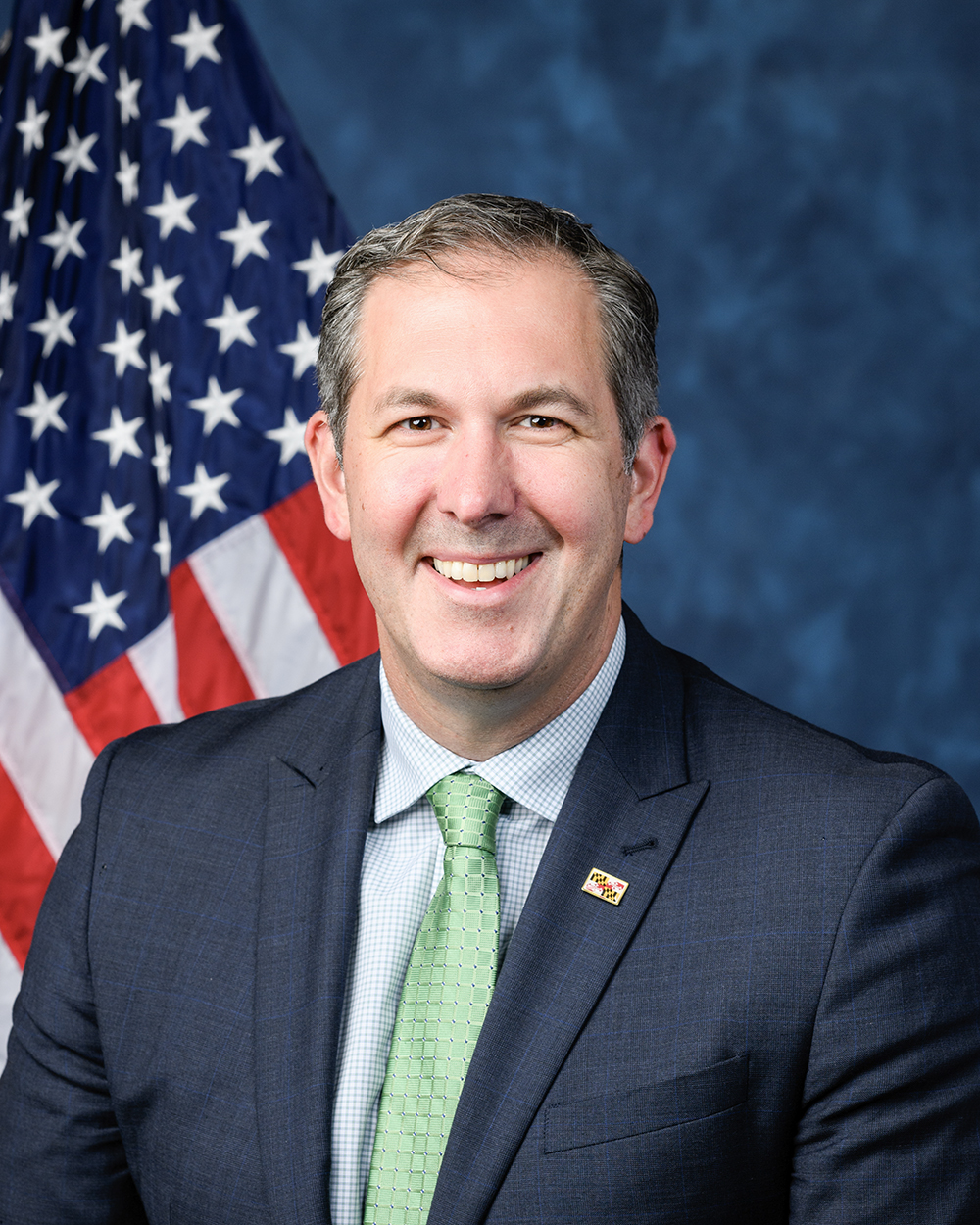
Jamie Raskin
Jamie Raskin House · District 8
D
Support
64% 304
Andy Harris
Andy Harris House · District 1
R
Oppose
36% 298
Showing 1–10 of 11 bills

All environment bills

in committee · United States · House Jun 8, 2026

HR 9188: Military Readiness Permitting Efficiency Act of 2026

The Military Readiness Permitting Efficiency Act of 2026 allows the Department of Defense to enter into agreements with the National Marine Fisheries Service and the U.S. Fish and Wildlife Service to speed up environmental reviews for priority military projects. Under these agreements, the military can provide direct funding to hire additional staff for these agencies if they lack the necessary personnel or funds to complete reviews within a specific timeframe. This process applies to environmental assessments required by laws such as the Endangered Species Act and the Marine Mammal Protection Act. The bill aims to reduce delays in military construction and operations by ensuring these reviews are completed promptly when national defense interests are at stake.
Sub-Topics Wildlife
in committee · United States · Senate Mar 26, 2026

S 4222: End Polluter Welfare for Enhanced Oil Recovery Act of 2026

This bill, the End Polluter Welfare for Enhanced Oil Recovery Act of 2026, removes tax incentives for enhanced oil recovery projects that use carbon dioxide as an injectant. It directly affects oil and gas companies and energy producers who build qualified facilities after the law is enacted. The legislation eliminates the tax credit for carbon capture and storage when the captured carbon dioxide is used to extract more oil from existing wells. Additionally, the bill repeals the federal enhanced oil recovery tax credit that previously allowed companies to deduct certain costs related to extracting additional oil from mature wells. These changes apply to taxable years beginning after the bill is enacted.
Sub-Topics Tax Credits Oil & Gas
in committee · United States · House Jul 21, 2026

HR 6213: Heat Workforce Standards Act of 2025

HR 6213, the Heat Workforce Standards Act of 2025, prohibits the U.S. Department of Labor from finalizing, implementing, or enforcing OSHA's proposed "Heat Injury and Illness Prevention" standard (published August 30, 2024). This bill directly blocks the specific regulatory proposal targeting heat safety in both outdoor and indoor work settings. It does not create new requirements or affect workers; it solely prevents the implementation of the existing OSHA proposal. The bill is procedural, focusing on halting a regulatory action rather than establishing new policy.
in committee · United States · House Jun 26, 2025

HR 4172: OCED Elimination Act

HR 4172, the OCED Elimination Act, abolishes the Office of Clean Energy Demonstrations (OCED) within the U.S. Department of Energy. It repeals Section 41201 of the Infrastructure Investment and Jobs Act (42 U.S.C. 18861), which previously authorized the OCED's operations. This bill directly affects the Department of Energy by eliminating a specific office and its associated funding mechanisms for clean energy demonstration projects. The change removes a dedicated structure for advancing clean energy demonstrations but does not alter broader clean energy funding programs. As a procedural bill, it focuses solely on the elimination of the office and its related statutory provision.
Sub-Topics Renewable Energy
in committee · United States · House Jan 22, 2025

HR 600: WHO is Accountable Act

HR 600, the "WHO is Accountable Act," prohibits U.S. federal funds from supporting the World Health Organization (WHO) until the organization meets eight specific conditions. These include ending perceived Chinese Communist Party influence, ending alleged pandemic cover-ups, granting Taiwan observer status, and halting WHO activities on gender identity, climate change, and abortion access. The bill blocks all U.S. contributions and membership efforts until the State Department certifies WHO compliance. It directly affects U.S. agencies managing international health funding and WHO's operational policies.
passed · United States · House Dec 18, 2025

HR 845: Pet and Livestock Protection Act

This bill, titled "Pet and Livestock Protection Act," is misleading; it actually focuses on gray wolf management. It requires the Secretary of the Interior to reissue a 2020 rule removing gray wolves from the endangered species list within 60 days of enactment. The bill also prohibits courts from reviewing this reissuance. This directly affects gray wolf populations and management policies in states where wolves are present, shifting regulatory control away from federal endangered species protections.
Sub-Topics Wildlife
signed · United States · House Nov 25, 2025

HR 2316: Wetlands Conservation and Access Improvement Act of 2025

This bill amends the Pittman-Robertson Wildlife Restoration Act to delay when interest earned on the Federal aid to wildlife restoration fund becomes available for apportionment to states. Specifically, it changes the effective date from fiscal year 2026 to fiscal year 2033, meaning states will not receive this interest for wildlife conservation funding until 2033. The bill directly affects state wildlife conservation programs that rely on these federal funds for projects like habitat restoration. The title "Wetlands Conservation and Access Improvement Act" does not reflect the bill's actual focus, which is a procedural change to fund timing rather than new conservation measures.
Sub-Topics Conservation Wildlife
in committee · United States · House May 20, 2025

HR 513: Offshore Lands Authorities Act of 2025

HR 513, the Offshore Lands Authorities Act of 2025, reverses multiple existing presidential protections that blocked oil and gas leasing on offshore federal lands. It nullifies 8 specific presidential withdrawals (including areas in the Arctic, Atlantic, Gulf of Mexico, and Pacific) and restricts future presidential actions by limiting withdrawals to 150,000 acres per action, capping them at 20 years, and requiring Congressional approval for cumulative withdrawals exceeding 500,000 acres. The bill mandates that before any withdrawal, the Secretary must complete four assessments covering mineral resources, economic/energy value, revenue impacts, and national security. It also establishes a fast-track process for Congress to disapprove withdrawals within 20 days, with limited debate (10 hours) on the resolution.
in committee · United States · Senate Mar 4, 2025

S 837: Defending American Jobs and Affordable Energy Act of 2025

This bill repeals four executive orders issued on January 20, 2025, which related to energy policy and environmental agreements. It directly affects federal agencies responsible for implementing those orders, prohibiting the use of federal funds for any of their provisions. The key mechanism is an immediate ban on funding for the orders' implementation upon the bill's enactment, effectively canceling their legal force.
in committee · United States · House Feb 27, 2025

HR 1754: FARM Act of 2025

HR 1754, the FARM Act of 2025, blocks tax credits for renewable energy projects on agricultural land. It amends the tax code to deny credits under Sections 48 (solar) and 45 (wind) for public utilities installing solar or wind facilities on agricultural land as defined by existing law (Food Security Act of 1985). The bill directly affects public utilities seeking tax incentives for new renewable energy installations on farmland. The provisions apply to property placed in service after the bill's enactment date. This is a tax code change, not a new program, and does not impact individual farmers or non-public utility projects.
Sub-Topics Renewable Energy Solar Tags Agriculture
Showing 1 to 10 of 11 bills
1 2 Next