Issue · Criminal Justice

Criminal Justice (Corrections)

Every criminal justice bill, vote, and legislator stance in Maryland, automatically classified by Maddy, our AI policy reader.

Total bills
78
2026 Regular Session
Top supporter
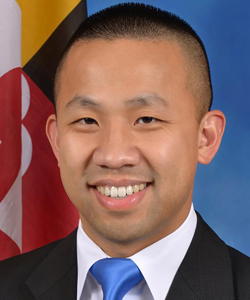
Stuart Schmidt
100% support rate
Top opponent
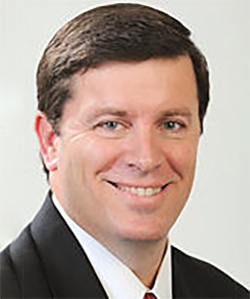
Barrie Ciliberti
0% support rate
Ranked legislators
10
5 support · 5 oppose
Key legislators

Who's moving corrections in Maryland

Legislators moving corrections in Maryland
Legislator Party Stance Support rate Votes
Stuart Schmidt
Stuart Schmidt House · District 33B
R
Strong +
100% 5
Gabriel Moreno
Gabriel Moreno House · District 13
D
Strong +
100% 4
Clarence Lam
Clarence Lam Senate · District 12
D
Strong +
100% 3
Cory McCray
Cory McCray Senate · District 45
D
Strong +
100% 3
Jennifer White Holland
Jennifer White Holland House · District 10
D
Strong +
100% 3
Barrie Ciliberti
Barrie Ciliberti House · District 4
R
Strong −
0% 4
Josh Stonko
Josh Stonko House · District 42C
R
Strong −
0% 4
Bryan Simonaire
Bryan Simonaire Senate · District 31
R
Strong −
0% 3
Chris West
Chris West Senate · District 42
R
Strong −
0% 3
Jack Bailey
Jack Bailey Senate · District 29
R
Strong −
0% 3
Showing 21–30 of 78 bills

All criminal justice bills

in committee · Maryland · House of Delegates Feb 16, 2026

HB 1415: Public Safety - Law Enforcement Officers - Identification

HB 1415 requires all Maryland law enforcement officers to visibly wear identification (including agency, last name, and badge number) on their outermost clothing during duty, with specific standards for size, placement, and visibility. It mandates that the Maryland Police Training and Standards Commission develop a model policy covering these requirements, including how identification must be displayed on uniforms, outerwear, and plainclothes, plus training for officers. Law enforcement agencies must adopt policies matching this model, and officers violating the rule face misdemeanor penalties (up to 2 years in jail or $2,000 fine) and loss of civil immunity. The law excludes active undercover officers and takes effect October 1, 2026.
died · Maryland · House of Delegates Feb 23, 2026

HB 876: Criminal Procedure - Motion to Reduce Duration of Sentence - Repeal of Sentencing Date Limitation

HB 876 repeals a time limit that previously prevented certain individuals from filing a motion to reduce their prison sentence. It applies to people convicted as adults for crimes committed as minors (if sentenced before October 1, 2021) who have served 20+ years, or those convicted between ages 18-24 for non-violent crimes (excluding sex offenders and specific murders) who have served 20+ years. The bill requires courts to hold a hearing on such motions, allowing the individual to present evidence and victims to submit impact statements without cross-examination, with the individual required to attend in person or via video unless waived.
Sub-Topics Corrections Sentencing
in committee · Maryland · House of Delegates Feb 5, 2026

HB 847: Criminal Law - Fraud - Possession of Residential Real Property

HB 847 makes it a misdemeanor to possess or claim rights to residential property you don’t legally own with intent to defraud. Violations carry escalating penalties: up to 90 days in jail or $500 for a first offense, increasing to 1 year/jail or $2,500 for repeat offenses within two years. Property owners can file a sworn affidavit with the sheriff to request law enforcement remove alleged fraudsters, but officers must halt removal if the person presents evidence of lawful possession. The law explicitly states it doesn’t prevent owners from filing standard wrongful detainer lawsuits under existing property law.
in committee · Maryland · Senate Feb 12, 2026

SB 680: Intercepted Communications - Penalty

SB 680 reclassifies the offense of intercepting, disclosing, or using unauthorized wire, oral, or electronic communications from a felony to a misdemeanor under Maryland law. It directly affects individuals who unlawfully intercept, share, or use private communications obtained through illegal means. The bill changes the penalty from potential felony charges to a maximum of 5 years in prison or a $10,000 fine for violations of Section 10-402(a). This is a straightforward penalty adjustment without altering the prohibited conduct itself. The law takes effect October 1, 2026.
Sub-Topics Corrections
passed both · Maryland · Senate Apr 10, 2026

SB 514: Criminal Law - Third-Degree Assault

SB 514 redefines third-degree assault in Maryland as a misdemeanor involving intentional non-consensual touch a reasonable person would find offensive, excluding cases involving physical injury, domestic violence, or sexual crimes. It creates a new offense with penalties of up to 90 days in jail or a $500 fine for causing "offensive contact," engaging in conduct that puts someone in fear of such contact, or attempting it. The bill also modifies expungement eligibility for certain convictions and clarifies court procedures for charging third-degree assault cases. It directly affects individuals committing non-injurious, non-domestic, non-sexual assault-like acts under this new standard.
in committee · Maryland · House of Delegates Feb 5, 2026

HB 885: Criminal Law - Causing Ingestion of an Abortion-Inducing Drug - Prohibition (Women's Freedom From Coercion Act)

HB 885 prohibits knowingly causing another person to ingest a drug that induces abortion when the person knows the other is pregnant and acts without consent, through fraud or coercion, or by force. It directly affects individuals who attempt to compel another person to take such medication under these conditions. The law creates a felony offense punishable by up to 10 years in prison for violations. The bill, titled the "Women’s Freedom From Coercion Act," takes effect October 1, 2026.
Sub-Topics Corrections
died · Maryland · Senate Mar 16, 2026

SB 676: Criminal Law - Threat of Mass Violence - Penalty

SB 676 upgrades the penalty for threatening mass violence from a misdemeanor to a felony in Maryland. It directly affects individuals who make threats via oral, written, or electronic communication that would place five or more people at substantial risk of death or serious injury if carried out. The bill establishes a felony charge punishable by up to 10 years in prison, a $10,000 fine, or both, and requires convicted individuals to reimburse government agencies for response costs. Key provisions clarify the threat threshold (affecting five or more people) and expand court options for penalties beyond standard fines or imprisonment.
Sub-Topics Corrections Courts
in committee · Maryland · House of Delegates Feb 5, 2026

HB 788: Criminal Law - Theft - Mail and Packages (Porch Piracy Act of 2026)

HB 788, the "Porch Piracy Act of 2026," prohibits stealing mail or packages delivered by the U.S. Postal Service or delivery companies (like FedEx or Amazon) without the recipient’s permission. It makes this theft a felony punishable by up to five years in prison. The bill also requires courts to order convicted offenders to stay away from specific locations, including the crime scene, the victim’s home or workplace, and any other place the offender targeted during the theft. This law directly affects individuals who steal packages and the recipients whose deliveries are stolen, taking effect on October 1, 2026.
Sub-Topics Corrections
in committee · Maryland · Senate Feb 12, 2026

SB 944: Correctional Services - Reentry Readiness Program

SB 944 establishes a Reentry Readiness Program within Maryland's Department of Public Safety to assist individuals transitioning from incarceration. It requires the Department to collaborate with the Motor Vehicle Administration, Vital Records, and the Department of Labor to help "returning citizens" (those expected to be released within 90 days) secure job training, obtain birth certificates, and apply for photo IDs or driver's licenses. Key timelines include: 90 days before release for job training enrollment, 60 days for ID/license forms, and 30 days for verification of completed assistance. The program mandates concrete support to address immediate barriers to reintegration, effective October 1, 2026.
in committee · Maryland · House of Delegates Feb 16, 2026

HB 1484: Child Sex Offenders - Plea Agreements and Places for Children

HB 1484 prohibits prosecutors from entering plea agreements that dismiss charges for offenses against minors (Section 3-1104). It also bans individuals convicted of offenses against minors requiring sex offender registration from knowingly operating or entering "places for children" like playgrounds, theme parks, or children's museums (Section 11-722.1). This directly affects prosecutors who can no longer dismiss such charges and convicted sex offenders who target minors. Violating the place restriction is a felony punishable by up to 5 years in prison, a $5,000 fine, or both. The bill takes effect October 1, 2026.
Sub-Topics Corrections
Showing 21 to 30 of 78 bills
Previous 1 2 3 4 8 Next