Issue · Criminal Justice

Criminal Justice (Corrections)

Every criminal justice bill, vote, and legislator stance in Maryland, automatically classified by Maddy, our AI policy reader.

Total bills
78
2026 Regular Session
Top supporter
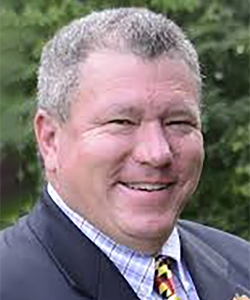
Stuart Schmidt
100% support rate
Top opponent
Barrie Ciliberti
0% support rate
Ranked legislators
10
5 support · 5 oppose
Key legislators

Who's moving corrections in Maryland

Legislators moving corrections in Maryland
Legislator Party Stance Support rate Votes
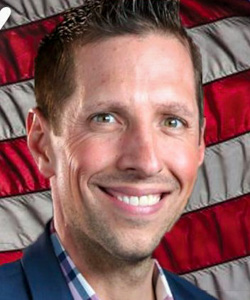
Stuart Schmidt
Stuart Schmidt House · District 33B
R
Strong +
100% 5
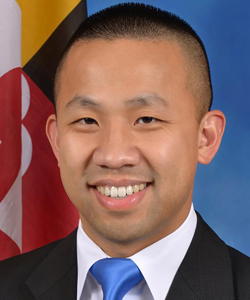
Gabriel Moreno
Gabriel Moreno House · District 13
D
Strong +
100% 4
Clarence Lam
Clarence Lam Senate · District 12
D
Strong +
100% 3
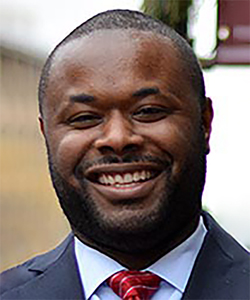
Cory McCray
Cory McCray Senate · District 45
D
Strong +
100% 3
Jennifer White Holland
Jennifer White Holland House · District 10
D
Strong +
100% 3
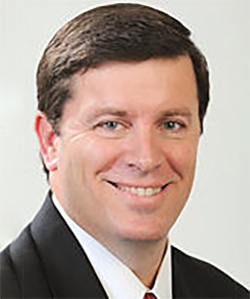
Barrie Ciliberti
Barrie Ciliberti House · District 4
R
Strong −
0% 4
Josh Stonko
Josh Stonko House · District 42C
R
Strong −
0% 4
Bryan Simonaire
Bryan Simonaire Senate · District 31
R
Strong −
0% 3
Chris West
Chris West Senate · District 42
R
Strong −
0% 3
Jack Bailey
Jack Bailey Senate · District 29
R
Strong −
0% 3
Showing 11–20 of 78 bills

All criminal justice bills

in committee · Maryland · House of Delegates Feb 5, 2026

HB 782: Criminal Law - Taking and Breaking Open Letters - Penalty

HB 782 amends Maryland's criminal law to increase the penalty for illegally opening another person's mail. The bill raises the fine for violating this prohibition from $15 to $500 while keeping the maximum jail term at six days. It directly affects individuals who take or break open letters addressed to others without permission, including mail carriers or others accessing private correspondence. The key change is the substantial fine increase, making the penalty more severe for this specific violation. The amendment becomes effective October 1, 2026.
Sub-Topics Corrections
passed · Maryland · House of Delegates Mar 20, 2026

HB 1294: Criminal Law - Child Sexual Abuse Material - Artificial Intelligence Software

HB 1294 updates Maryland law to define "child sexual abuse material" (replacing "child pornography") and explicitly includes images created using artificial intelligence software in this definition. The bill modifies legal provisions to prohibit possessing or viewing AI-generated images that appear indistinguishable from real children engaged in sexual conduct or abuse, while excluding drawings, cartoons, sculptures, or paintings. It increases penalties for repeat offenses (up to 10 years in prison) and adds a defense for individuals who promptly destroy such material or report it to authorities. This change directly affects anyone creating, sharing, or accessing AI-generated images that mimic real minors in sexual contexts.
Sub-Topics Corrections Tags Artificial Intelligence
in committee · Maryland · House of Delegates Feb 5, 2026

HB 767: Criminal Law - Theft and Opening of Mail and Packages

HB 767 updates Maryland's criminal law to specifically address theft and unauthorized opening of mail and packages. It prohibits taking or opening mail/package not addressed to you without permission (Section 3-905) and makes stealing mail/package delivered by USPS or a delivery company a felony (Section 7-106.1), punishable by up to 5 years in prison. The bill requires courts to notify the U.S. Postmaster General of convictions involving USPS-delivered mail or packages. It directly affects individuals who steal or tamper with mail or packages intended for others, particularly those handled by USPS or commercial delivery services.
Sub-Topics Corrections
in committee · Maryland · House of Delegates Feb 16, 2026

HB 1146: Crime of Violence - Medical Facilities and Places of Worship - Penalty (Sacred Places Safety Act)

HB 1146, the "Sacred Places Safety Act," prohibits committing any crime of violence (as defined in Maryland law) within medical facilities or places of worship. It directly affects individuals who commit such acts in these locations, which include hospitals, clinics, and nonresidential religious gathering spaces. The bill increases penalties by making such violations a felony punishable by up to 10 years in prison, in addition to penalties for the underlying violent crime. This law takes effect June 1, 2026, and applies to all relevant locations statewide.
died · Maryland · Senate Mar 2, 2026

SB 679: Criminal Procedure - Motion to Reduce Duration of Sentence - Eligibility (Vincent Anthony Fisher III Act)

SB 679, the "Vincent Anthony Fisher III Act," allows certain individuals to request a reduction in their prison sentence. It applies to people convicted as adults for offenses committed when they were minors (before October 1, 2021) and imprisoned for at least 20 years, or those convicted between ages 18-24 (not life without parole, not sex offenders, and not convicted of specific violent crimes like murder of first responders or hate crimes) with 20+ years served. The bill requires a court hearing where the person must show they are not a public danger and that a reduced sentence serves justice, considering factors like their age at the offense, rehabilitation efforts, victim input, and family circumstances. The court must consider these factors before deciding whether to shorten the prison term.
died · Maryland · House of Delegates Mar 16, 2026

HB 1031: Law Enforcement - Use of Force - National Guard Members

HB 1031 establishes specific use-of-force standards for National Guard members operating in Maryland under federal authority (per 32 U.S.C. § 502). It requires National Guard members to use only necessary and proportional force to prevent imminent harm or achieve legitimate law enforcement objectives, while mandating de-escalation, intervention in excessive force incidents, medical aid for injured persons, and detailed documentation of all force encounters. Violating these standards and causing serious injury or death constitutes a misdemeanor punishable by up to 10 years in prison. The law applies directly to National Guard personnel supporting state operations under federal orders, not to regular police officers.
in committee · Maryland · House of Delegates Feb 16, 2026

HB 1347: Task Force to Study Postrelease Services and Requirements (Bri's Law)

HB 1347 (Bri’s Law) creates a 7-member task force to study Maryland’s post-incarceration support systems. The task force, including state legislators, corrections officials, and prosecutors, will examine all release types from prison and current programs designed to prevent reoffending. It must submit recommendations to the Governor and legislature by July 2027, after which the task force automatically expires on June 30, 2028. This bill does not change existing services but mandates a review of current postrelease requirements.
Sub-Topics Corrections
in committee · Maryland · House of Delegates Feb 16, 2026

HB 1154: Correctional Services - Restrictive Housing

HB 1154 limits restrictive housing for pregnant incarcerated individuals in Maryland correctional facilities. It prohibits placing them in restrictive housing (defined as 20+ hours locked in a cell daily) except in specific emergencies involving immediate safety risks or disease control, requiring facility staff to document why less restrictive options weren’t possible. The bill mandates medical assessments every 8 hours, access to recreation and programming for pregnant individuals in infirmary care, and requires facilities to submit detailed reports to officials within 30 days of any placement. It also prohibits placing other vulnerable populations in restrictive housing and mandates the Correctional Ombudsman to review implementation annually.
Sub-Topics Corrections
in committee · Maryland · House of Delegates Feb 5, 2026

HB 873: Manslaughter by Vehicle or Vessel - Increased Penalties (Jamari's Law)

HB 873 increases prison sentences for drivers who cause death through extreme carelessness while operating a vehicle or vessel. For a first offense, the maximum sentence rises from 10 to 20 years; for repeat offenses, it increases from 15 to 30 years. The bill does not change fines, which remain up to $5,000 for first offenses and $10,000 for repeat offenses. This law affects a very limited number of cases, as only about 30 people were incarcerated for this specific offense in Maryland during fiscal 2025, making its overall impact minimal.
Sub-Topics Corrections
in committee · Maryland · House of Delegates Feb 5, 2026

HB 787: Criminal Law - Theft - Mail and Packages (Porch Piracy Act of 2026)

HB 787, the "Porch Piracy Act of 2026," makes stealing mail or packages delivered by USPS or commercial carriers a felony. It directly affects individuals who take another person’s mail/package without permission (e.g., porch pirates) and courts handling such cases. Key provisions require offenders to return stolen items or pay restitution, with third or subsequent offenses carrying up to 3 years in prison, $1,500 fines, or both. For repeat offenders, courts may also mandate substance use disorder evaluation and treatment as part of sentencing. The law takes effect October 1, 2026.
Showing 11 to 20 of 78 bills
Previous 1 2 3 8 Next