Maddy summaryThe Protect America’s Workforce Act (S 2837) directly affects federal employees and their labor unions by reversing two executive orders that limited their collective bargaining rights. It nullifies Executive Orders 14251 and 14343, which had excluded certain federal workers from labor-management programs, and prohibits federal funding for any efforts to implement those orders. The bill ensures that all existing collective bargaining agreements between federal agencies and employee unions remain fully enforceable through their original terms, as long as they were in effect as of March 26, 2025. This preserves current workplace agreements without creating new obligations or altering existing labor-management processes.
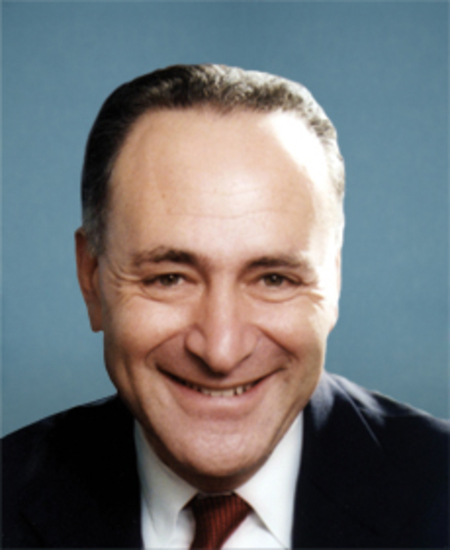
Sen. Charles E. Schumer
Sponsored bills
Maddy summaryThe FAMILY Act (S 2823) would establish a federal paid family and medical leave insurance program that provides wage replacement benefits for eligible workers who need time off for family or medical reasons. It directly affects workers who need leave to care for a family member with a serious health condition, address their own serious health condition, or deal with family violence or other qualifying acts of violence. The program would pay a percentage of an individual's average earnings (up to 85% for lower earners), with maximum monthly benefits of $4,000 and minimum benefits of $580 in 2026, while requiring employers to maintain health coverage during leave. The Social Security Administration would administer the program through a new Office of Paid Family and Medical Leave, with benefits available starting 18 months after enactment.
Maddy summaryS 2784, the Congressional Tribute to Constance Baker Motley Act of 2025, is a commemorative resolution honoring civil rights pioneer Constance Baker Motley. It authorizes the posthumous presentation of a Congressional gold medal to her son, Joel Motley III, and niece, Constance Royster, recognizing her historic role as the first African-American woman on the LDF legal team for *Brown v. Board of Education*, her service as a federal judge, and her civil rights advocacy. The bill directs the Treasury Secretary to design and strike the medal, with proceeds from bronze duplicates covering costs. It does not create new laws or affect any policies, as it solely serves to commemorate Motley's legacy.
Maddy summaryS 2777, the Small Business RELIEF Act, exempts small businesses from import duties imposed under Executive Order 14257 (related to national emergencies) for goods they import. It requires the President to refund all duties paid under that order within 90 days of the bill's enactment. The bill directly affects small business concerns as defined by the Small Business Act (15 U.S.C. 632), which typically covers businesses with fewer than 500 employees. This policy change removes a financial burden on qualifying small importers and provides retroactive refunds for past payments.
Maddy summaryThis bill would make several administrative changes to the Social Security Administration, including exempting it from the jurisdiction of the Department of Government Efficiency (DOGE) and certain executive orders, restricting political appointees from accessing beneficiary data systems, and preventing closure of field offices while requiring maintenance of staff levels. It also creates new offices within the SSA for civil rights, transformation, and analytics, and provides additional funding for administrative costs and customer experience improvements. These provisions would directly affect how the SSA manages its operations, protects beneficiary data, and delivers services to beneficiaries. The bill's title is misleading as it does not address billionaires or their relationship with Social Security.
Maddy summaryS 2746, the "Produce Epstein Treasury Records Act," requires the U.S. Treasury Secretary to submit physical copies of financial transaction records related to Jeffrey Epstein and his associates within 30 days of the bill’s enactment. It mandates the Treasury to provide a list of financial institutions that filed these records, identify all individuals/entities involved in transactions with Epstein (including banks like JPMorgan and Deutsche Bank, and associates like Ghislaine Maxwell), and detail the total transaction value by institution. The bill also requires reports on Treasury investigations into financial institutions’ handling of Epstein-related accounts. These records and reports would be submitted to the Senate Committees on Finance and Banking. The legislation focuses on transparency around Epstein’s financial networks, not on legal outcomes.
Maddy summaryThis bill authorizes a one-time federal grant of $5-10 million to the National September 11 Memorial & Museum (operated by its designated nonprofit entity) to cover operational, security, and maintenance costs. The grant requires the museum to provide free admission to veterans, first responders, and victims' families, plus weekly free public hours, and allow annual federal financial audits. It also mandates annual reports to Congress detailing how funds were spent. The museum must use the funds solely for these specified purposes, with no new funding authorized beyond existing appropriations.
Maddy summarySRES 374 is a non-binding Senate resolution expressing that Secretary of Health and Human Services Robert F. Kennedy Jr. lacks the confidence of the Senate and American people to serve in his role. The resolution cites specific actions including the termination of $11 billion in public health funding, mass firings of scientists (notably eliminating 8 Offices of Minority Health), replacing all 17 members of the vaccine advisory committee (ACIP) with critics of vaccines, and dismantling programs supporting maternal health, disability services, and chronic disease research. It alleges these actions violated federal law, undermined scientific integrity, and endangered public health during a measles outbreak. The resolution calls for the Secretary’s removal but has no legal effect, as it is a symbolic statement of disapproval.
Maddy summaryThis resolution designates August 11, 2025, as "Hip Hop Celebration Day," August 2025 as "Hip Hop Recognition Month," and November 2025 as "Hip Hop History Month" to commemorate the 50th anniversary of hip hop's origins. It references the 1973 Back to School Jam in the Bronx as hip hop's founding event and encourages federal, state, and local governments to observe these dates through activities honoring hip hop's cultural impact. The resolution has no legal force or direct effect on individuals or policies - it is purely symbolic, calling for recognition of hip hop's artistic, social, and economic contributions without imposing requirements.
Maddy summaryThe Lowering Electric Bills Act extends federal tax credits for clean energy adoption through 2034, directly affecting homeowners installing solar panels or heat pumps and businesses producing clean electricity. It modifies three key tax provisions: (1) extends the residential clean energy credit deadline from 2025 to 2034, (2) adjusts the clean electricity production credit to expire based on U.S. emissions reaching 25% of 2022 levels or 2032 (whichever comes later), and (3) simplifies the clean electricity investment credit rules. These changes aim to maintain financial incentives for clean energy projects beyond current law, reducing administrative complexity. The bill does not create new programs but prolongs existing tax benefits to support ongoing adoption.