ABLE Age Adjustment Act This bill increases from 26 to 46 the age threshold for tax-favored ABLE (Achieving a Better Life Experience) accounts. (ABLE accounts are designed to enable individuals with disabilities to save for and pay for disability-related expenses. To establish an account, an individual must have a qualifying impairment that began before the individual attained the age threshold.)
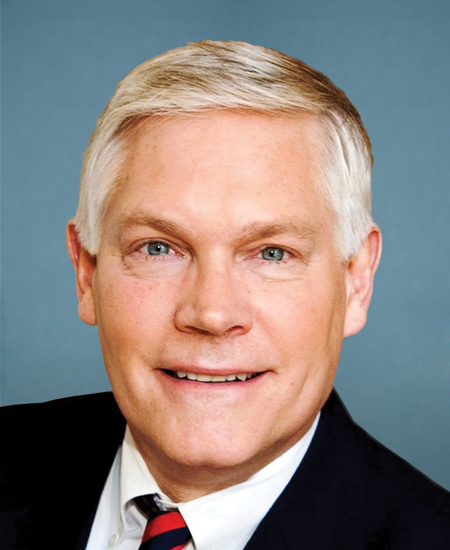
Rep. Pete Sessions
Sponsored bills
This bill makes certain full-time health care practitioners eligible for the Public Service Loan Forgiveness program. Specifically, the bill extends program eligibility to health care practitioners who work at a nonprofit or public hospital or facility but are prohibited under state law from being directly employed by the hospital or facility.
Modernizing America's Apprenticeship Act This bill provides statutory authority for federal regulations titled Apprenticeship Programs, Labor Standards for Registration, Amendment of Regulations published by the Department of Labor in the Federal Register on March 11, 2020.
This resolution requests that the President transmit to the House of Representatives documents related to the amount of funding that was provided in specified laws regarding COVID-19 (i.e., coronavirus disease 2019) and is currently unspent. The specified laws include the Coronavirus Preparedness and Response Supplemental Appropriations Act, 2020; the Families First Coronavirus Response Act; the Coronavirus Aid, Relief, and Economic Security Act (CARES Act); the Paycheck Protection Program and Health Care Enhancement Act; and Division N of the Consolidated Appropriations Act, 2021.
Recreational Lands Self-Defense Act of 2021 This bill requires the U.S. Army Corps of Engineers to allow an individual to possess a firearm at a Corps water resources development project as long as the individual's possession of the firearm is in compliance with the law of the state in which the project is located.
This resolution urges the U.S. Postal Service to take steps to ensure the continuation of its six-day mail delivery service.
United States-Israel PTSD Collaborative Research Act This bill establishes a grant program for collaborative efforts between the United States and Israel to advance research on post-traumatic stress disorders. The Department of Defense, in coordination with the Department of Veterans Affairs and the Department of State, shall award grants to eligible academic institutions or nonprofit entities in the United States. Work shall be conducted by the eligible entity and an entity in Israel under a joint research agreement.
Taking Account of Bureaucrats' Spending Act of 2021 or the TABS Act of 2021 This bill eliminates provisions that fund the Consumer Financial Protection Bureau (CFPB) using transfers from the earnings of the Federal Reserve System. The transfers under current law permit the CFPB to be funded outside of the annual appropriations process, and this bill brings the CFPB into the regular process.
Flood Resiliency and Taxpayer Savings Act of 2021 This bill requires federal agencies to take specified actions to evaluate and mitigate the risk of floods to federally funded projects. Specifically, the bill directs federal agencies to evaluate the potential for flooding throughout the planned lifetime or duration of a federally funded project to reduce the risk of financial and property losses and prevent the disruption of critical services during floods. Further, federal agencies must consider certain data and information (e.g., the most recent flood insurance rate map published by the Federal Emergency Management Agency) when evaluating whether a federally funded project is in a floodplain. If the agency determines the data and information are not adequate for understanding the flood risks to the project, then the agency must use an alternative design standard outlined by the bill. Finally, the bill directs the Federal Interagency Floodplain Management Task Force to issue guidelines for federal agencies related to flood risk management.
Taking Account of Institutions with Low Operation Risk Act or the TAILOR Act This bill requires federal financial regulatory agencies to (1) tailor any regulatory actions so as to limit burdens on the institutions involved, with consideration of the risk profiles and business models of those institutions; and (2) report to Congress on specific actions taken to do so, as well as on other related issues. The bill's tailoring requirement applies not only to future regulatory actions but also to regulations adopted within the last seven years.