

Maddy summaryHR 5267, the American Franchise Act, clarifies when franchisors can be considered joint employers of franchisee employees under federal labor laws. It defines "substantial direct and immediate control" over essential employment terms like wages, benefits, hours, hiring, and discipline - requiring franchisors to actively set these terms to be deemed joint employers. The bill explicitly excludes routine brand standards, training, or minimal safety requirements from constituting such control. This directly affects franchisors and franchisees by limiting joint employer liability to cases where franchisors exert significant, ongoing influence over core employment decisions. The law applies prospectively to new cases after enactment, not past disputes.
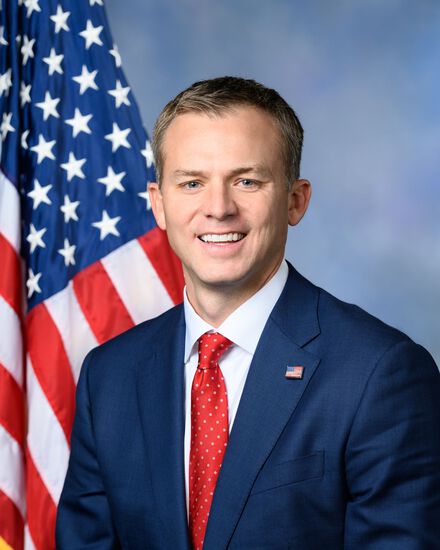
Rep. Blake D. Moore
Sponsored bills
Maddy summaryThis bill amends the Fair Labor Standards Act to clarify that direct sellers and qualified real estate agents (as defined under IRS rules) are not considered "employees" under federal labor law. It directly affects these workers by excluding them from FLSA protections like minimum wage and overtime pay. The key provision inserts a new definition into the law, changing how these professions are classified for labor rights purposes. This is a technical definitional change, not a new policy or program.
Maddy summaryThe Fair Treatment of Religious Organizations Act of 2026 changes how the IRS determines if a group qualifies for tax-exempt status based on its religious beliefs. Specifically, it ensures that beliefs regarding marriage, sexuality, or gender identity are not automatically considered illegal or against public policy when evaluating a religious organization's purpose. Additionally, the bill clarifies that a belief does not need to be central to a religion to be recognized as a valid religious belief for tax purposes. These rules will apply to tax years starting after December 31, 2025, affecting how various faith-based groups are assessed under the Internal Revenue Code.
Maddy summaryHR 2555, the Freedom of Association in Higher Education Act of 2025, protects students who join or form single-sex social organizations (like fraternities or sororities) at colleges. It prohibits colleges receiving federal funds from taking negative actions against these students or organizations solely because they limit membership to one sex - such as denying housing, financial aid, leadership roles, or recognition. The bill ensures students can join such groups without coercion and stops colleges from imposing unfair recruitment rules on single-sex organizations compared to others. It does not require colleges to recognize single-sex groups, allow organizations to set their own membership rules, or override Title IX protections.
Maddy summaryThe Safeguarding America's Nonprofits Act clarifies that tax-exempt status under Section 501 of the Internal Revenue Code does not count as federal financial assistance. This change directly affects charitable organizations, religious groups, and other nonprofits that are exempt from federal income taxes. The bill amends the tax code to ensure these entities are not subject to regulations or restrictions typically applied to recipients of government grants or aid. It also includes a provision stating that this new definition does not apply retroactively to periods before the law is enacted.
Maddy summaryThe First-Time Homebuyer Affordability Act amends the Internal Revenue Code to exempt qualified mortgage bonds from the federal government's annual volume cap on tax-exempt securities. By removing this limit, the bill allows for a greater issuance of these specific bonds, which are typically used to finance home loans for first-time buyers. This change directly affects financial markets and lenders by enabling them to issue more tax-advantaged debt without being constrained by existing statutory limits. The provision applies to all obligations issued after the date of the Act's enactment.
Maddy summaryThe Foster Youth Investment Act allows individuals to contribute to Coverdell Education Savings Accounts for foster children who are under 18 and in the custody of a state or tribal government. This change expands eligibility beyond just the taxpayer's own eligible foster child to include any minor meeting these specific care and age requirements. The provision applies to contributions made after December 31, 2025, enabling these youth to benefit from tax-advantaged savings for their education.
Maddy summaryThis resolution honors the memory of four wildland firefighters - Emily Barker, Nick Hutcherson, Sydney Watson, and Nicholas Dale - who died while battling wildfires in 2026. It expresses sympathy to their families and acknowledges the bravery of injured colleagues and all personnel who risk their lives to protect communities and natural resources. The measure formally recognizes the critical role of firefighters, aviation crews, and support staff in suppressing dangerous fires across the United States.
Maddy summaryThis bill, titled the Prediction Markets Are Gambling Act, prohibits the listing, clearing, or trading of contracts related to sports events or casino-style games on regulated financial exchanges. It directly affects platforms and entities that currently operate prediction markets by banning them from offering bets on outcomes like professional sports matches or casino games such as roulette and blackjack. The law achieves this by amending the Commodity Exchange Act to explicitly define these activities as prohibited agreements, while also clarifying that state laws regulating such contracts remain unaffected. Essentially, the legislation removes the ability for federally registered markets to facilitate gambling on sports and traditional casino games.
Maddy summaryThe Anti-Fraud Fund Act of 2026 increases funding for the Health Care Fraud and Abuse Control Account by $7 billion annually from fiscal year 2027 through 2030. This additional money is intended to support the government's efforts in detecting and preventing fraud within the healthcare system. The bill modifies existing laws to ensure these funds are available for the specified period without altering other spending limits.