Issue · Criminal Justice

Criminal Justice (Corrections)

Every criminal justice bill, vote, and legislator stance in Louisiana, automatically classified by Maddy, our AI policy reader.

Total bills
43
2026 Regular Session
Top supporter
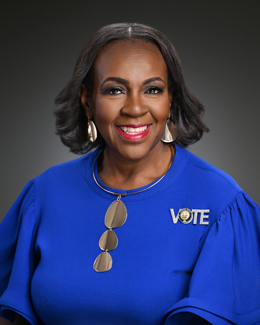
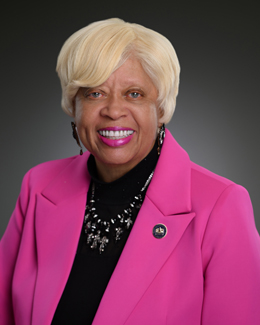
Regina Barrow
80% support rate
Top opponent
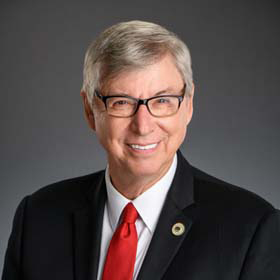
Larry Bagley
0% support rate
Ranked legislators
10
5 support · 5 oppose
Key legislators

Who's moving corrections in Louisiana

Legislators moving corrections in Louisiana
Legislator Party Stance Support rate Votes
Regina Barrow
Regina Barrow Senate · District 15
D
Strong +
80% 5
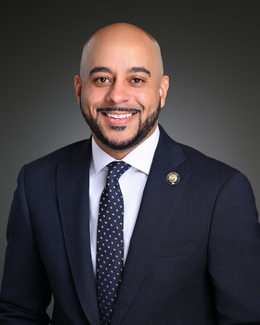
Royce Duplessis
Royce Duplessis Senate · District 5
D
Strong +
80% 5
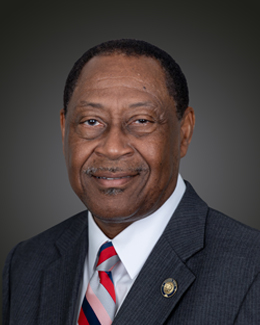
Sam Jenkins
Sam Jenkins Senate · District 39
D
Strong +
80% 5
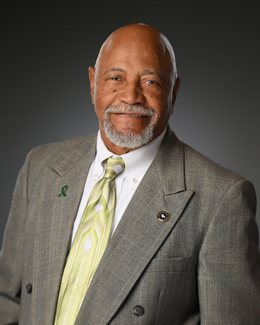
Wilford Carter
Wilford Carter House · District 34
D
Support
78% 9
Sylvia Taylor
Sylvia Taylor House · District 57
D
Support
75% 12
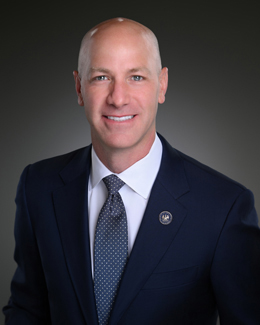
Larry Bagley
Larry Bagley House · District 7
R
Strong −
0% 6
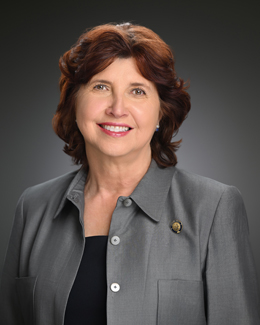
Beth Mizell
Beth Mizell Senate · District 12
R
Strong −
20% 5
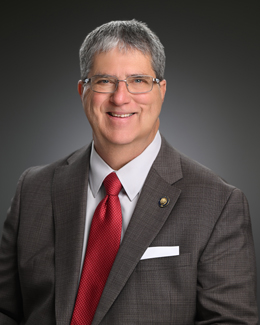
Bill Wheat
Bill Wheat Senate · District 37
R
Strong −
20% 5
Brach Myers
Brach Myers Senate · District 23
R
Strong −
20% 5
Franklin Foil
Franklin Foil Senate · District 16
R
Strong −
20% 5
Showing 1–10 of 43 bills

All criminal justice bills

passed · Louisiana · House Jun 3, 2026

HR 391: COURTS: Creates a task force to study the effectiveness of the 18th Judicial District Court Drug Court Program

This resolution establishes a task force to evaluate the 18th Judicial District Court Drug Court Program and related behavioral health services for incarcerated individuals in Iberville, Pointe Coupee, and West Baton Rouge Parishes. The eleven-member group includes representatives from the courts, health and corrections departments, mental health and substance abuse professionals, and legislative leaders. Their mandate is to examine specific operational aspects such as recidivism rates, treatment effectiveness, mental health evaluation timeliness, and the costs of the program compared to standard incarceration. The task force must hold its initial meeting within sixty days and submit a final report with findings and recommendations to state committees by February 1, 2027.
Sub-Topics Corrections Courts
in committee · Louisiana · Senate Apr 1, 2026

SB 498: CORRECTIONAL FACILITIES: Requires the Department of Public Safety and Corrections to provide state inmates housed in local facilities with the same clothing and healthcare they would be provided at a state facility. (8/1/26) (OR +$31,361,677 GF EX See Note)

SB 498 requires the Louisiana Department of Public Safety and Corrections to provide state inmates housed in local parish jails with the same clothing and healthcare products they would receive at a state facility. This change directly affects state prisoners currently confined in parish-run correctional institutions by mandating uniform care standards regardless of the facility's location. The bill ensures that these inmates are not denied essential items or medical supplies simply because they are not in a state-run prison.
Sub-Topics Corrections
signed · Louisiana · House May 22, 2026

HB 1238: LABOR: Enacts the Louisiana Behind the Counter Protection Act (EN SEE FISC NOTE GF EX See Note)

This bill, known as the Louisiana Behind the Counter Protection Act, strengthens penalties for crimes committed against employees working at retail and food service counters, drive-through windows, or similar customer service points. It increases the maximum fines and prison sentences for simple assault and battery when the victim is an employee performing their duties at a regulated establishment. Additionally, the law requires businesses to display a specific warning sign informing the public that workplace violence against these employees is a crime. The act defines workplace violence broadly to include physical attacks, threats, intimidation, and verbal abuse directed at staff while they are on the job.
passed both · Louisiana · House May 28, 2026

HCR 50: CORR FACILITIES/JAILS: Requests certain state and governmental entities to report on opioid abatement and treatment programs in correctional facilities, and to clarify guidance regarding available funding for such programs

This bill asks state agencies and law enforcement groups to report on how they are using opioid settlement funds for treatment and prevention programs in correctional facilities. It also requests that the Opioid Abatement Task Force and the Attorney General provide clearer guidance on which expenses are allowed under these funds. The measure aims to address concerns raised in a recent audit that many local areas have not spent their allocated money due to confusion about rules and a lack of available programs. By gathering this information, the state hopes to ensure that the millions of dollars received from opioid lawsuits are used effectively to help incarcerated individuals with substance use disorders.
signed · Louisiana · Senate May 29, 2026

SB 440: SPECIAL DISTRICTS: Provides for the membership of the board of commissioners in a renaissance district. (8/1/26)

This bill creates a renaissance district in Rapides Parish, Louisiana, and establishes a seven-member board of commissioners to govern it. The board will include representatives from local government, law enforcement, the district attorney's office, and organizations involved in juvenile justice, with specific requirements for experience in juvenile education, rehabilitation, or incarceration. Commissioners will serve four-year terms and must be residents of the parish who are not employed by the parish police jury. The legislation focuses on restructuring oversight of juvenile detention, education, and rehabilitation services within the parish.
in committee · Louisiana · House Mar 31, 2026

HB 1073: PUBLIC SFTY/CORRECTIONS: Provides for the issuance of certain documentation to inmates before their release from incarceration (OR SEE FISC NOTE GF EX)

This bill requires Louisiana's Department of Public Safety and Corrections to provide released inmates with specific documents to help them find employment, including vocational and work records, birth certificates, social security information, and a resume highlighting any skills learned in prison. It also mandates that the department coordinate with the Office of Motor Vehicles to issue special identification cards to eligible inmates who lack current state IDs upon their release, using prison time computation records as valid photo identification. Additionally, the bill establishes a new certificate of employability for inmates who have completed certain educational programs, vocational training, or passed job skills assessments, which will include their criminal history and institutional records to help employers verify their qualifications. These provisions apply to inmates released from felony sentences who designate their residence within Louisiana, while excluding certain older inmates or those unable to return to the workforce from specific resume and interview documentation requirements.
Sub-Topics Corrections
signed · Louisiana · House May 29, 2026

HB 1104: CRIME: Prohibits relative to the manufacturing and sale of motor vehicle key programming or emulation devices (EN SEE FISC NOTE LF EX)

This bill prohibits the manufacture, sale, transfer, and possession of devices used to program or emulate motor vehicle keys and relay attack devices, which intercept key fob signals to unlock or start cars. The law applies to individuals and businesses but includes exceptions for law enforcement, insurance investigators, licensed automotive professionals, locksmiths, and repossession agencies. Authorized users must report lost or stolen devices to law enforcement within 48 hours, with violations punishable by fines up to $1,000 or up to six months in prison. The legislation aims to prevent unauthorized access to vehicles while allowing legitimate professionals to continue their work.
signed · Louisiana · House May 15, 2026

HB 1034: CRIME: Authorizes the establishment of temporary protection zones (EN SEE FISC NOTE GF EX)

This bill creates a new legal framework allowing local government leaders like mayors, parish presidents, or police chiefs to establish temporary protection zones for public safety. These zones can cover roads, shorelines, or other areas and must be announced in writing with clear boundaries, reasons for the restriction, and effective times, while also being publicly notified and filed with the court clerk. The zones can last up to 72 hours and may be renewed if safety concerns persist, with violations punishable by fines, jail time, or hard labor depending on the severity of the offense.
in committee · Louisiana · House Mar 24, 2026

HB 994: CRIMINAL/RESTITUTION: Provides relative to the payment of restitution from offenders convicted of vehicular homicide under certain circumstances

This bill allows courts to order restitution payments to the minor children of victims in vehicular homicide cases, ensuring financial support until the child turns eighteen. It establishes that restitution amounts should be calculated based on the deceased parent's lost income using existing state guidelines. The law also outlines how payments will be enforced, including provisions for defendants released from prison or placed in work release programs to begin payments within one year. Additionally, the bill clarifies that any civil judgment against the offender can include these restitution deductions and permits indigent defendants to enter payment plans.
signed · Louisiana · Senate Jun 1, 2026

SB 422: CRIME/PUNISHMENT: Provides for unsupervised probation in certain circumstances for fourth offense operating while impaired. (8/1/26) (EN SEE FISC NOTE GF EX)

This bill modifies Louisiana's penalties for a fourth offense of driving while impaired by allowing courts to order unsupervised probation in certain cases. It requires offenders to complete treatment programs, drug division probation, or supervised probation after release from incarceration, with the probation period lasting until the original sentence ends or for twenty years, whichever is longer. Additionally, the bill authorizes prosecutors to request the seizure and auction of vehicles used during the offense. These changes directly affect repeat offenders charged with operating a vehicle while impaired and aim to balance rehabilitation with accountability through structured probation requirements.
Showing 1 to 10 of 43 bills
1 2 3 5 Next