

Never Yielding Europe's Territory (NYET) Act of 2022 This bill addresses Russia's actions against Ukraine and other countries in the region. The bill authorizes and expedites the provision of security assistance, including by (1) prioritizing delivering excess defense articles to Ukraine, (2) authorizing the Department of State to waive certain costs for defense articles leased to Ukraine, and (3) authorizing additional Foreign Military Financing for programs in Europe. The bill also provides funding for (1) Foreign Military Financing assistance to Ukraine, (2) the Global Engagement Center to counter foreign-sponsored propaganda and disinformation, (3) the Countering Russian Influence Fund to support Ukraine and other countries in response to Russia's aggression, and (4) International Military Education and Training assistance for Ukraine. Furthermore, the bill imposes sanctions, including on (1) senior Russian military officials responsible for planning or executing military operations that violated Ukraine's sovereignty or territorial integrity, and (2) foreign individuals or entities that acted on behalf of Russia's government to destabilize Ukraine or disrupt Ukraine's critical infrastructure. The bill also addresses additional matters, including (1) authorizing Radio Free Europe/Radio Liberty to explore opening new bureaus to reach audiences on Russia's periphery; and (2) providing for expedited approval of natural gas exports to qualifying nations, including NATO members, whereas currently expedited approval is only available for exports to countries that are in a free trade agreement relating to natural gas with the United States.
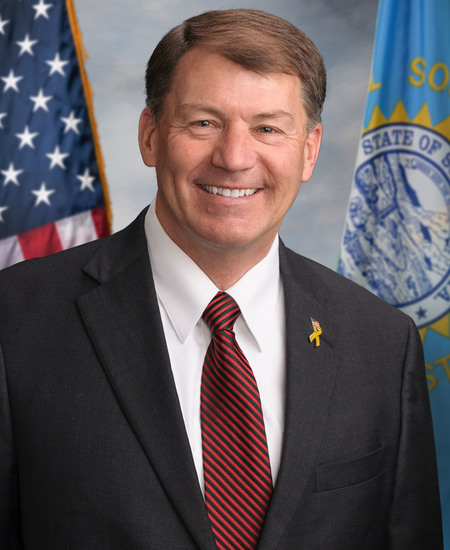
Sen. Mike Rounds
Sponsored bills
Veterans Health Care Freedom Act This bill requires the Center for Innovation for Care and Payment within the Department of Veterans Affairs (VA) to implement a three-year pilot program to improve the ability of veterans who are enrolled in the VA health care system to access hospital care, medical services, and extended care services through the covered care system by providing such veterans with the ability to choose health care providers. Under the bill, the covered care system includes VA medical facilities, health care providers participating in the Veterans Community Care Program (VCCP), and eligible entities or providers that have entered into a Veterans Care Agreement. A veteran participating in the program may elect to receive care at any provider in the covered care system. The pilot program removes certain requirements (e.g., location of the veteran) to access care at VA and non-VA facilities. After four years, the bill eliminates the requirements for accessing care under the VCCP and Veterans Care Agreements and requires the VA to provide such care under the same conditions of the pilot program. Additionally, after four years, veterans may receive care at a VA medical facility regardless of whether the facility is in the same Veterans Integrated Service Network as the veteran.
Strengthening Enforcement to Curtail Unlawful, Risky Entrance to Flights Act of 2022 or the SECURE Flights Act of 2022 This bill prohibits the use of warrants and other documents issued by U.S. Immigration and Customs Enforcement (ICE) as proof of identification at airport security checkpoints unless the individual is leaving the United States pursuant to immigration laws. If an individual uses prohibited documents as a proof of identification, the Transportation Security Administration (TSA) must (1) inform ICE and local law enforcement to determine whether the individual is in violation of any term of release, and (2) collect the individual's biometric information unless the TSA can verify the individual is a U.S. national. The TSA must also submit the biometric information to a national biometric identification system.
Ghost Army Congressional Gold Medal Act This bill provides for the award of a Congressional Gold Medal to the 23rd Headquarters Special Troops and the 3133rd Signal Services Company, known collectively as the Ghost Army , in recognition of unique and highly distinguished service during World War II.
Willie O'Ree Congressional Gold Medal Act This bill provides for the award of a Congressional Gold Medal to Willie O'Ree or, if unavailable, to a member of his family, in recognition of his contributions and commitment to hockey, inclusion, and recreational opportunity. The amounts received from the sale of duplicate medals shall be deposited in the U.S. Mint Public Enterprise Fund.
This concurrent resolution expresses the sense of Congress that there should be a national day of remembrance for the Native American children who died while attending an Indian boarding school in the United States.
This resolution supports the recognition of a Day of Tears and encourages memorializing those who have lost their lives to abortion by lowering the U.S. flag to half-staff on January 22 every year.
Cybersecurity Opportunity Act This bill requires the Department of Homeland Security to award grants to specified institutions of higher education for establishing or expanding cybersecurity education programs and opportunities. Eligible institutions include minority-serving institutions and historically Black colleges and universities, and grant recipients may use the funds to increase research, education, technical, partnership, and innovation capacity for cybersecurity programs, research, and training experiences.
Gilt Edge Mine Conveyance Act This bill provides for a land conveyance to South Dakota. Specifically, if South Dakota submits an offer to the Forest Service to acquire approximately 266 acres of National Forest System land within the Gilt Edge Mine Superfund Boundary for its market value, the Forest Service shall convey such land to South Dakota. Any proceeds received by the Forest Service from the conveyance shall be (1) deposited in a specified fund for the exchange of lands, and (2) available to the Forest Service for the maintenance and improvement of land or administration facilities in the Black Hills National Forest in South Dakota.
Thin Blue Line Act This bill expands the list of statutory aggravating factors in death penalty determinations to also include killing or targeting a law enforcement officer, firefighter, or other first responder.