Maddy summaryThe Bonuses for Cost-Cutters Act of 2025 creates a program to reward federal employees who identify unnecessary spending in agency budgets. Employees can report funds not required for agency operations (called "surplus salaries and expenses funds"), and agencies must verify these savings through their Inspector General or designated staff. If verified, agencies transfer the funds to the Treasury for deficit reduction, while retaining up to 10% of the amount to pay cash awards to the employees who identified the savings. Agencies must submit annual reports on savings and awards to the Treasury, which then shares this data with Congress. The program expires 6 years after enactment.
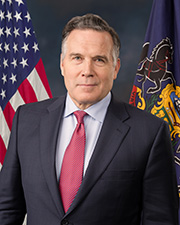
Sen. David McCormick
Sponsored bills
Maddy summaryThis bill, the GOOD Act (Guidance Out Of Darkness Act), requires federal agencies to publish all their non-binding guidance documents - such as memos, bulletins, letters, and blog posts - on a single, publicly accessible government website. It applies to all federal agencies and mandates that existing guidance be posted within 180 days of the law's enactment, with new guidance published immediately upon issuance. Agencies must also maintain rescinded guidance documents online with clear labels indicating they are no longer in effect. The law does not apply to documents already exempt from public disclosure under the Freedom of Information Act (FOIA).
Maddy summaryThe USTRx Act establishes a new position for a Chief Pharmaceutical Trade Negotiator within the United States Trade Representative office to specifically advocate for and enforce trade agreements related to U.S. pharmaceutical products. The bill requires the USTR to annually identify high-income countries based on World Bank statistics and publish reports evaluating whether their drug pricing policies are fair, transparent, and market-based. If a country’s practices are found to unfairly restrict access or undervalue innovative medicines, the USTR must submit a response plan to Congress within 30 days, which may include initiating trade investigations under existing authority.
Maddy summaryThe Workforce Recovery and Resilience Act amends the Workforce Innovation and Opportunity Act to direct federal resources toward communities significantly affected by high rates of substance use disorders. It requires the Secretary of Labor to annually update and distribute evidence-based practices to states and local areas for addressing the economic impacts of these disorders. Additionally, the bill creates a new category of national dislocated worker grants that can be awarded to entities providing employment and training related to addiction treatment, mental health care, and pain management in areas where demand exceeds local resources. Eligible recipients for this assistance include dislocated workers, long-term unemployed individuals, those underemployed due to widespread substance use, and healthcare professionals involved in these treatment fields.
Maddy summaryThe BLADE Act directs the Department of Commerce to identify foreign entities, particularly those from China and Russia, that are conducting unauthorized "model extraction attacks" to steal capabilities from U.S. closed-source artificial intelligence models. The bill requires the government to publish a public list of these attackers and mandates their addition to the Entity List, which restricts their access to certain technologies and exports. Additionally, it authorizes the President to impose financial sanctions on identified individuals and entities, with specific exceptions for humanitarian assistance and national security activities.
Maddy summaryThe Kids Online Safety Act (S 1748) requires major social media platforms, online video games, and other "covered platforms" to implement specific safety features for minors (under 17). These features include default privacy settings that limit harmful design features like infinite scrolling and auto-play, parental controls for managing minors' accounts, and restrictions on advertising illegal products to minors. The bill also mandates annual transparency reports about how platforms are used by minors and requires platforms to provide clear notices about their content algorithms. It creates a Kids Online Safety Council to advise Congress on online safety issues for children. The law applies to platforms with more than 10 million monthly users in the U.S. and takes effect 18 months after enactment.
Maddy summaryThis Senate resolution condemns the Government of Iran for ongoing human rights abuses, specifically targeting its use of politically motivated espionage claims to justify arbitrary detention and executions. The bill outlines several key provisions, including calls to halt executions based on unsupported security charges and demands for detainees to receive due process and access to independent legal counsel. It also urges the release of individuals imprisoned for peacefully exercising freedoms of expression and religion while supporting the Iranian people's pursuit of democracy. Additionally, the resolution affirms U.S. efforts to hold Iranian officials accountable through sanctions and international investigations for their actions.
Maddy summaryThe TURBO Act expands tax-exempt financing options for specific transportation projects to encourage investment in urban transit and freight infrastructure. It directly affects state and local governments issuing bonds to fund these initiatives by raising the maximum borrowing limit for highway and freight transfer facilities from $30 billion to $45 billion. Additionally, the bill allows tax-exempt bonds to be used for purchasing rolling stock like trains and permits high-speed intercity rail projects to have a maximum speed limit of 110 miles per hour instead of 150. These changes apply to any bonds issued after the law is enacted.
Maddy summaryThe Spotted Lanternfly Research and Development Act designates the fight against the invasive spotted lanternfly as a top research priority for federal agricultural programs. It authorizes the issuance of grants to develop and share new tools and treatments aimed at controlling this pest. Additionally, the bill extends the funding period for these high-priority agricultural research initiatives from 2023 to 2028.
Maddy summaryThis bill directs the National Park Service to conduct a feasibility study for establishing Washington's Trail - 1753 as a National Historic Trail. The proposed trail would follow the historic route taken by George Washington in 1753, stretching approximately 500 miles from Williamsburg, Virginia, to Fort LeBoeuf in Pennsylvania. By amending the National Trails System Act, the legislation authorizes an official evaluation to determine if the trail meets the criteria for designation. This process involves assessing the trail's historical significance and potential for public access without yet committing to its final creation.