

Maddy summaryThis bill updates federal law to prohibit excluding military members from assignments or career fields based on their gender, affecting all branches of the U.S. Armed Forces. It requires the Secretary of Defense to submit annual reports detailing changes to occupational standards and data on involuntary reclassifications or separations, broken down by military job and gender. The legislation also modernizes how the military evaluates job requirements, mandating that standards be based on scientifically rigorous assessments of technical, tactical, cognitive, and physical abilities rather than gender. Additionally, it directs the Secretary of Defense to submit a full review of ground combat unit effectiveness to Congress and requires an independent audit of that review within 180 days.
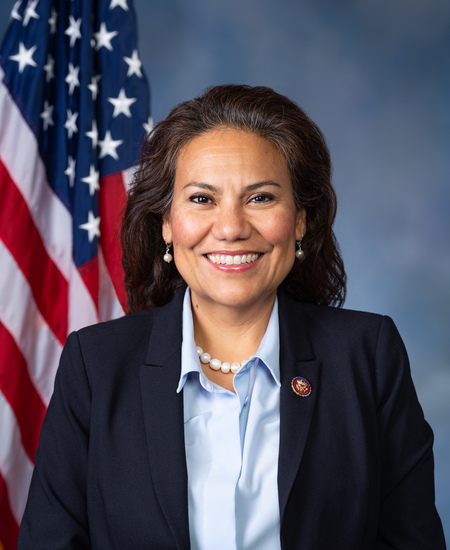
Rep. Veronica Escobar
Sponsored bills
Love Lives On Act of 2025 This bill extends entitlement for various benefit programs and services for surviving spouses of deceased members of the Armed Forces or veterans. The bill provides that the remarriage of a surviving spouse must not bar the furnishing of dependency and indemnity compensation or special pension benefits to such spouse. Additionally, the Department of Defense may not terminate the payment of an annuity for a surviving spouse under the Survivor Benefit Plan solely because the surviving spouse remarries. The bill also expands the definition of a dependent under TRICARE to include a remarried widow or widower whose subsequent marriage has ended due to death, divorce, or annulment.
Maddy summaryThe Energy Bills Relief Act aims to lower household energy costs and accelerate the development of low-cost, clean energy by modifying federal tax credits, expanding weatherization programs, and streamlining permitting processes. Key provisions include restoring tax incentives for renewable energy projects, increasing funding for low-income heating assistance, and requiring federal agencies to treat wind, solar, and storage projects with the same procedural fairness as oil and gas projects. The bill also establishes new incentives for upgrading the electricity grid, such as tax credits for transmission lines and grants for wildfire prevention measures, while creating mechanisms to ensure utilities serve public interests and protect consumers from price volatility.
Maddy summaryThis bill requires the Department of Veterans Affairs (VA) to cover abortion care, counseling, and related medication as part of standard hospital and medical services for eligible veterans and certain dependents. It amends VA healthcare law to explicitly include these services under existing coverage for veterans qualifying under section 1703 and dependents eligible under section 1781(a). The policy directly affects veterans and their dependents enrolled in VA healthcare programs by expanding covered benefits to include abortion-related care. This is a concrete policy change to VA healthcare benefits, not a broader abortion law.
Maddy summaryThis bill reorganizes the Corporation for National and Community Service into a new executive department called the AmeriCorps Administration, which would oversee national service programs. It creates a seven-member Advisory Board with representatives from different age groups and political parties to advise on program policies and priorities. The legislation increases financial support for participants by raising living allowances and educational awards, while also establishing a new National Service Foundation to accept private donations for the programs. Additionally, the bill sets a goal of serving 1 million participants annually by 2036 and creates an outreach program to notify young people aged 17-30 about service opportunities.
Maddy summaryThis bill requires the Department of Homeland Security to offer an appeal process to individuals whose Trusted Traveler program enrollment is denied, suspended, or terminated early. It affects participants in programs like Global Entry, PreCheck, NEXUS, and SENTRI by mandating that they receive written explanations for adverse decisions along with information about appeal options, reapplication procedures, and relevant timelines. The legislation also requires the agency to publish appeal process details online and provide status updates to applicants at least every 30 days while their appeals are pending.
This concurrent resolution directs the President to terminate the use of U.S. Armed Forces from hostilities against Iran or any part of the Iranian government or military unless a declaration of war or authorization to use military force for such purpose has been enacted. The resolution specifies that it shall not be construed to prevent the United States from defending itself from imminent attack.
Maddy summaryHRES 1107 is a House resolution urging the President to issue a proclamation flying the U.S. flag at half-staff to honor Rev. Jesse Jackson. The resolution recognizes his civil rights leadership, including founding the Rainbow PUSH Coalition and his presidential campaigns in 1984 and 1988, which advanced racial equality and economic justice. This symbolic gesture directly affects the President (as the one who would issue the proclamation) and the public, who would observe the flag at half-staff.
Maddy summaryThis bill, the PrEP Access and Coverage Act of 2026, requires most health insurance plans to cover HIV prevention medication without charging patients any out-of-pocket costs. It directly affects people with private insurance, government health programs like Medicare and Medicaid, military health care, and the Indian Health Service. The law mandates that insurance companies cannot require pre-approval for these medications, cannot charge deductibles or copayments for them, and cannot deny or charge higher premiums for life, disability, or long-term care insurance based on someone taking HIV prevention medication. The bill also creates a new public education campaign to increase awareness about HIV prevention options and provides federal funding to states and community organizations to expand access to these services.
Maddy summaryThis bill requires the Secretary of Energy to conduct a study on how data centers impact communities of color and low-income communities, working with agencies like the EPA and the Council on Environmental Quality. The study will examine specific issues including water and energy consumption, air and soil quality, effects on property values and local tax revenue, and public health risks related to pollution and heat. The Secretary must consult with local governments and Indian Tribes during the study and submit a report to Congress within 18 months that includes a map of data center locations relative to affected communities, along with recommendations for mitigating potential harms.