

Maddy summaryThe Fair Audits and Inspections for Regulators' Exams Act establishes strict deadlines for federal financial regulators to complete examinations, conduct exit interviews, and issue final reports, with extensions permitted only for specific documented reasons. The bill creates a new Office of Independent Examination Review within the Federal Financial Institutions Examination Council, staffed by a three-member board appointed by the President, to oversee examination quality and handle complaints from financial institutions. It grants banks and credit unions the right to request binding written advice on regulatory interpretations and allows them to seek independent, de novo review of significant supervisory determinations made during exams. Additionally, the legislation permits regulated entities to choose between an administrative hearing before their regulator or a judicial hearing in federal district court when facing enforcement actions or civil money penalties.
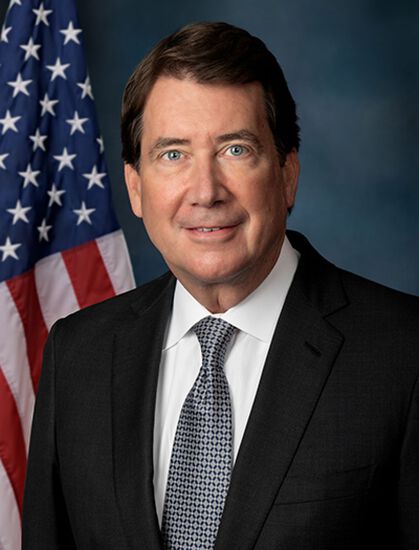
Sen. Bill Hagerty
Sponsored bills
Maddy summaryThe End Housing Welfare for Illegal Aliens Act would prohibit states and local governments designated as "sanctuary jurisdictions" from receiving Community Development Block Grants, defining such jurisdictions as those that restrict information sharing or compliance with federal immigration detainers. The bill also codifies a "mixed-status" rule that prevents housing assistance programs from providing prorated benefits to households where some members are ineligible, requiring full eligibility verification for all family members before any funds are distributed. Additionally, it mandates that public housing agencies affirmatively verify the citizenship status of applicants and expands the scope of these restrictions to include specific federal housing programs like Section 811 and Section 202.
Maddy summaryThe BLADE Act directs the Department of Commerce to identify foreign entities, particularly those from China and Russia, that are conducting unauthorized "model extraction attacks" to steal capabilities from U.S. closed-source artificial intelligence models. The bill requires the government to publish a public list of these attackers and mandates their addition to the Entity List, which restricts their access to certain technologies and exports. Additionally, it authorizes the President to impose financial sanctions on identified individuals and entities, with specific exceptions for humanitarian assistance and national security activities.
Maddy summaryThe Kids Online Safety Act (S 1748) requires major social media platforms, online video games, and other "covered platforms" to implement specific safety features for minors (under 17). These features include default privacy settings that limit harmful design features like infinite scrolling and auto-play, parental controls for managing minors' accounts, and restrictions on advertising illegal products to minors. The bill also mandates annual transparency reports about how platforms are used by minors and requires platforms to provide clear notices about their content algorithms. It creates a Kids Online Safety Council to advise Congress on online safety issues for children. The law applies to platforms with more than 10 million monthly users in the U.S. and takes effect 18 months after enactment.
Maddy summaryThis bill amends the Foreign Agents Registration Act (FARA) to restrict exemptions for foreign agents representing certain entities. It prohibits exemptions for agents of foreign corporate or government entities owned by countries listed in the State Department's "country of concern" definition (e.g., Russia, China, Iran). The bill creates a new process requiring congressional approval via a specific joint resolution to add or remove countries from the "concern" list, with proposals submitted to designated Senate and House committees. The changes expire after 5 years from enactment. (Note: The title "PAID OFF Act" is misleading; the bill focuses on foreign influence transparency, not financial relief.)
Maddy summaryThis resolution honors the life and legacy of the late Senator Lindsey Olin Graham from South Carolina. It formally acknowledges his extensive career in the military, state government, and Congress, noting his service as a Senator and his roles as Chairman of the Judiciary and Budget committees. The Senate expresses its sorrow over his death and requests that this tribute be shared with the House of Representatives and Graham's family.
Maddy summaryThe Ratepayer Protection Act establishes a new federal standard to protect utility customers from high electricity bills caused by large industrial users. It defines "large-load customers" as non-residential entities with a peak power demand of 100 megawatts or more that primarily use electricity for data centers and computing. Under this bill, these customers must pay for the full cost of any power plant, transmission line, or distribution upgrade needed to serve them, including costs incurred if the customer leaves the utility early. Additionally, utilities are required to obtain financial guarantees from these large customers before making such infrastructure investments. State regulators must review and implement these rules within two years, unless a state has already enacted similar protections.
Maddy summaryThis bill establishes a comprehensive sanctions framework targeting the Russian government and its affiliated entities in response to ongoing military actions. It authorizes the President to block assets, revoke visas, and prohibit financial transactions for Russian officials, military leaders, and foreign persons supporting Russia's defense industry or undermining Ukraine. The legislation also bans U.S. investments in Russian energy sectors, prohibits the purchase of Russian sovereign debt, and imposes high tariffs on Russian imports while restricting crude oil purchases by specific foreign nations. Additionally, the bill prevents Russian companies from listing on U.S. stock exchanges and includes mechanisms for terminating sanctions only if Russia signs a peace agreement accepted by Ukraine and ceases hostilities.
Maddy summaryThe Protecting American Taxpayers Act is a comprehensive bill designed to combat government fraud, recover misused funds, and strengthen oversight across various federal programs. It directly affects federal agencies, state governments administering public assistance, small businesses, veterans, and contractors by imposing new reporting requirements, extending statutes of limitations for fraud cases, and restricting financial assistance to entities linked to foreign agents or the Taliban. Key mechanisms include requiring child care payments to be based on recorded attendance rather than enrollment, mandating investigations into sudden spikes in health care spending, prohibiting small businesses with convicted fraudsters from receiving loans, and creating a new officer within the Department of Veterans Affairs dedicated to scam prevention. Additionally, the legislation rescinds unspent pandemic-era funds for deficit reduction, expands whistleblower protections for defense and non-defense contractors, and establishes stricter rules against transferring public assistance money abroad via remittance transfers.
Maddy summaryThe American Energy and Mineral Infrastructure Act of 2026 streamlines the permitting process for natural gas pipelines and other energy projects by designating the Federal Energy Regulatory Commission as the sole lead agency for environmental reviews and establishing strict deadlines for federal and state agencies to complete their portions of the review. The bill also modifies water quality laws to reduce the number of required certifications for discharges into navigable waters, extends the validity of certain nationwide permits for dredged or fill material from five to ten years, and creates a new fund to address abandoned hardrock mines. Additionally, the legislation updates the National Environmental Policy Act to limit the scope of environmental reviews to effects directly caused by a project, impose specific timelines for agency decisions, and restrict the ability of courts to issue injunctions that would halt construction while legal challenges are pending.