Maddy summarySRES 165 is a 2023 Senate resolution recognizing federal law enforcement agencies (specifically the Department of Justice and FBI) for their work, condemning calls to "defund" these agencies, and rejecting partisan efforts to undermine public trust in them. It directly addresses the actions of former President Trump and his allies who advocated limiting DOJ/FBI funding. The resolution cites FY2022 statistics showing these agencies prosecuted over 20,000 defendants for violent crime, terrorism, and other offenses. As a symbolic resolution (not a law), it has no legal effect but expresses the Senate's position on supporting federal law enforcement.
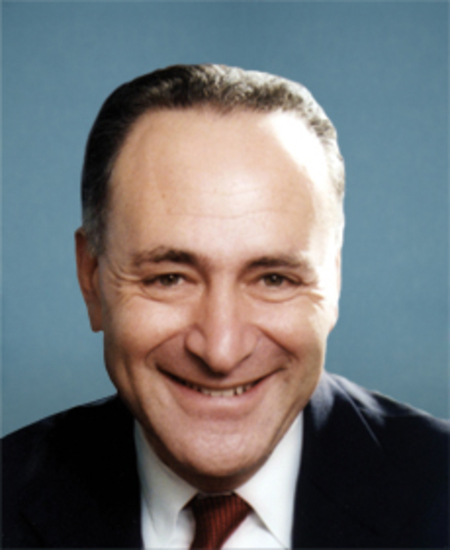
Sen. Charles E. Schumer
Sponsored bills
Maddy summaryThe Latonya Reeves Freedom Act of 2023 establishes a federally protected right for individuals with disabilities who require long-term services and supports (LTSS) to live in community-based settings rather than institutions. The bill defines specific requirements for "community-based" settings, including housing options that allow individuals to live in their own homes or shared residences with privacy rights, choice, and control over their services. It requires states to develop transition plans with measurable goals to move people from institutional settings to community-based supports within 12 years, along with annual reporting on progress. The Department of Justice and Department of Health and Human Services will enforce the law through investigations, compliance reviews, and the ability to seek injunctive relief for violations.
Maddy summaryS 1098, the Global Health, Empowerment and Rights Act, changes U.S. aid rules for foreign nongovernmental organizations (NGOs) receiving funding under the Foreign Assistance Act. It removes eligibility barriers for these NGOs if they provide health services (like counseling) using their own funds, as long as those services comply with local laws and would be legal in the U.S. It also eliminates extra restrictions on how foreign NGOs can use non-U.S. government funds for advocacy or lobbying, making these rules the same as those applied to U.S. NGOs receiving similar aid. This directly affects foreign health-focused NGOs working in international development and rights advocacy.
Maddy summaryThe Gun Violence Prevention Research Act of 2023 would authorize $50 million annually for the Centers for Disease Control and Prevention (CDC) to conduct or support research on firearms safety and gun violence prevention for fiscal years 2024 through 2029. This funding would allow the CDC to study the causes and prevention of gun violence, including evaluating safety measures and effective interventions. The research would be conducted under the Public Health Service Act, with the funding added to existing appropriations. The bill does not change current laws but provides dedicated resources for evidence-based research on gun violence as a public health issue.
Maddy summaryThis bill raises the salary threshold for white-collar workers (executives, administrators, professionals) to qualify for overtime pay under federal law. It sets new annual salary minimums: $45,000 starting in 2023, increasing to $55,000 in 2024, $65,000 in 2025, $75,000 in 2026, and then automatically adjusting yearly based on the 55th percentile of full-time salaried workers' earnings. The bill also limits exempt employees to no more than 20 hours per week on duties not directly related to their exempt roles. It directly affects millions of salaried workers currently excluded from overtime pay due to the current $35,568 annual threshold. The changes aim to restore overtime protections to historic levels by updating the threshold to reflect modern wages.
Maddy summaryThe Access to AEDs Act (S 1024) provides $25 million in federal funding over five years (2024-2028) to help public elementary and secondary schools improve access to automated external defibrillators (AEDs) and CPR training. It authorizes grants for schools to purchase AEDs, train students and staff, develop emergency response plans, and partner with health organizations - such as local hospitals or fire departments - to implement these programs. The bill also requires the creation of a national database to track school AED access and share best practices, aiming to support immediate response during cardiac emergencies. This directly affects schools, students, and school staff by enhancing preparedness for sudden cardiac arrest, which the bill cites as a leading cause of death among young athletes and children.
Maddy summaryThis bill establishes a federal "National Parkinson’s Project" under the Department of Health and Human Services to coordinate efforts across agencies in preventing, treating, and curing Parkinson’s disease and related conditions. It requires an integrated national plan, annual progress assessments, and a public Advisory Council - including patient advocates, researchers, and healthcare providers - to guide strategy and recommend actions. The project mandates data sharing among federal agencies and biannual reports to Congress evaluating federally funded Parkinson’s programs, aiming to improve care coordination, reduce financial burdens on Medicare and families, and advance research on environmental triggers. The law directly affects people living with Parkinson’s, their caregivers, and federal health agencies involved in research and patient services. The initiative is scheduled to sunset in 2035.
This resolution authorizes (1) Daniel Schwager, a former employee of the Office of the Secretary of the Senate, to provide relevant testimony in the case of United States v. Grillo , except concerning matters for which a privilege should be asserted; and (2) the Senate Legal Counsel to represent Mr. Schwager and any current or former officer or employee of his office in connection with this case.
Maddy summaryThis bill amends the federal Food and Nutrition Act to allow Puerto Rico to transition from its current nutrition assistance system to the Supplemental Nutrition Assistance Program (SNAP), which provides federal benefits to low-income households. It requires Puerto Rico to submit a transition plan to the U.S. Department of Agriculture within 60 days, with the agency having 180 days to approve it. Puerto Rico would operate under a 5-year transition period from its existing block grant system, during which the federal government must provide technical assistance and annual reporting. The bill directly affects Puerto Rico residents eligible for nutrition assistance and modifies federal funding formulas to support this transition.
Maddy summaryThis is a ceremonial Senate resolution (SRES 110) honoring the late James George Abourezk, the first Arab American to serve in the U.S. Senate (1973-1979) from South Dakota. It commemorates his legacy, including his work re-establishing the Senate Committee on Indian Affairs and co-authoring key Native American rights legislation like the Indian Child Welfare Act. The resolution directs the Senate to adjourn in his memory and send a copy to his family, acknowledging his service as a representative and advocate for Native American communities. As a procedural resolution, it has no legislative effect beyond commemoration.