

Maddy summaryThis bill, known as the Presidential Tax Accountability and Audit Integrity Act, prevents the President and their close family members or related business associates from entering into agreements that waive or release federal tax debts while the President is in office. It stops the IRS from honoring any such waivers or orders made during the President's term and requires the agency to publicly report the identities of any taxpayers affected by these instruments within seven days. Additionally, the law ensures that the standard time limits for the government to collect unpaid taxes or sue for collection do not expire until at least three years after the President leaves office. These measures aim to increase transparency and maintain the integrity of the tax system by restricting special treatment for the highest office holder and their connections.
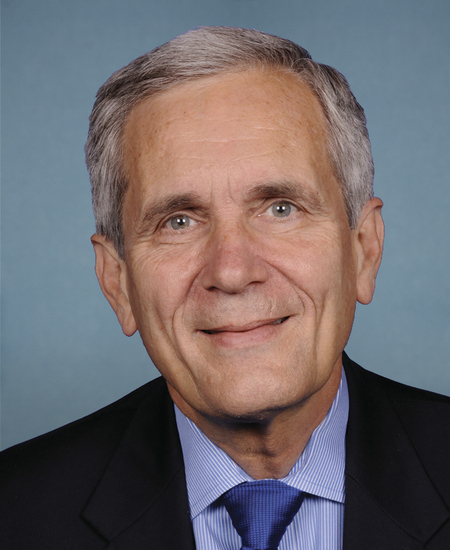
Rep. Lloyd Doggett
Sponsored bills
Maddy summaryThis resolution expresses support for designating the first week of August as National Community Health Center Week to honor the contributions of these facilities. It encourages all Americans to visit their local health centers during this time to celebrate the partnership between these organizations and the communities they serve. The bill highlights how community health centers provide affordable, comprehensive care to millions of people, particularly in rural and underserved areas, while integrating services like dental care, behavioral health, and pharmacy support. By recognizing these centers, the resolution aims to raise awareness of their role in improving public health outcomes and supporting local economies.
Maddy summaryThis resolution expresses support for designating July 2026 as "Plastic Pollution Action Month" to raise awareness about the environmental and health risks of plastic waste. It highlights statistics on plastic production, low recycling rates, and the impact of microplastics on marine life and human health to underscore the need for action. The bill encourages individuals across the United States to participate in activities that reduce plastic use and pollution throughout the year, rather than implementing new laws or regulations.
Maddy summaryThis resolution expresses the sense of the House of Representatives that Charleston, South Carolina, should proceed with hosting the 2027 annual meeting of the Organization for Security and Cooperation in Europe Parliamentary Assembly. The bill cites Charleston's existing facilities as suitable for the event and notes that hosting the convention in South Carolina honors the legacy of late Senator Lindsey Olin Graham. It also highlights that the United States has not hosted this specific assembly since 2005. The measure does not change any laws or allocate funding but serves as a formal statement of support for the planned event.
Maddy summaryThis bill, titled the Ensuring Kids Have Access to Medically Necessary Dental Care Act, modifies the Children's Health Insurance Program to expand dental coverage for low-income children and pregnant women. It mandates that states remove any lifetime or annual dollar limits on dental benefits for eligible participants and requires states to offer dental-only supplemental coverage instead of allowing them to opt out. The changes take effect six months after the law is enacted, ensuring that these specific groups receive consistent access to necessary dental services without financial caps.
Maddy summaryThe Medicaid Dental Benefit Act of 2026 mandates that Medicaid programs cover a range of dental and oral health services for adults starting in 2027, including dentures, implants, and treatments for pain and emergencies. To help states afford this expansion, the bill provides 100 percent federal funding for these specific services for a 12-quarter period beginning in 2027, while allowing states the option to add extra dental benefits if they choose. In addition to expanding coverage, the legislation requires the federal government to develop standardized quality measures to track adult oral health outcomes and report on disparities based on race, ethnicity, and other demographics. The bill also directs the creation of an outreach program to help eligible adults find care and establishes a timeline for a comprehensive report on access barriers and reimbursement issues.
Maddy summaryThis bill reauthorizes federal programs focused on preventing and responding to tick-borne diseases through 2026-2030, extending existing efforts beyond their previous expiration. It updates the National Strategy for Vector-Borne Diseases to emphasize identifying, reporting, preventing, and responding to these illnesses. The bill modifies two sections of the Public Health Service Act to continue funding for health departments working on vector-borne disease control. It directly affects public health programs and state/local health departments managing tick-borne disease prevention and response.
Maddy summaryThe AADAPT Act reauthorizes and expands Project ECHO grants to improve Alzheimer’s and dementia care through technology-enabled training. It specifically funds grants for healthcare providers in rural, frontier, or medically underserved areas to enhance early diagnosis, quality care, and provider retention for dementia patients. The bill authorizes $1 million annually (2027-2032) for these dementia-focused training programs, requiring funds to supplement - not replace - existing resources. This directly supports primary care providers licensed to serve underserved communities, using collaborative online learning to address care gaps.
Maddy summaryHR 2821, the FDA Modernization Act 3.0, requires the FDA to update regulatory language within one year of enactment. It directs the agency to replace all references to "animal tests" with "nonclinical tests" in 22 specific sections of the Code of Federal Regulations related to drug development and approval processes. The bill also adds a definition for "nonclinical test" into relevant FDA regulations to align with prior legislative changes. This update applies directly to pharmaceutical manufacturers and FDA reviewers who follow these regulatory guidelines during drug development. The changes aim to modernize terminology without altering current testing requirements.
Maddy summaryHR 2001 increases annual funding for a grant program supporting dental workforce development from $13.9 million to $15 million, extending the program through fiscal years 2026-2030 (previously 2019-2023) under the Public Health Service Act. The bill modifies existing funding levels to maintain support for addressing dental workforce shortages, with funds remaining available until expended. This change directly affects the operation of the grant program and its ability to fund dental workforce initiatives.