Maddy summaryThis joint resolution seeks to overturn a Department of Homeland Security rule that would establish fixed time periods for admission and specific extension procedures for nonimmigrant academic students, exchange visitors, and representatives of foreign information media. If enacted, the bill would prevent this immigration regulation from taking effect, thereby maintaining the existing framework for how these individuals manage their stay in the United States. The measure directly affects international students, cultural exchange participants, and foreign journalists by blocking changes to their visa duration limits and renewal processes.
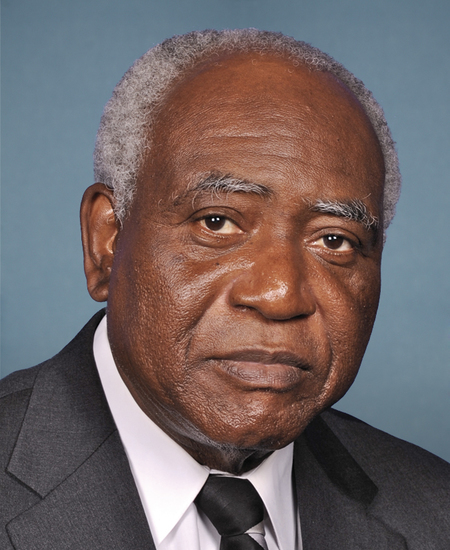
Rep. Danny K. Davis
Sponsored bills
Maddy summaryThis bill designates the U.S. Postal Service facility at 14855 South Van Dyke Road in Plainfield, Illinois, as the "Staff Sergeant Jose Dueñez Jr. Post Office Building." It directly affects the postal facility and all official references to it. The key provision requires that any future law, document, or record referring to the location must use the new name. This is a purely procedural renaming with no funding, policy changes, or impact beyond official nomenclature.
Maddy summaryThis bill names a U.S. Postal Service facility at 1300 East Northwest Highway in Palatine, Illinois, as the "Bernie Bluestein Post Office Building." It updates all official references in federal laws, documents, and records to reflect this new name for the location. The change is purely administrative and affects how the building is identified in government materials. No new policies or funding are involved; it is a ceremonial designation.
Maddy summaryHR 2466 designates the U.S. Postal Service facility at 5225 Harrison Avenue in Rockford, Illinois, as the "Jay P. Larson Post Office Building." The bill updates all federal references - including laws, maps, and official documents - to use this new name for the building. It does not create new policies or affect residents, businesses, or postal services. This is a ceremonial naming bill with no financial or operational changes.
Maddy summaryThe EBOLA Act requires the President to rejoin the World Health Organization within 30 days of enactment and immediately coordinate with that body to address an ongoing Ebola outbreak in Central and Eastern Africa. The legislation authorizes necessary funding to cover U.S. membership fees and financial obligations, as well as voluntary contributions to support international disease response efforts. By mandating this rapid re-entry into the global health agency, the bill aims to enhance the nation's ability to monitor emerging infectious diseases and prevent the spread of the virus to American soil.
Maddy summaryThis bill establishes new procedural safeguards for the Internal Revenue Service when conducting tax inquiries or examinations of universities, requiring high-level Treasury approval based on reasonable belief that a university may not qualify for tax-exempt status. It mandates that the IRS provide written notice to the institution before beginning an inquiry and at least 15 days before starting a formal examination, offering the university the opportunity to hold a conference to discuss concerns. The legislation imposes strict time limits, requiring inquiries to be completed within 90 days and examinations within two years, while also restricting the ability to re-examine a university for five years if no significant tax issues are found. Additionally, it requires the Secretary of the Treasury to submit confidential reports to congressional committees detailing any new university tax investigations.
Maddy summaryHR 5267, the American Franchise Act, clarifies when franchisors can be considered joint employers of franchisee employees under federal labor laws. It defines "substantial direct and immediate control" over essential employment terms like wages, benefits, hours, hiring, and discipline - requiring franchisors to actively set these terms to be deemed joint employers. The bill explicitly excludes routine brand standards, training, or minimal safety requirements from constituting such control. This directly affects franchisors and franchisees by limiting joint employer liability to cases where franchisors exert significant, ongoing influence over core employment decisions. The law applies prospectively to new cases after enactment, not past disputes.
Maddy summaryThis House resolution marks the 25th anniversary of the September 11, 2001 terrorist attacks by formally honoring the memory of the nearly 3,000 victims and recognizing the sacrifices made by first responders, military personnel, and the passengers of United Airlines Flight 93. The bill acknowledges the ongoing health challenges faced by survivors and responders, highlighting the role of the World Trade Center Health Program in providing long-term medical support. It also credits charitable organizations and community groups that have continued to assist victims' families and veterans over the past two decades. Finally, the resolution urges the American public to observe the anniversary with ceremonies and reaffirms Congress's commitment to remembering the events and lessons of that day.
Maddy summaryThe Protecting Student Athletes from Unexpected Tax Liability Act requires companies to withhold 30 percent of income tax from payments made for a student athlete's name, image, and likeness. This rule treats these specific commercial payments as if they were standard wages, even though the athletes are not classified as employees. The bill also waives penalties for underpaid taxes in the first year a student athlete is subject to this new withholding requirement. To ensure the policy works effectively, the Treasury Department must report to Congress by 2029 on whether the 30 percent rate is appropriate and how well companies are complying with the law.
Maddy summaryThis bill designates the Route 66 National Historic Trail, covering approximately 2,400 miles from Chicago, Illinois, to Santa Monica, California, along all historical alignments of U.S. Highway 66 (1926-1985). It directs the National Park Service to administer the trail while respecting its unique character, requiring tribal consultation for significant impacts on Native American tribes, and explicitly prohibiting land acquisition beyond 1/4 mile on either side of the trail. The bill clarifies it does not create buffer zones, disrupt energy infrastructure (including pipelines or renewable projects), or designate the trail as part of the National Park System, while affirming existing authority for easements and rights-of-way.