

In committee Sep 24, 2026
1 co-sponsor
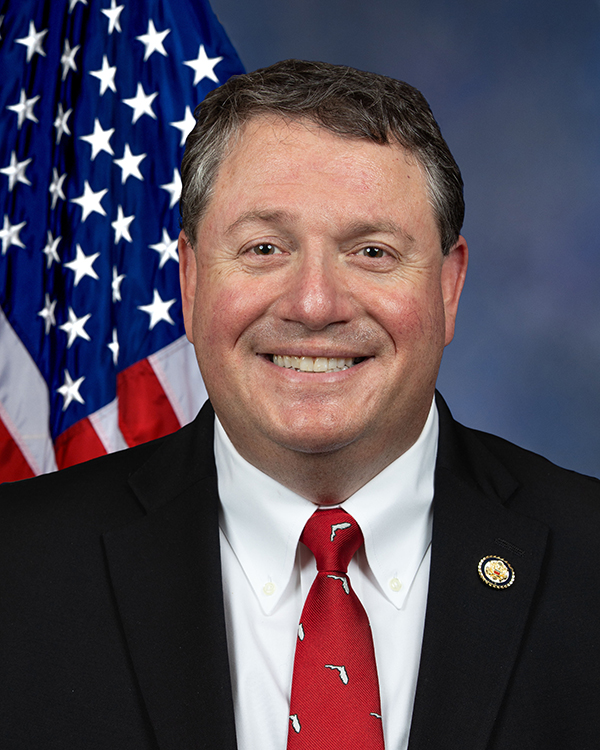
Rep. Randy Fine
Total votes
583
all sessions
Attendance
95%
27 missed
Lower than 78% of chamber peers
With party
91%
of cast votes
Lower than 92% of chamber peers
Bipartisan score
4%
crosses aisle rarely
Higher than 91% of chamber peers
Sponsored
256
bills & resolutions
Near the chamber average
Committees
7
assignments
256 bills and resolutions
Sponsored bills
Total
256
Primary
30
Co-sponsor
226
This page
256
matching current filters
In committee Sep 21, 2026
1 co-sponsor
In committee Sep 16, 2026
1 co-sponsor
Tyler’s Law
Maddy summaryHR 2004, titled "Tyler’s Law," requires the Secretary of Health and Human Services to study how often hospital emergency departments test for fentanyl during overdose cases (beyond standard drug tests), including associated costs, patient benefits/risks, and impacts on privacy and patient-physician relationships. The study must be completed within one year of the bill's enactment. Based on the study results, the Secretary must issue guidance within six months on whether emergency departments should routinely test for fentanyl, how to inform clinicians about test contents, and how such testing may affect future overdose risks and health outcomes. This bill directly affects hospital emergency departments and patients experiencing overdoses by shaping future testing protocols.
Passed Sep 16, 2026
1 co-sponsor
AM Radio for Every Vehicle Act of 2025
Maddy summaryThis bill requires all new passenger vehicles manufactured for sale in the U.S. to include AM radio as standard equipment (not an optional add-on) by 2027-2028, depending on manufacturer size. It mandates that AM radio receivers must be easily accessible to drivers and allows compliance through digital AM broadcast technology. During a transition period, manufacturers must clearly label vehicles without AM radio but cannot charge extra for this feature. The bill also mandates a GAO study on AM radio's role in emergency alerts and includes a 10-year sunset provision for the rule. It preempts state laws regarding AM radio access in vehicles.
Passed Sep 16, 2026
1 co-sponsor
To temporarily suspend the imposition of certain fuel taxes.
Maddy summaryThis bill temporarily suspends federal excise taxes on certain transportation fuels, such as gasoline and diesel, setting the tax rate to zero for sales occurring between enactment and December 31, 2026. The legislation directly affects consumers by aiming to lower fuel prices at the pump. It mandates that fuel producers and dealers pass the full amount of the tax savings on to buyers immediately. To enforce this requirement, the bill authorizes the Secretary of the Treasury to impose monetary penalties on companies that fail to reduce their prices accordingly.
Budget & TaxesSupports Budget & TaxesThe bill suspends federal excise taxes on fuel, aiming to lower prices for consumers and provide tax relief, which directly supports the topic of Budget & Taxes by adjusting taxation.
EnvironmentOpposes EnvironmentTemporarily suspending fuel taxes aims to lower fuel prices, which could increase fuel consumption and consequently lead to higher greenhouse gas emissions and pollution, weakening environmental protection efforts.
In committee Sep 15, 2026
1 co-sponsor
MAGA Act
Maddy summaryThe Make Apportionment Great Again Act would change how U.S. House seats are distributed among states by excluding noncitizens from the population count used for apportionment. It requires the Secretary of Commerce to recalculate state populations using existing federal and state government records, without conducting a new census, and mandates that future censuses include a question on citizenship status. The bill establishes a legal presumption that any resulting changes in seat allocation are valid, allowing courts to overturn them only with clear evidence of statutory or constitutional violations. Additionally, it creates an expedited judicial process for legal challenges, requiring cases to be heard by three-judge panels and permitting direct appeal to the Supreme Court.
In committee Sep 15, 2026
1 co-sponsor
TEAM USA Act
Maddy summaryThe TEAM USA Act would amend the Higher Education Act to require colleges and universities receiving federal financial assistance to limit international student athletes to no more than 20 percent of any varsity sports team roster, or a maximum of one player for teams with fewer than ten members. The bill defines an international student athlete as someone who is not a U.S. national or permanent resident, or who has received athletic financial support from a foreign Olympic or Paralympic committee. Institutions would be required to report their compliance annually to the Secretary of Education and relevant athletic associations. These new restrictions would take effect on July 1, 2029, applying to the 2029-2030 academic year and all subsequent years.
EducationOpposes EducationThe bill restricts the number of international student athletes allowed on varsity teams at colleges receiving federal aid, limiting educational and athletic access.
ImmigrationOpposes ImmigrationBill restricts the participation of non-citizens (international student athletes) in US college sports, limiting their access to educational and athletic opportunities.
In committee Sep 14, 2026
1 co-sponsor
Expressing support for the designation of the week of September 19 through September 26, 2026, as "National Estuaries Week".
Maddy summaryThis House resolution expresses support for designating the week of September 19 through September 26, 2026, as National Estuaries Week to raise public awareness about the importance of these coastal ecosystems. The bill highlights that estuaries support a significant portion of the U.S. population and economy while providing critical services such as flood control, water filtration, and habitat for fish and wildlife. It acknowledges ongoing threats to estuary health, including pollution and sea level changes, and recognizes the efforts of government agencies, organizations, and individuals working to protect and restore these areas.
In committee Sep 10, 2026
1 co-sponsor
American Franchise Act
Maddy summaryHR 5267, the American Franchise Act, clarifies when franchisors can be considered joint employers of franchisee employees under federal labor laws. It defines "substantial direct and immediate control" over essential employment terms like wages, benefits, hours, hiring, and discipline - requiring franchisors to actively set these terms to be deemed joint employers. The bill explicitly excludes routine brand standards, training, or minimal safety requirements from constituting such control. This directly affects franchisors and franchisees by limiting joint employer liability to cases where franchisors exert significant, ongoing influence over core employment decisions. The law applies prospectively to new cases after enactment, not past disputes.
In committee Sep 8, 2026
1 co-sponsor
Ask Maddy
·
AI policy assistant
Ask Maddy about Randy Fine
Scope: kansas
Hi! I can help you understand Randy Fine's legislative record. What would you like to know?
Try one of these
i
Maddy answers using official bill text and legislative records. Always verify before sharing.
Sources cited inline